


Resources
My resources are your resources. The best of the information I’ve used to grow my skills, knowledge, and wisdom, personally curated for you.
Resources
My resources are your resources. The best of the information I’ve used to grow my skills, knowledge, and wisdom, personally curated for you.
Drawn from real work in systems, leadership, Java, and AI so you can apply ideas with clarity and confidence.
These books follow one clear thread: helping Java teams make sound choices in the cloud. Each book tackles a different part of the journey. One clarifies how to choose the right Azure service. One walks through coding, deployment, and scaling. One provides visual maps that match Java frameworks to Azure hosting options.
Together, they move from decision clarity to practical execution to clear architecture references. The focus is not on features. It is on fit and tradeoffs.
This shelf is for practitioners and architects who value structure over noise and long-term thinking over quick fixes. Read alone or in sequence, these books build steady judgment and more consistent Java system design.

Book of Architectures – Java on Microsoft Azure
April 2025
Practitioner, Architect
This book is for practitioners and architects deciding where and how their Java application workloads should run on Azure. The tension is clear: many hosting models and services exist, and each framework or application server maps differently across them. Before reading, choices feel scattered. After reading, each workload has a visible match. Clarity beats guesswork. The recurring decision matrix, “Find the Azure Match: Right Service for Every Java App Type,” anchors that shift by mapping Tomcat, Spring Boot, Jakarta EE, WebLogic, WebSphere Liberty, JBoss EAP, Quarkus, and others to Azure App Service, Azure Container Apps, Azure Kubernetes Service, OpenShift, or Virtual Machines. The diagrams extend beyond hosting into the grounding of identity, secrets, monitoring, CI/CD, and data services integration. This is an architectural reference lens. Used well, it helps teams design Java systems on Azure with consistency and confidence.
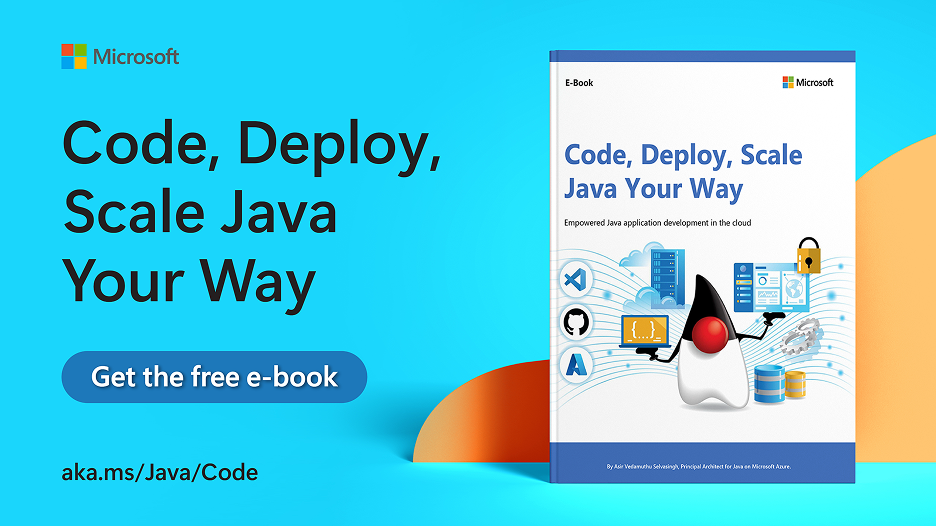
Code, Deploy, and Scale Java Your Way
August 2022
Practitioner, Architect
This publication is for Java practitioners and architects who want to move to the cloud without rewriting their habits. Many teams worry that cloud adoption means abandoning familiar tools, frameworks, and application servers. This book reframes that concern. The shift is from disruption to continuity. It shows how coding, deployment, and scaling can follow a clear three-part path while preserving established tooling such as Maven, Gradle, IntelliJ, Eclipse, GitHub, Jenkins, Terraform, and the Azure CLI. It lays out multiple deployment models, from virtual machines to Kubernetes and managed services, and connects them to security, observability, and scaling patterns. Choice remains central. By grounding decisions in architecture guidance and lifecycle thinking, the book becomes a lens for aligning Java workloads with modern cloud capabilities while preserving control and developer efficiency over time.

How to Choose the Right Azure Services for Your Applications – It’s Not A or B
June 2022
Practitioner, Architect
This book is for practitioners and architects who are facing a familiar cloud tension: IaaS or PaaS, lift and shift or modernize, speed or control. The real question is not A or B. It is fit for purpose. The shift it encourages is from choosing services by category to choosing them by workload characteristics and architectural intent. That shift changes decision quality. Instead of starting with products, you start with constraints, lifecycle needs, and operational posture. One concrete lens it develops is mapping application patterns to service capabilities before committing to a platform path. Tradeoffs become explicit. Assumptions surface early. Over time, this habit strengthens architectural judgment and builds systems that age well rather than drift under platform pressure.
Drawn from real work in systems, leadership, Java, and AI so you can apply ideas with clarity and confidence.
These books follow one clear thread: helping Java teams make sound choices in the cloud. Each book tackles a different part of the journey. One clarifies how to choose the right Azure service. One walks through coding, deployment, and scaling. One provides visual maps that match Java frameworks to Azure hosting options.
Together, they move from decision clarity to practical execution to clear architecture references. The focus is not on features. It is on fit and tradeoffs.
This shelf is for practitioners and architects who value structure over noise and long-term thinking over quick fixes. Read alone or in sequence, these books build steady judgment and more consistent Java system design.

Book of Architectures – Java on Microsoft Azure
April 2025
Practitioner, Architect
This book is for practitioners and architects deciding where and how their Java application workloads should run on Azure. The tension is clear: many hosting models and services exist, and each framework or application server maps differently across them. Before reading, choices feel scattered. After reading, each workload has a visible match. Clarity beats guesswork. The recurring decision matrix, “Find the Azure Match: Right Service for Every Java App Type,” anchors that shift by mapping Tomcat, Spring Boot, Jakarta EE, WebLogic, WebSphere Liberty, JBoss EAP, Quarkus, and others to Azure App Service, Azure Container Apps, Azure Kubernetes Service, OpenShift, or Virtual Machines. The diagrams extend beyond hosting into the grounding of identity, secrets, monitoring, CI/CD, and data services integration. This is an architectural reference lens. Used well, it helps teams design Java systems on Azure with consistency and confidence.
Code, Deploy, and Scale Java Your Way
August 2022
Practitioner, Architect
This publication is for Java practitioners and architects who want to move to the cloud without rewriting their habits. Many teams worry that cloud adoption means abandoning familiar tools, frameworks, and application servers. This book reframes that concern. The shift is from disruption to continuity. It shows how coding, deployment, and scaling can follow a clear three-part path while preserving established tooling such as Maven, Gradle, IntelliJ, Eclipse, GitHub, Jenkins, Terraform, and the Azure CLI. It lays out multiple deployment models, from virtual machines to Kubernetes and managed services, and connects them to security, observability, and scaling patterns. Choice remains central. By grounding decisions in architecture guidance and lifecycle thinking, the book becomes a lens for aligning Java workloads with modern cloud capabilities while preserving control and developer efficiency over time.

How to Choose the Right Azure Services for Your Applications – It’s Not A or B
June 2022
Practitioner, Architect
This book is for practitioners and architects who are facing a familiar cloud tension: IaaS or PaaS, lift and shift or modernize, speed or control. The real question is not A or B. It is fit for purpose. The shift it encourages is from choosing services by category to choosing them by workload characteristics and architectural intent. That shift changes decision quality. Instead of starting with products, you start with constraints, lifecycle needs, and operational posture. One concrete lens it develops is mapping application patterns to service capabilities before committing to a platform path. Tradeoffs become explicit. Assumptions surface early. Over time, this habit strengthens architectural judgment and builds systems that age well rather than drift under platform pressure.
Design better systems, avoid common traps, and build software that endures, from the fundamentals to enterprise scale.
Java mastery is not built in random steps. It grows in layers. First, you learn the language, its syntax, and its core libraries. Then you learn to think more clearly about objects, APIs, structure, and how code evolves over time. From there, you build the habits that make code easier to read, test, maintain, and extend. Algorithms sharpen problem-solving. Concurrency and performance deepen your understanding of how Java behaves under pressure. Frameworks, enterprise systems, and cloud-native patterns show how applications grow across teams, services, and production environments. AI adds a newer layer, but the same engineering discipline still applies.
This curated shelf is not just a list of books. It is a progression. Each stage builds on the one before it. Each book strengthens a specific layer of skill, from first exposure to deeper judgment. The goal is not to collect references or move fast through titles. The goal is to build understanding that compounds over time.
Good systems come from disciplined growth. So do good engineers.
Start Here – Foundations (First Exposure to Java)
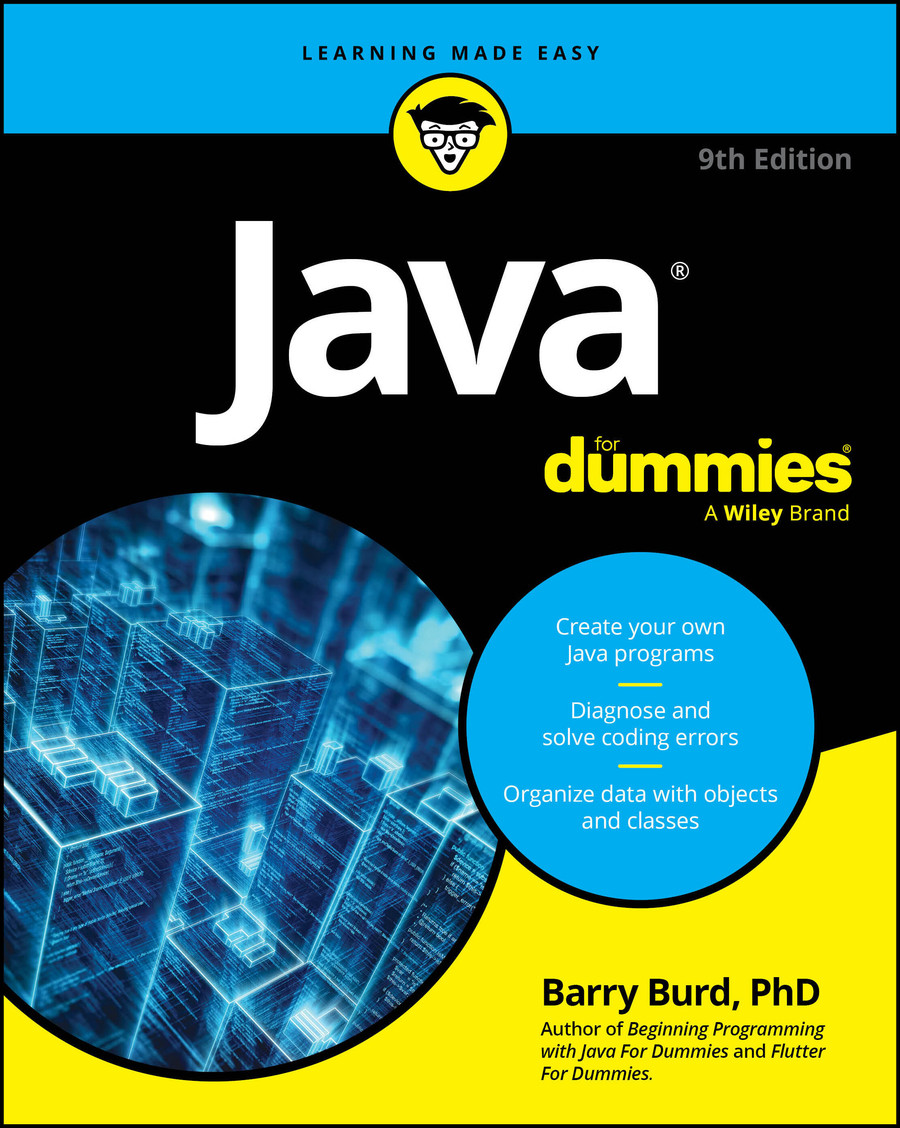
Java For Dummies
Foundations
This book is for readers who are learning how Java programs are built from the ground up. The shift is clear: from seeing code as strange syntax to understanding how instructions, variables, methods, and objects work together. Start small. The book uses complete code examples, setup guidance, diagrams, exercises, and beginner-oriented explanations to make Java less abstract. It introduces the habit of writing, running, testing, and modifying code instead of only reading about concepts. It also gives early exposure to the JDK, IDEs, JShell, JavaFX, collections, streams, and Java 23 preview features. That pattern matters because early habits shape how developers read errors, trace logic, and build confidence. Over time, this foundation supports cleaner debugging, steadier practice, and better technical judgment.
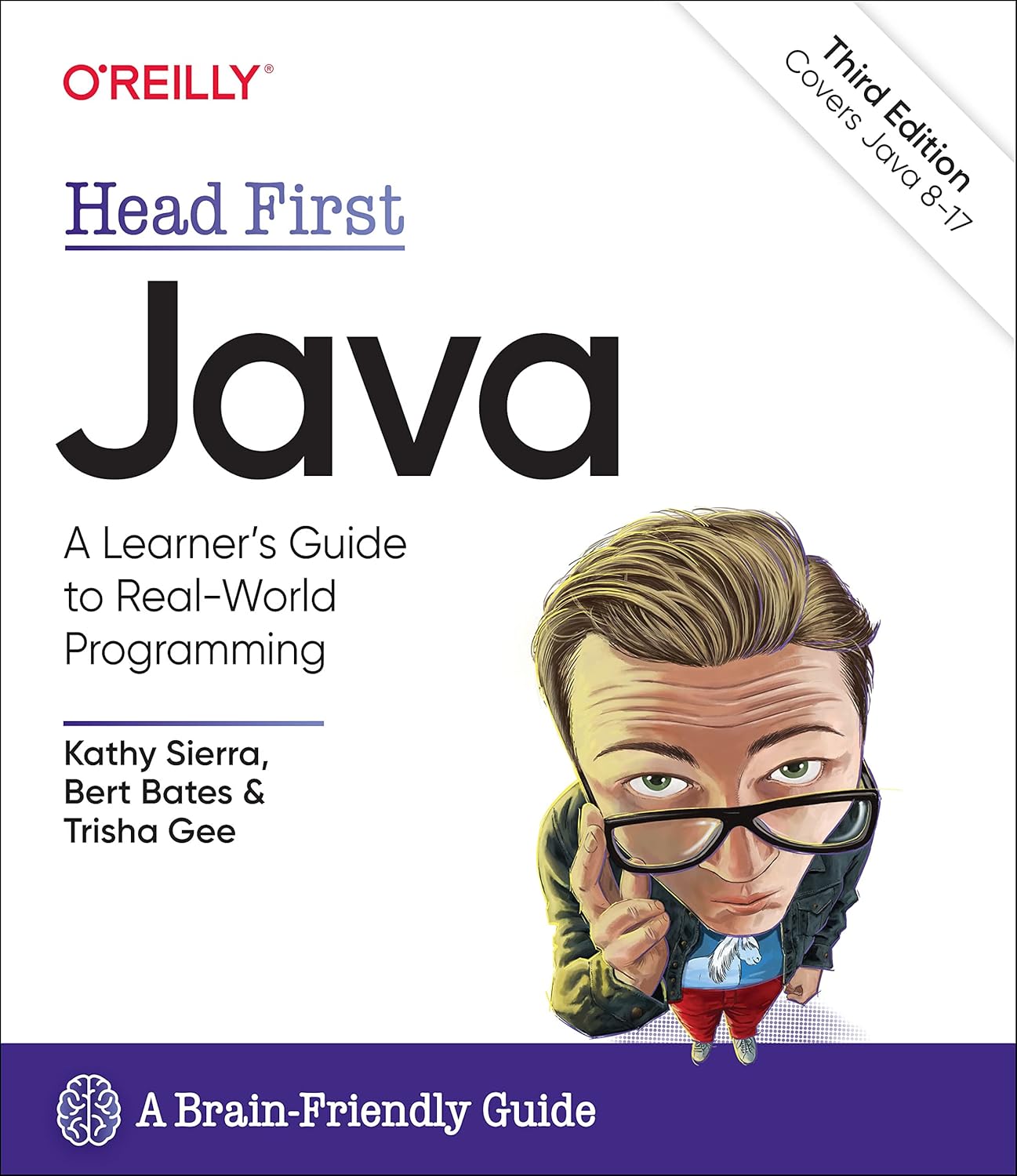
Head First Java: A Brain-Friendly Guide
Foundations
This book is for someone who wants to learn Java by building a working mental model, not by memorizing syntax. The before and after shift is clear: before reading, Java can feel like disconnected rules; after reading, classes, objects, methods, variables, and the JVM start to fit together as one system. Start with the basics. The book uses visual explanations, exercises, puzzles, and code walkthroughs to make readers practice the ideas rather than just read about them. It also introduces object-oriented thinking, collections, exception handling, I/O, and threads in a way that keeps the focus on how Java programs actually behave. Treat it as a learning tool, not a shortcut. Over time, that kind of practice builds cleaner habits, stronger judgment, and a more durable foundation for writing Java code.
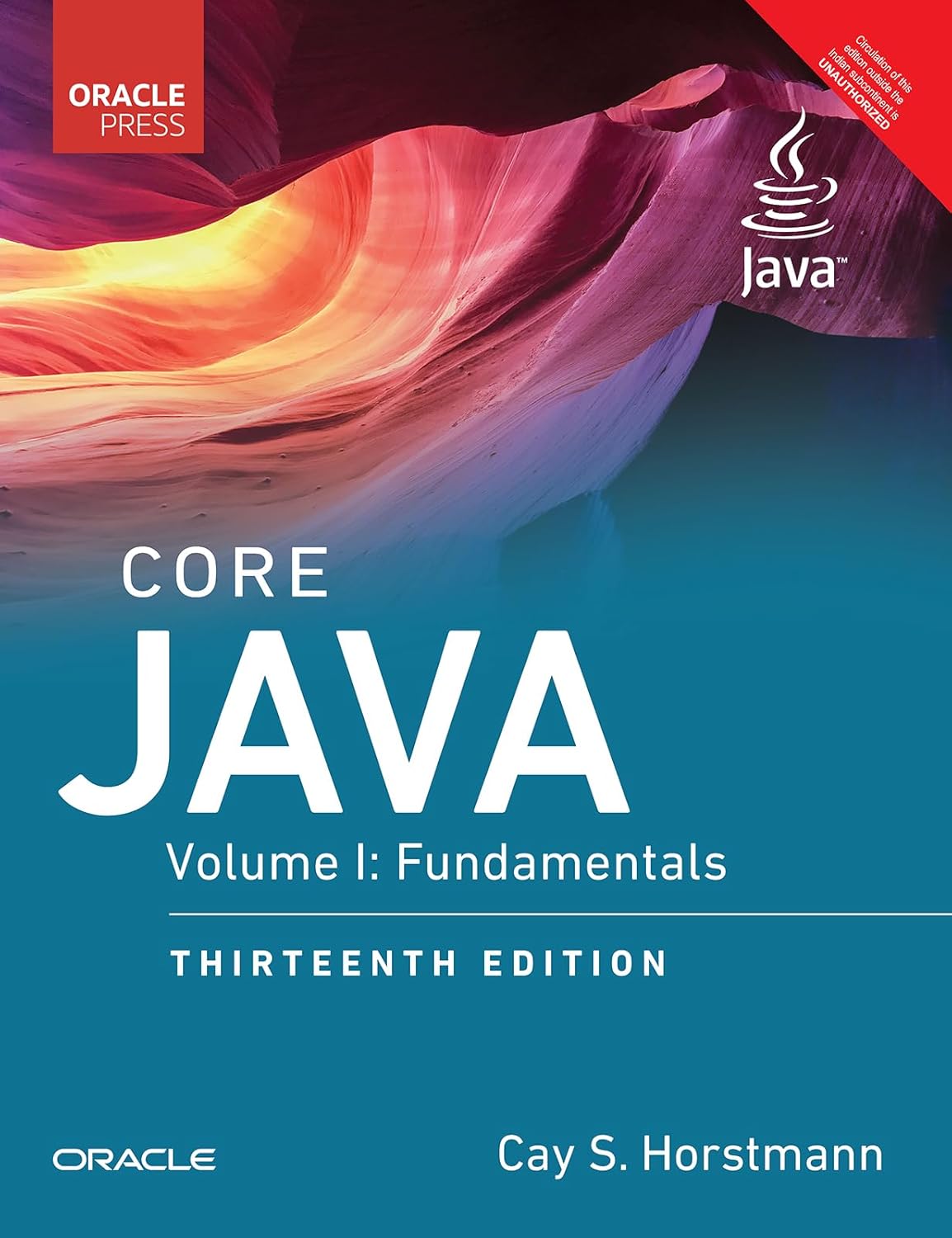
Core Java Volume I → Fundamentals
Foundations → Practitioner
This book is for programmers who already know how to think in code and want to understand Java with care. It helps move the reader from writing Java that merely runs to writing Java with a clearer grasp of language rules, libraries, tools, and tradeoffs. Details matter. The book builds that habit through sample programs, API notes, command-line practice, JShell, Eclipse setup, object-oriented programming, generics, collections, concurrency, annotations, and the module system. It also reflects Java 21, so the reader sees the language as it is used now, not only as it began. This is not a shortcut. It is a steady learning tool for building fluency in the language and the platform. Over time, that fluency becomes part of durable engineering judgment.
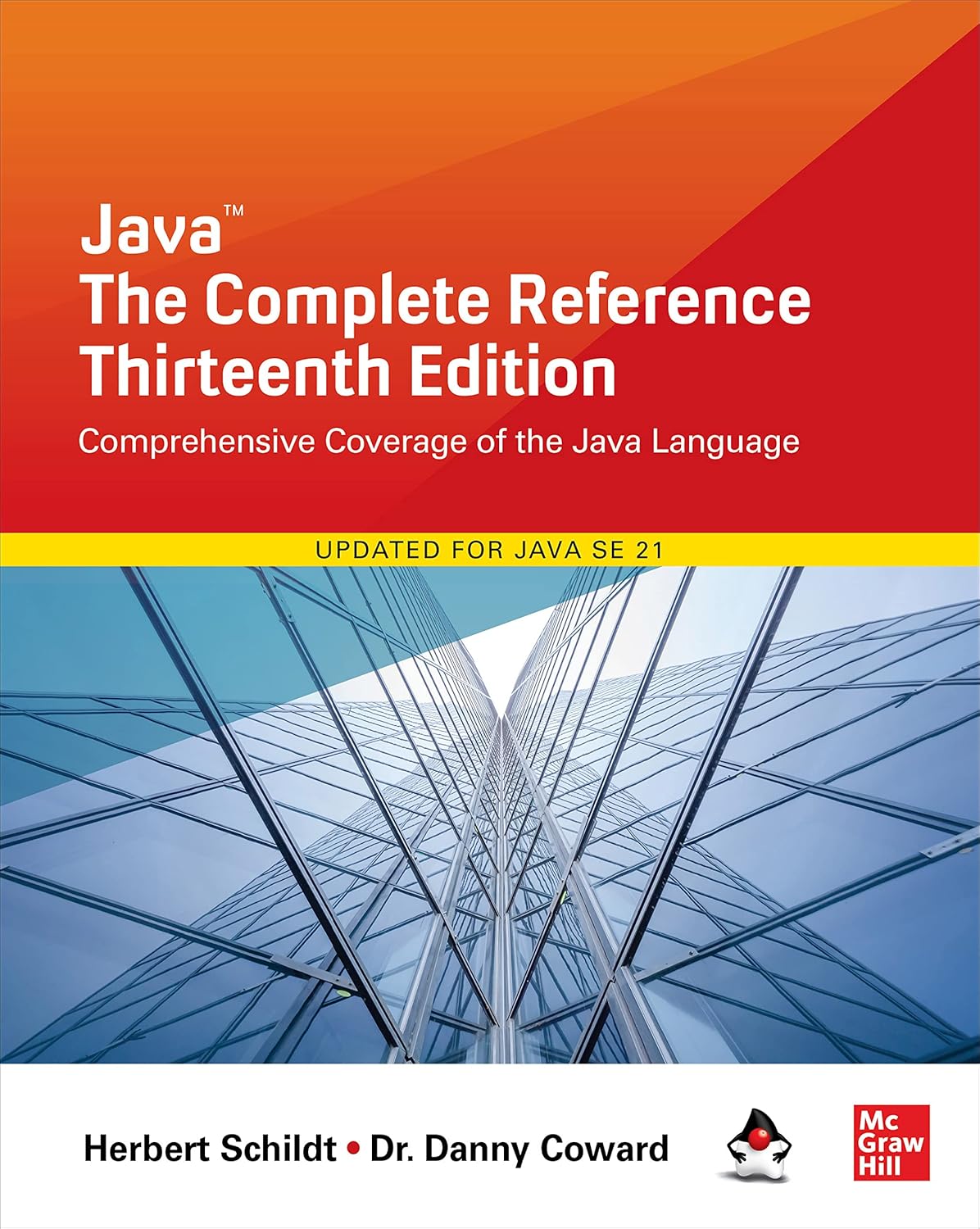
Java: The Complete Reference
Foundations → Practitioner
This book is for readers who want one broad place to understand Java as a language and as a working platform. It helps move a learner from scattered syntax knowledge to a more connected view of how Java programs are written, compiled, run, and extended. Start with structure. The book builds from data types, control statements, classes, inheritance, exceptions, and generics into libraries, streams, modules, concurrency utilities, and newer Java SE 21 features such as record patterns, sequenced collections, and virtual threads. It also gives readers a practical rhythm through examples, reference-style explanations, JShell, documentation comments, and single-file program execution. This is not a shortcut. It is a steady learning tool for building vocabulary, confidence, and context across the Java platform. Over time, that wider base supports better technical judgment and more durable engineering practice.
Developing Technical Judgement
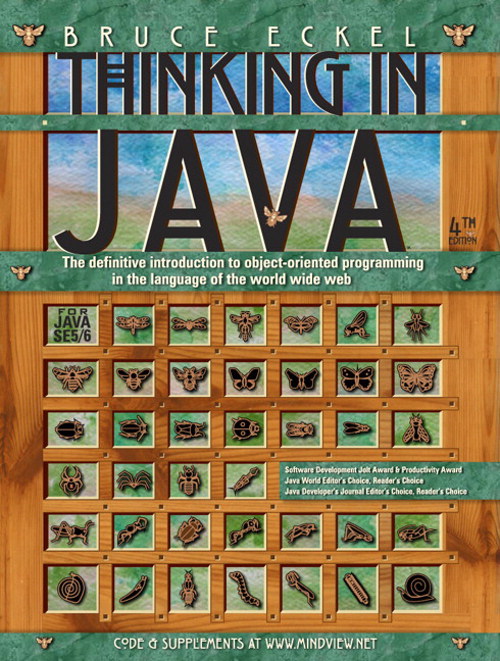
Thinking in Java
Foundations → Practitioner
This book is for readers who already know basic programming and want to understand Java as a way of thinking, not just a list of syntax rules. Before reading, you may see classes, inheritance, interfaces, and exceptions as separate topics. After reading, you start seeing how Java uses objects, types, boundaries, and reuse to manage complexity. That shift matters. Bruce Eckel spends time on abstraction, hidden implementation, composition, polymorphism, containers, and error handling, which helps readers build a mental model for why code is shaped a certain way. The book also uses examples, exercises, and design discussion to make the learning active. It is not a shortcut. It is a patient tool for building judgment that can carry forward into durable Java practice.
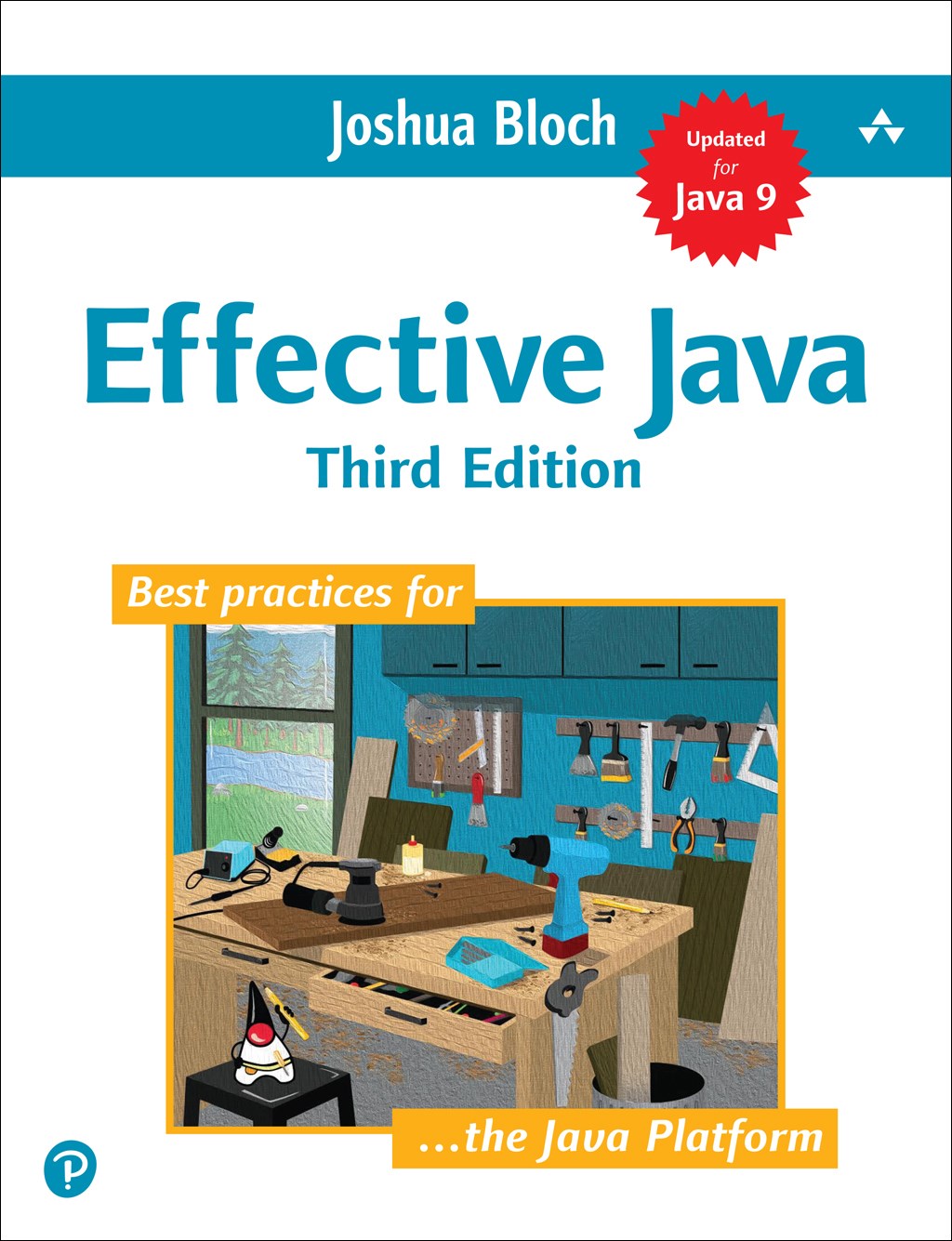
Effective Java
Practitioner → Architect
Effective Java is for developers who already know Java and want to write with more care. The shift is simple: you move from code that works today to code that holds up under change. Judgment beats shortcuts. Joshua Bloch uses 90 focused items to show how small choices shape long-term quality, from static factory methods and builders to equals, hashCode, generics, lambdas, streams, exceptions, concurrency, and serialization. The value is not in memorizing rules. It is in learning how to think through API design, component boundaries, mutability, reuse, and failure. The book keeps returning to clarity, simplicity, correctness, robustness, flexibility, and maintainability. Over time, that practice helps a Java developer build stronger habits, make cleaner tradeoffs, and grow into durable engineering judgment.
Writing Code That Lasts (Craft & Structure)
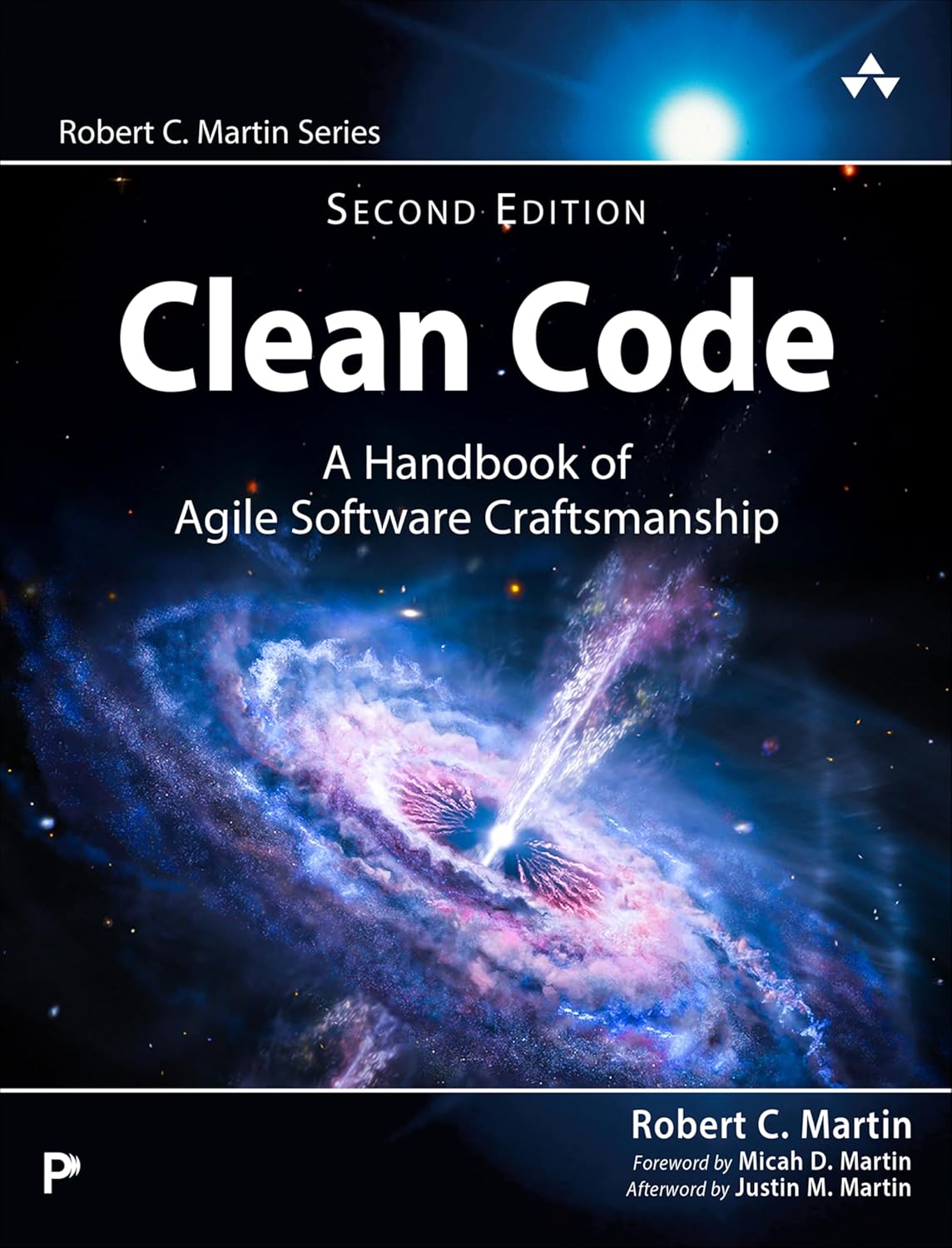
Clean Code: A Handbook of Agile Software Craftsmanship
Practitioner → Architect
Clean Code is for developers who can already write working programs but want their code to age better inside real teams. The shift is simple: you move from making code pass to making code readable, changeable, and easier to trust. Small things matter. Robert C. Martin frames code as something other people must read, maintain, test, and reshape over time. The book builds that practice through naming, functions, comments, error handling, unit tests, classes, systems, concurrency, refactoring, and code smells. It does not offer a shortcut. It asks the reader to study code, clean code, and practice the judgment behind each change. Over time, that discipline helps a Java developer write with more care, reduce avoidable complexity, and grow toward durable engineering judgment.
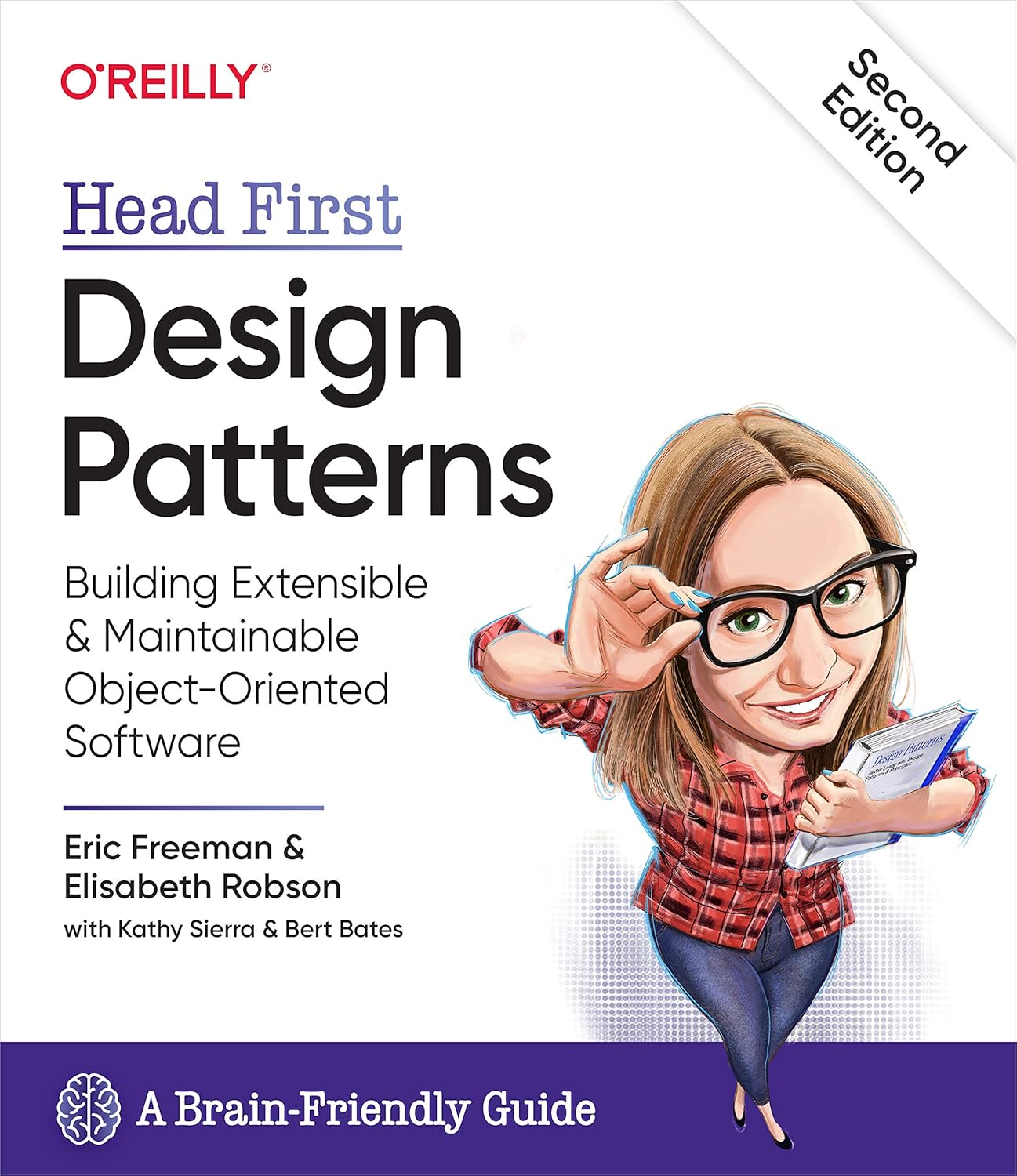
Head First Design Patterns: A Brain-Friendly Guide
Practitioner → Architect
This book is for Java developers who know object-oriented basics but want to design code that handles change with less strain. The shift is clear: before reading, inheritance and interfaces can feel like isolated language tools; after reading, they become part of a larger design vocabulary. Change is constant. The book builds that practice through the SimUDuck and Weather Station examples, showing how to identify what varies, encapsulate it, program to an interface, favor composition over inheritance, and use patterns such as Strategy and Observer. It also teaches why shared pattern language helps teams stay at the design level instead of getting lost in implementation details. This is not a shortcut. It is a learning tool for building flexible code, clearer communication, and durable design judgment.
Core Computer Science Discipline
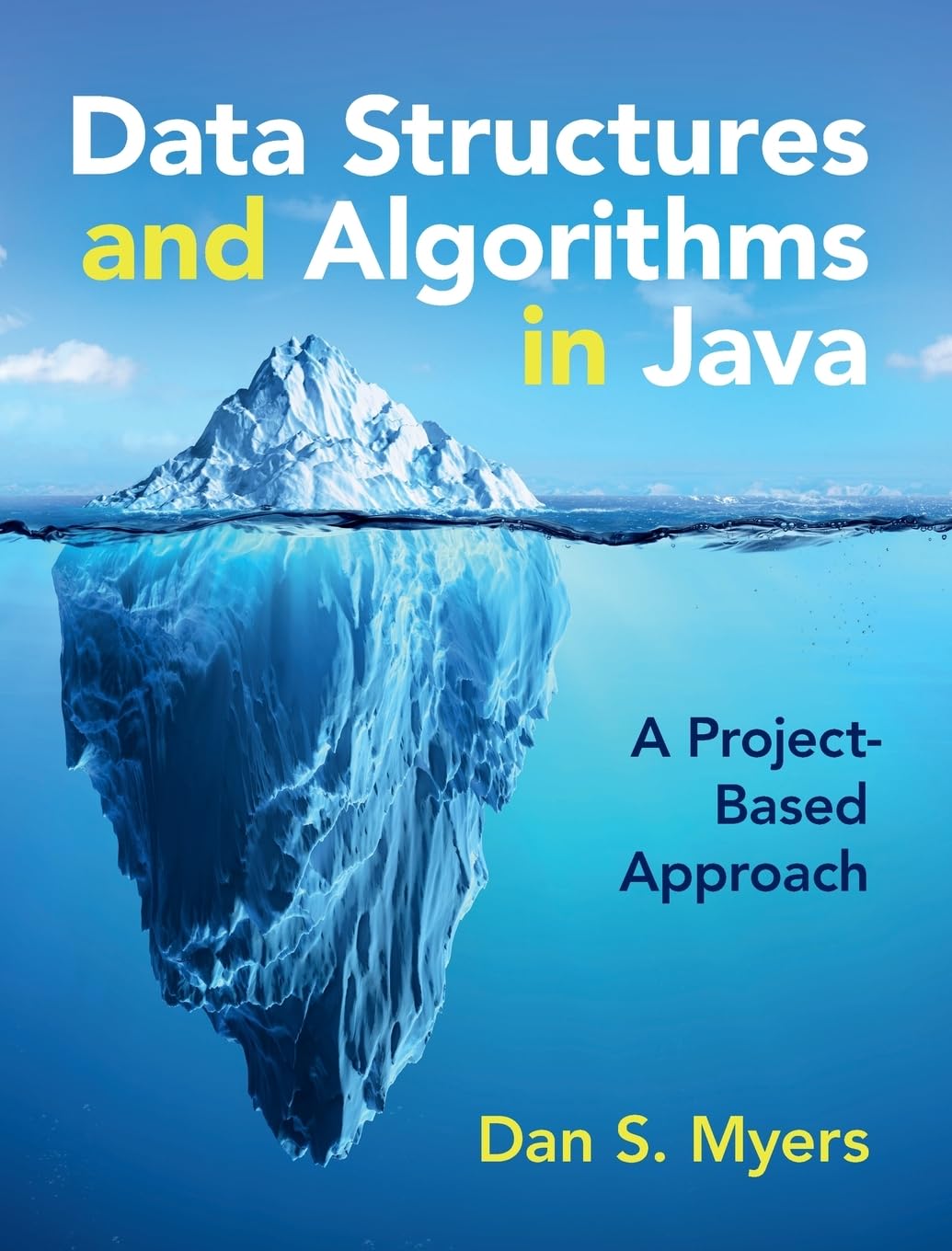
Data Structures and Algorithms in Java: A Project-Based Approach
Foundations → Practitioner
This book is for readers who already have some programming exposure and want to connect Java code with core computer science ideas. The shift is clear: before reading, data structures and algorithms can feel like abstract interview material; after reading, they become tools for solving real programming problems. Practice matters. The book builds that practice through Java implementations of arrays, lists, recursion, sorting, hashing, trees, heaps, graphs, and Big-O analysis. It also uses projects such as turtle graphics, Snake, generative art, password cracking, a search engine, and a recommendation engine to connect theory with working programs. This is not a shortcut. It is a hands-on learning tool for building problem-solving discipline, stronger implementation habits, and the judgment to choose better structures over time.
Modern Java & Concurrency
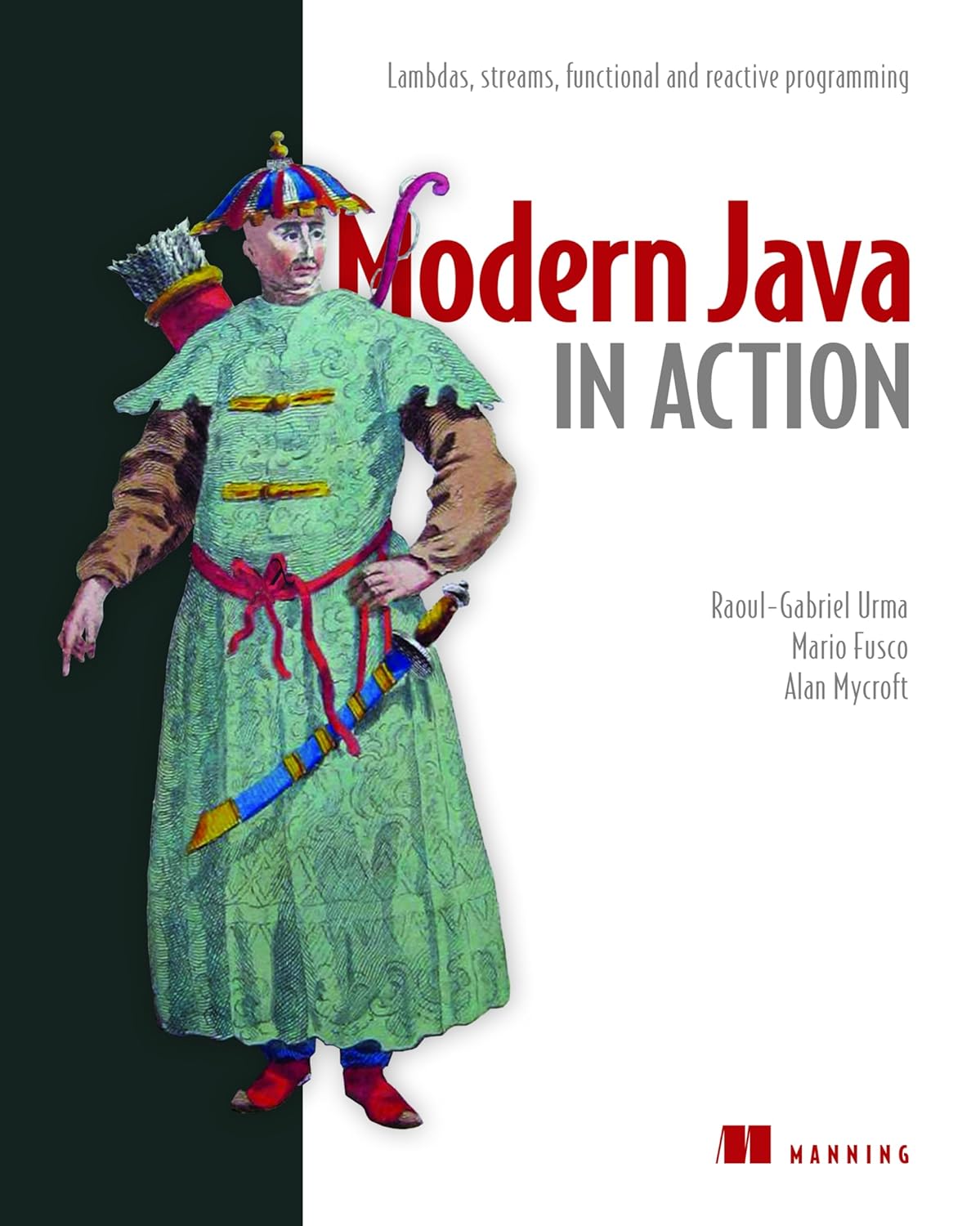
Modern Java in Action
Practitioner → Depth
This book is for Java developers who already know the language but want to write code that fits the way Java changed after lambdas, streams, and CompletableFuture. The shift is clear: before reading, you may treat collections, threads, and null handling as separate coding problems; after reading, you see how behavior parameterization, pipelines, Optional, and asynchronous APIs create a more consistent style. Code becomes more expressive. The book builds the practice of moving from loop-by-loop thinking to describing data processing with streams, while still paying attention to parallel processing and shared mutable state. It also gives a grounded path into modules and reactive programming without making them feel detached from everyday Java. Over time, this helps a developer build judgment about when language features clarify design and when they add unnecessary complexity.
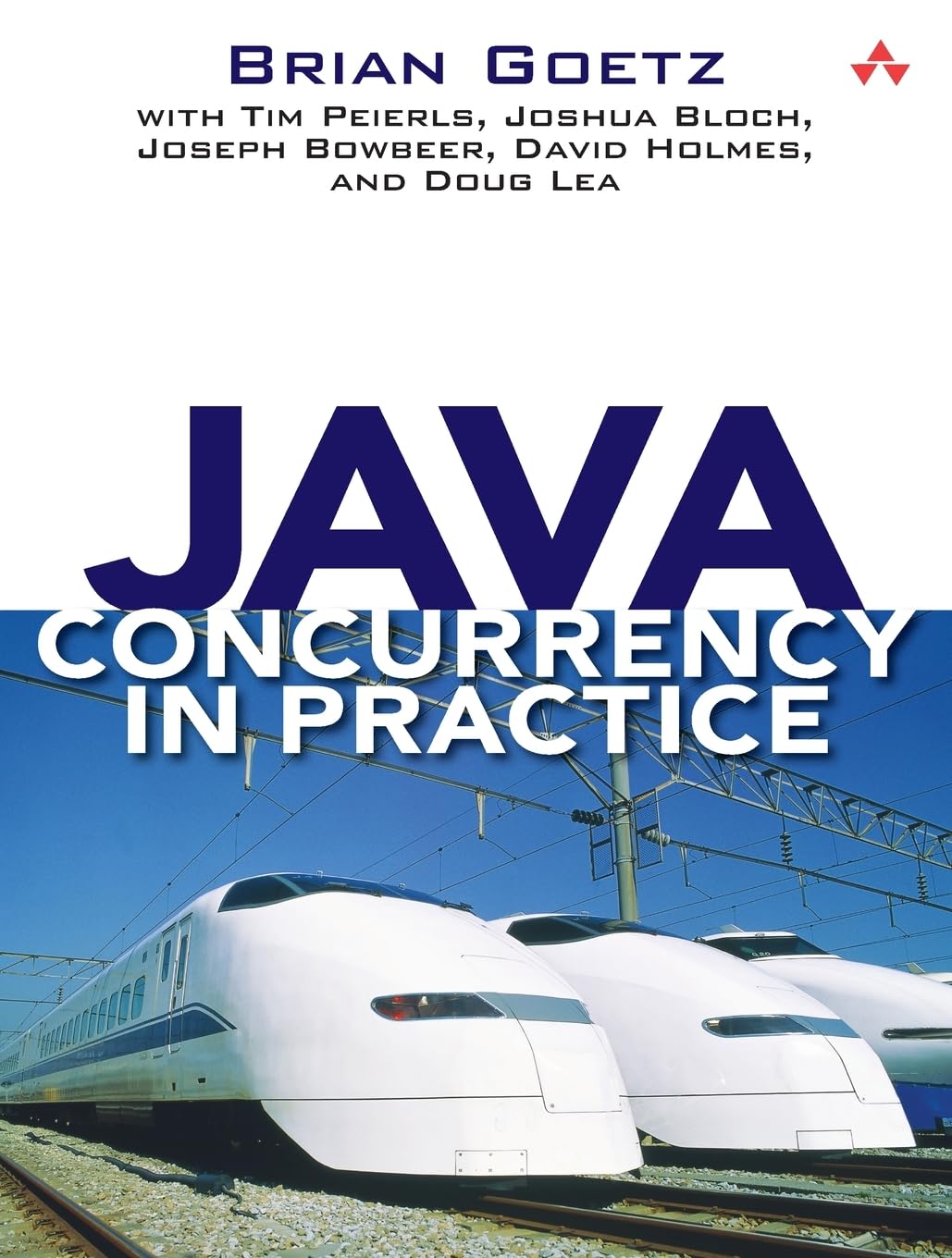
Java Concurrency in Practice
Practitioner, Architect
This book is for developers who are already building systems and now must make them correct under pressure. The shift is clear: from writing code that works in a single thread to designing systems that remain safe and predictable under concurrency. Concurrency changes everything. That pattern shows up in how you think about shared state, immutability, and safe publication. Instead of reacting to race conditions after they appear, you learn to design classes that are thread safe by construction. This habit compounds over time. Systems scale more cleanly. Failures become rarer and easier to reason about. That discipline matters most when systems grow and teams expand. Good concurrency design protects the future. It builds a foundation for long term architectural stability and thoughtful engineering leadership.
Performance & JVM Internals
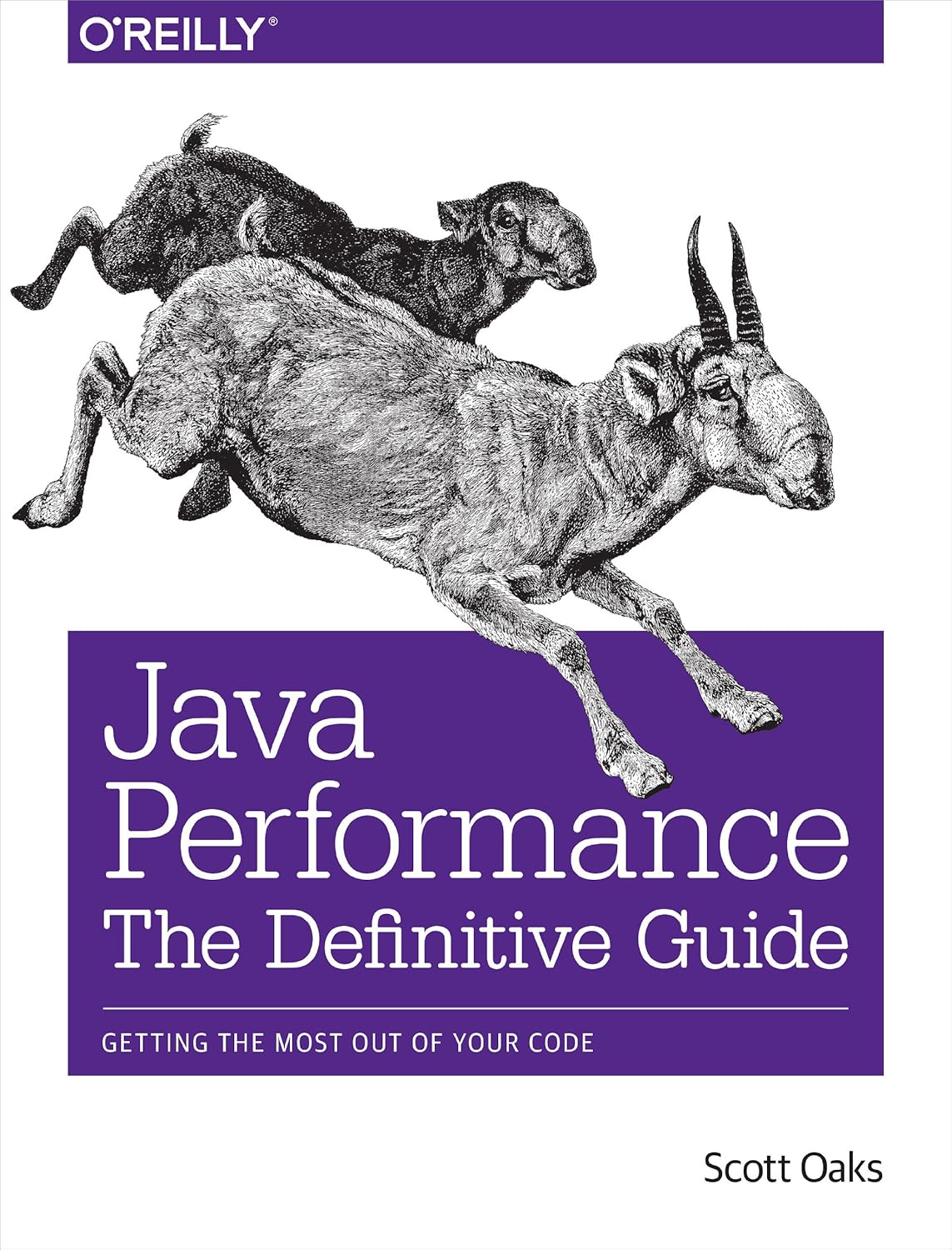
Java Performance: The Definitive Guide
Practitioner → Depth
This book is for Java developers who can already build working applications but want to understand why those applications slow down under real conditions. The shift is clear: before reading, you may treat performance as tuning flags and faster code; after reading, you see it as measurement, evidence, and runtime behavior working together. Data comes first. The book builds that practice through benchmarking, profiling, garbage collection, JIT compilation, heap use, native memory, thread behavior, and tools such as Java Flight Recorder. It also keeps the reader honest about full-system testing, because a JVM issue may not be the real bottleneck. This is a learning tool for developing performance judgment, not a bag of shortcuts. Over time, that judgment helps developers make better tradeoffs when Java systems need to stay fast, stable, and understandable.
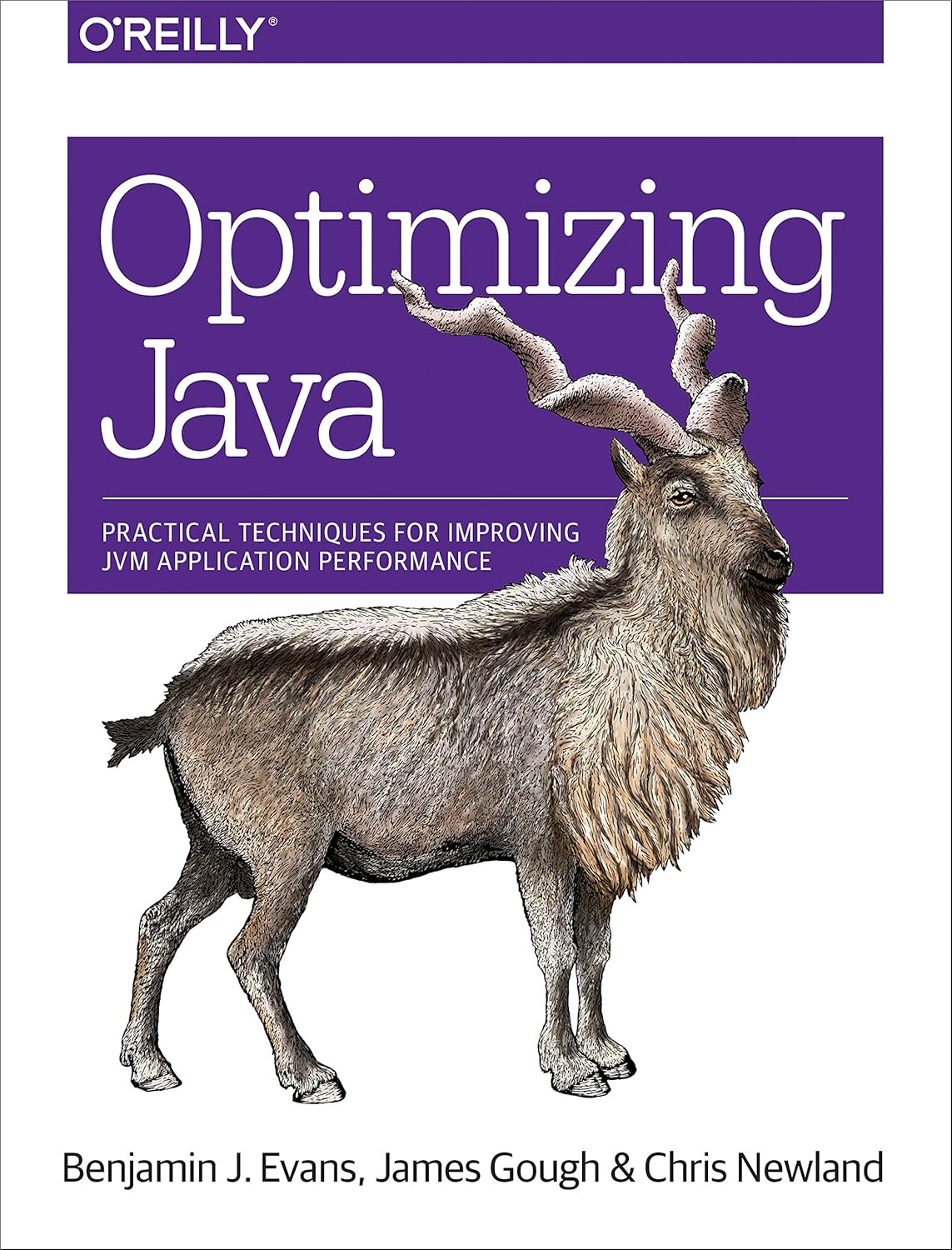
Optimizing Java: Practical Techniques for Improving JVM Application Performance
Practitioner → Depth
This book is for Java developers who already understand the language but want a more disciplined way to reason about runtime behavior. The shift is clear: before reading, performance can feel like scattered tuning advice; after reading, it becomes a measured practice built on evidence, models, and repeatable tests. Measurement comes first. The book builds that practice through JVM internals, HotSpot, garbage collection, JIT compilation, benchmarking, profiling, GC logs, and hardware-aware thinking. It also treats concurrency as part of the performance picture, with attention to the Java Memory Model, atomics, locks, executors, Fork/Join, and parallel streams. This is not a shortcut. It helps the reader build the patience to test carefully, interpret data honestly, and make stronger performance decisions over time.
Building Systems at Scale
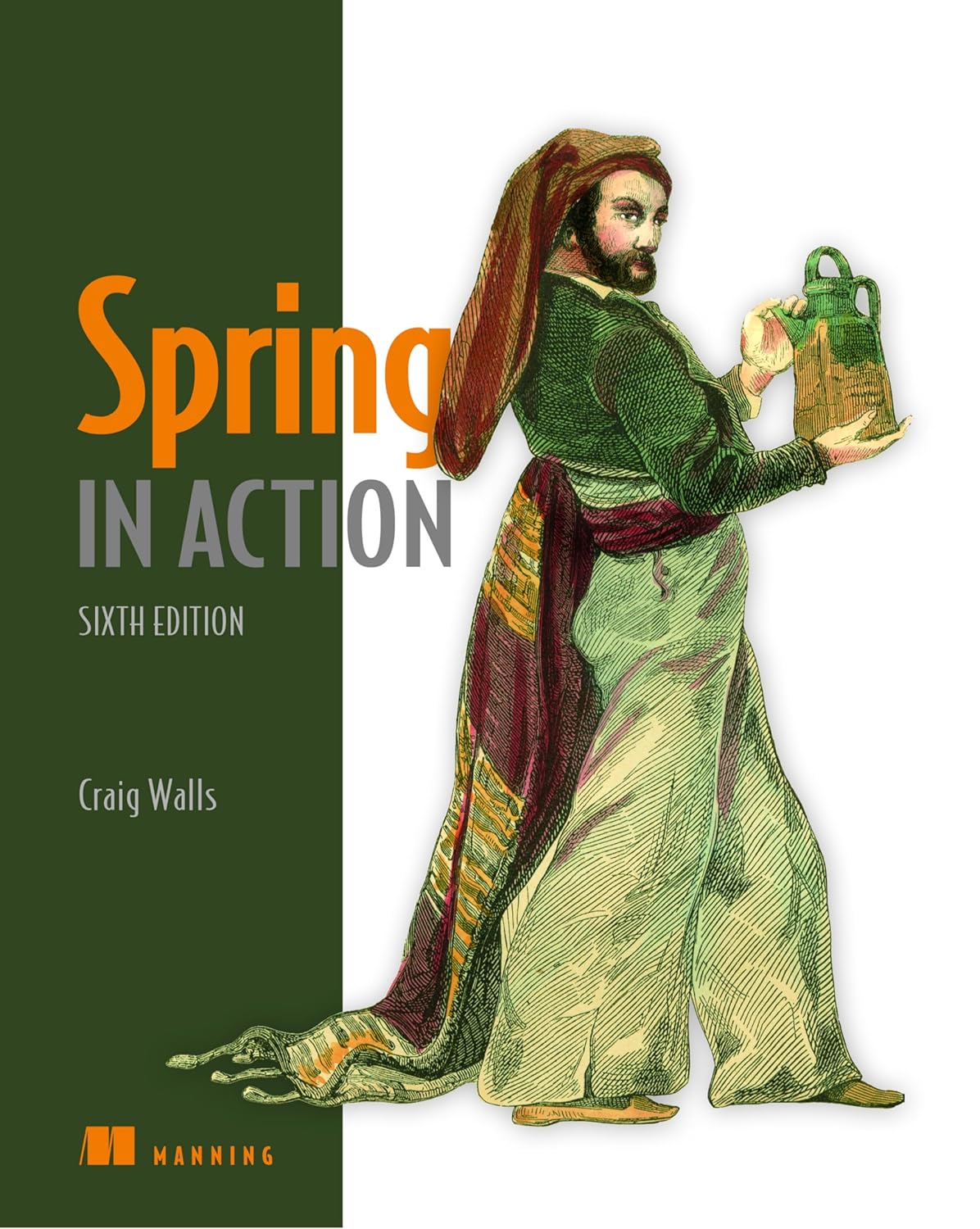
Spring in Action
Practitioner → Architect
This book is for Java developers who want to move from writing isolated application code to understanding how a Spring application comes together as a working system. The shift is clear: before reading, Spring can feel like a collection of annotations and starters; after reading, you see controllers, data access, security, messaging, reactive APIs, monitoring, and deployment as connected parts of one application model. Structure matters. The book builds that practice through a hands-on project that uses Spring Boot, Spring MVC, Spring Data, Spring Security, Reactor, WebFlux, Actuator, JMX, container images, and Kubernetes deployment. It is not a shortcut into Spring. It is a learning tool for seeing how framework choices shape application structure, operating behavior, and long-term maintainability. Over time, that view helps developers make steadier decisions when building Java systems that need to grow.
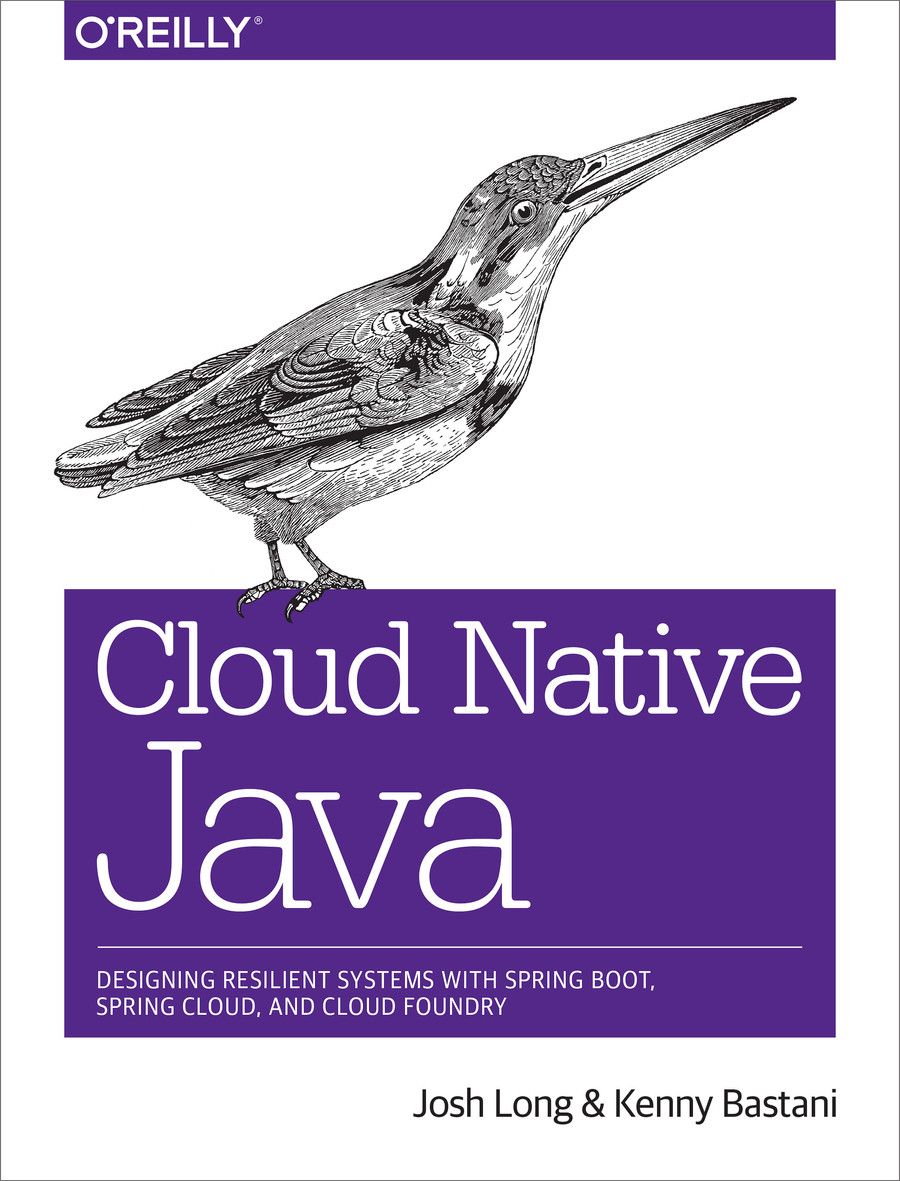
Cloud Native Java: Designing Resilient Systems with Spring Boot, Spring Cloud, and Cloud Native
Practitioner → Architect
This book is for Java developers who already know how to build applications and now need to understand how those applications behave when they become distributed systems. The shift is clear: before reading, cloud native can feel like deployment vocabulary; after reading, it becomes a way to connect architecture, operations, testing, configuration, and delivery. Systems need discipline. The book builds that practice through Spring Boot, Spring Cloud, twelve-factor application ideas, microservices, observability, service gateways, messaging, and continuous delivery. It also keeps the reader close to real operating concerns: externalized configuration, integration testing, state, routing, and production feedback. This is not a shortcut into cloud native development. It is a learning tool for seeing how Java applications move from code to running systems. Over time, that view helps developers make steadier choices when software must scale, recover, and keep changing.

Jakarta EE Cookbook: Practical recipes for enterprise Java developers to deliver large scale applications with Jakarta EE
Practitioner → Architect
This book is for Java developers who already understand application basics and want a practical path into enterprise Jakarta EE work. The shift is clear: before reading, Jakarta EE can feel like a collection of APIs; after reading, it becomes a set of recipes for building services, securing applications, managing persistence, and deploying systems. Recipes reduce guesswork. The book builds that practice through JAX-RS, JSON-P, JSON-B, JSF, servlets, authentication, authorization, messaging, transactions, Eclipse MicroProfile, Docker, OpenShift, cloud, and continuous delivery. It also connects server-side development with larger concerns such as microservices, containers, and deployment pipelines. This is not a shortcut into enterprise Java. It is a hands-on learning tool for turning platform features into working application patterns and building steadier judgment over time.
AI & Emerging Java Systems
![Book cover for Spring AI in Action featuring a vintage-clad figure beside a red vertical stripe and bold title on white background, Manning logo at bottom.]','Cover art for Spring AI in Action with a historical figure next to the title by Craig Walls, Manning logo shown below.](https://asir4.selvasingh.com/wp-content/uploads/2026/06/Walls-HI.jpg)
Spring AI in Action
Practitioner → Architect
This book is for developers who already build Spring applications and now want to add real intelligence to them. The shift is clear: from calling a model to designing AI systems with structure and guardrails. Intelligence needs architecture. Craig Walls shows how patterns like Retrieval-Augmented Generation and AI agents fit inside the Spring ecosystem without turning your codebase into an experiment. One habit this book builds is separating model logic from application boundaries, especially when working with embeddings, vector stores, and tool orchestration. That discipline matters. Over time, it helps teams build AI features that are testable, replaceable, and easier to reason about. For architects, it sharpens judgment around abstraction, provider flexibility, and system reliability. AI is not just prompts. It is system design. This book helps you design it with intention.
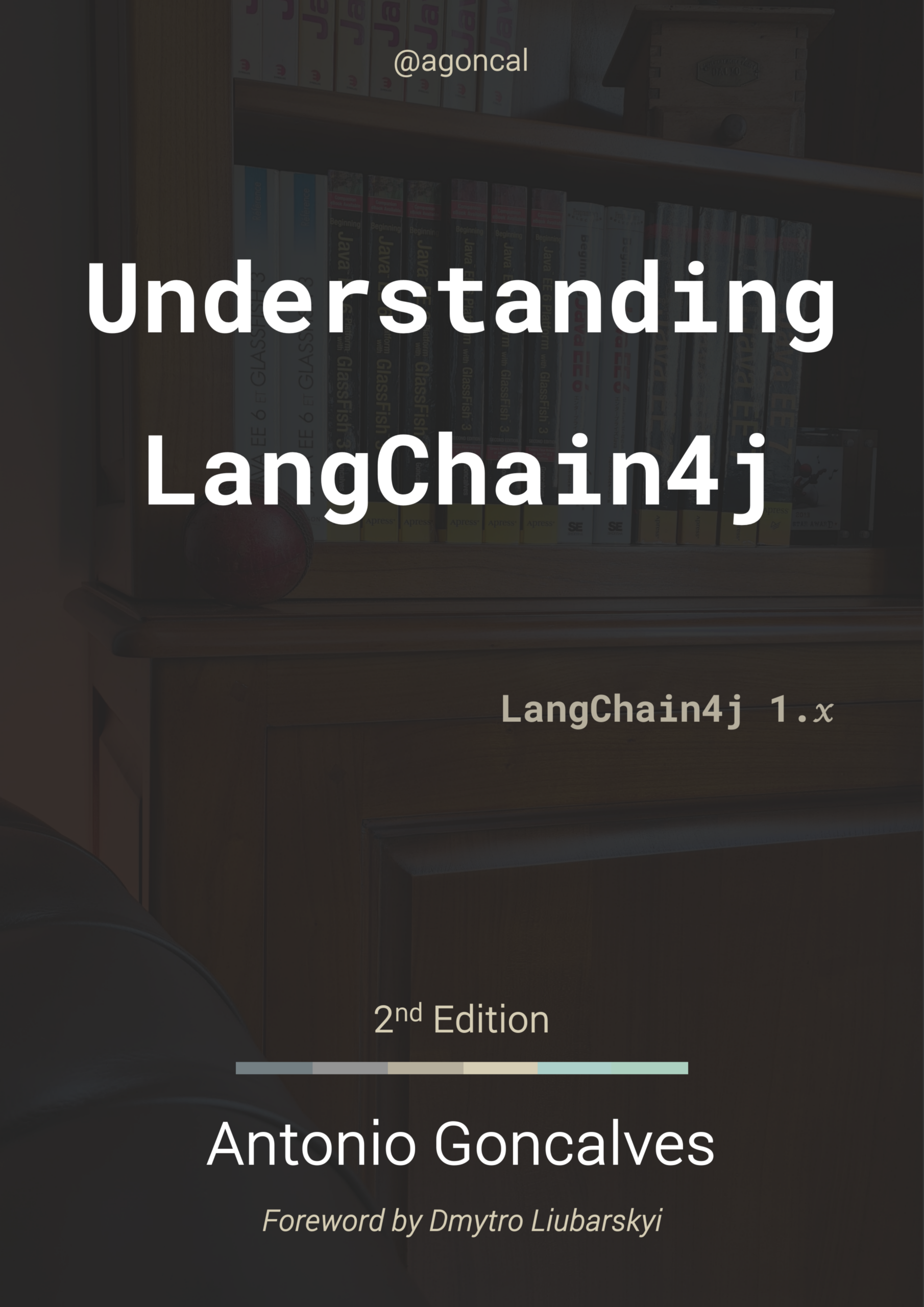
Fascicle: Understanding LangChain4j – v1.0.1: A Deep Dive Into LangChain4j 1.0.1
Practitioner → Architect
This book is for Java developers who are actively building AI features and beginning to shape architectural decisions around them. The shift is clear: from experimenting with prompts to designing structured AI systems grounded in retrieval, embeddings, and agent workflows. Structure matters. That pattern shows up in how the book treats RAG, vector databases, document splitting, and function calling as deliberate design choices rather than isolated tricks. You learn to separate model behavior from application responsibility, to manage context windows intentionally, and to treat hallucination control as an engineering concern. This discipline compounds over time. It helps you build AI features that are maintainable, testable, and aligned with real system constraints. That foundation prepares you to move from adding intelligence to applications toward shaping intelligent systems deliberately and responsibly.
Interview Preparation
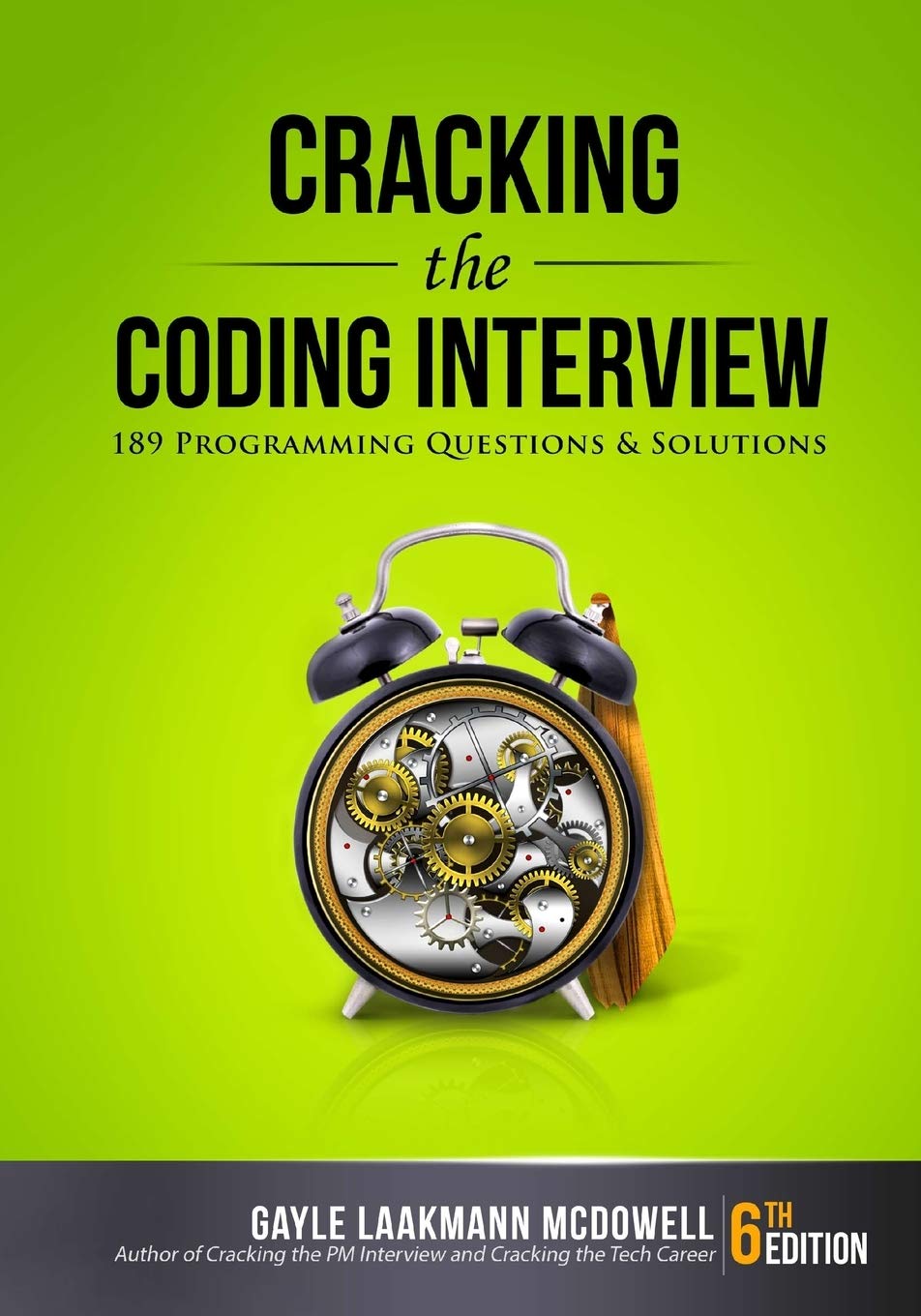
Cracking the Coding Interview: 189 Programming Questions and Solutions
Foundations → Practitioner
This book is for developers who need to prepare for software engineering interviews where algorithms, coding, and communication are tested under pressure. The shift is clear: before reading, interview preparation can feel like memorizing answers; after reading, it becomes a practice of solving problems, explaining tradeoffs, writing code, and testing your thinking. Practice changes the outcome. The book builds that practice through Big O, data structures, recursion, dynamic programming, sorting, searching, system design, Java basics, threads and locks, behavioral questions, hints, and worked solutions. It also reinforces a disciplined interview rhythm: understand the problem, start with brute force, optimize, code carefully, and test. This is a learning tool, not a shortcut. Over time, that preparation helps developers strengthen problem-solving habits that matter beyond the interview itself.
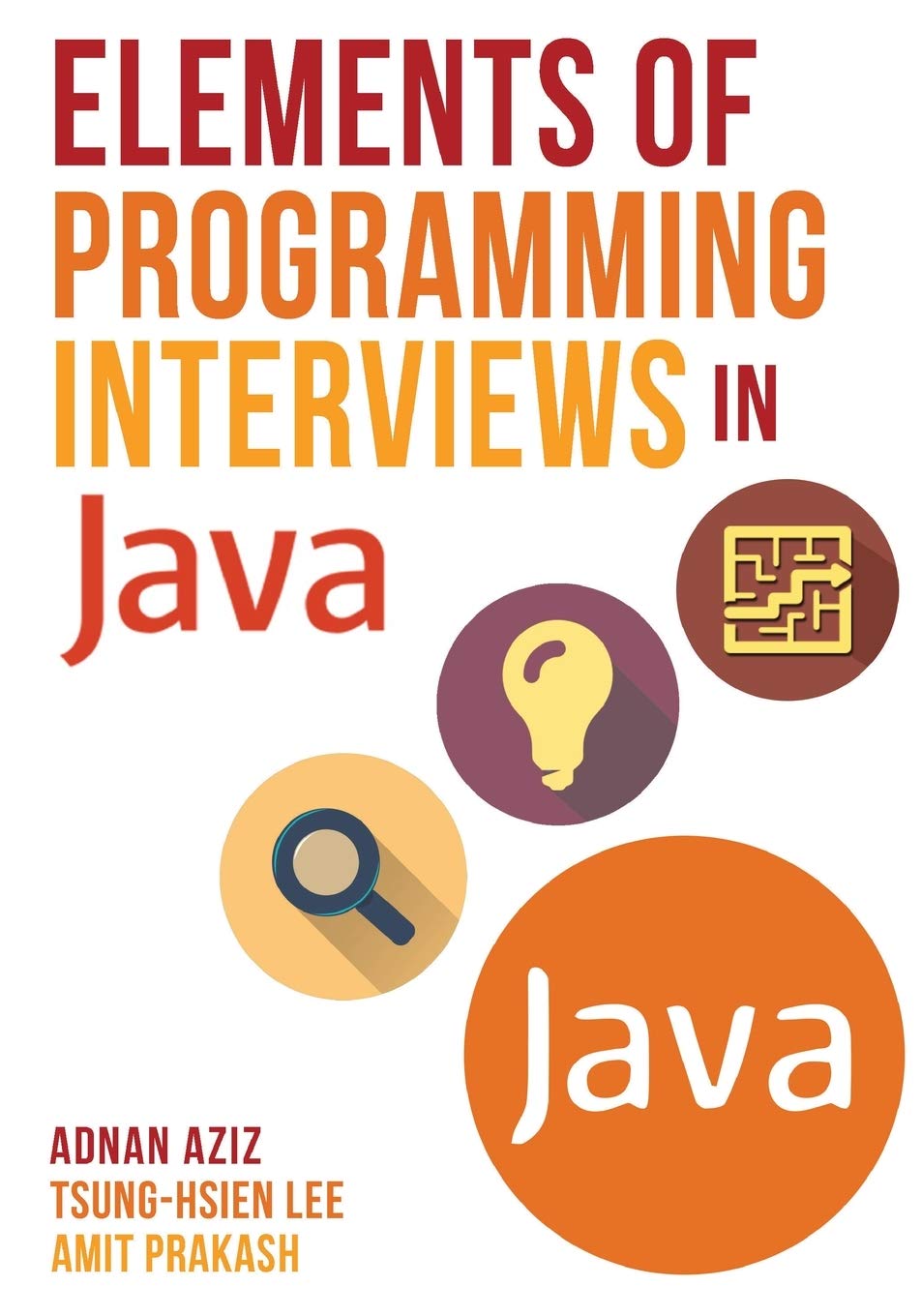
Elements of Programming Interviews: The Insiders’ Guide
Foundations → Practitioner
This book is for developers who want interview preparation to become a structured practice, not a last-minute scramble. The shift is clear: before reading, coding interviews can feel like a pile of disconnected problems; after reading, they become a repeatable way to clarify, solve, code, test, and explain. Practice needs structure. The book builds that structure through data structures, algorithms, system design, Java solution code, complexity analysis, study plans, hints, and worked problem patterns. It also gives attention to the interview setting itself, including resumes, mock interviews, communication, company research, and offer negotiation. This is not a shortcut into interviewing. It is a learning tool for building problem-solving rhythm under pressure, and that rhythm can support stronger technical judgment long after the interview is over.
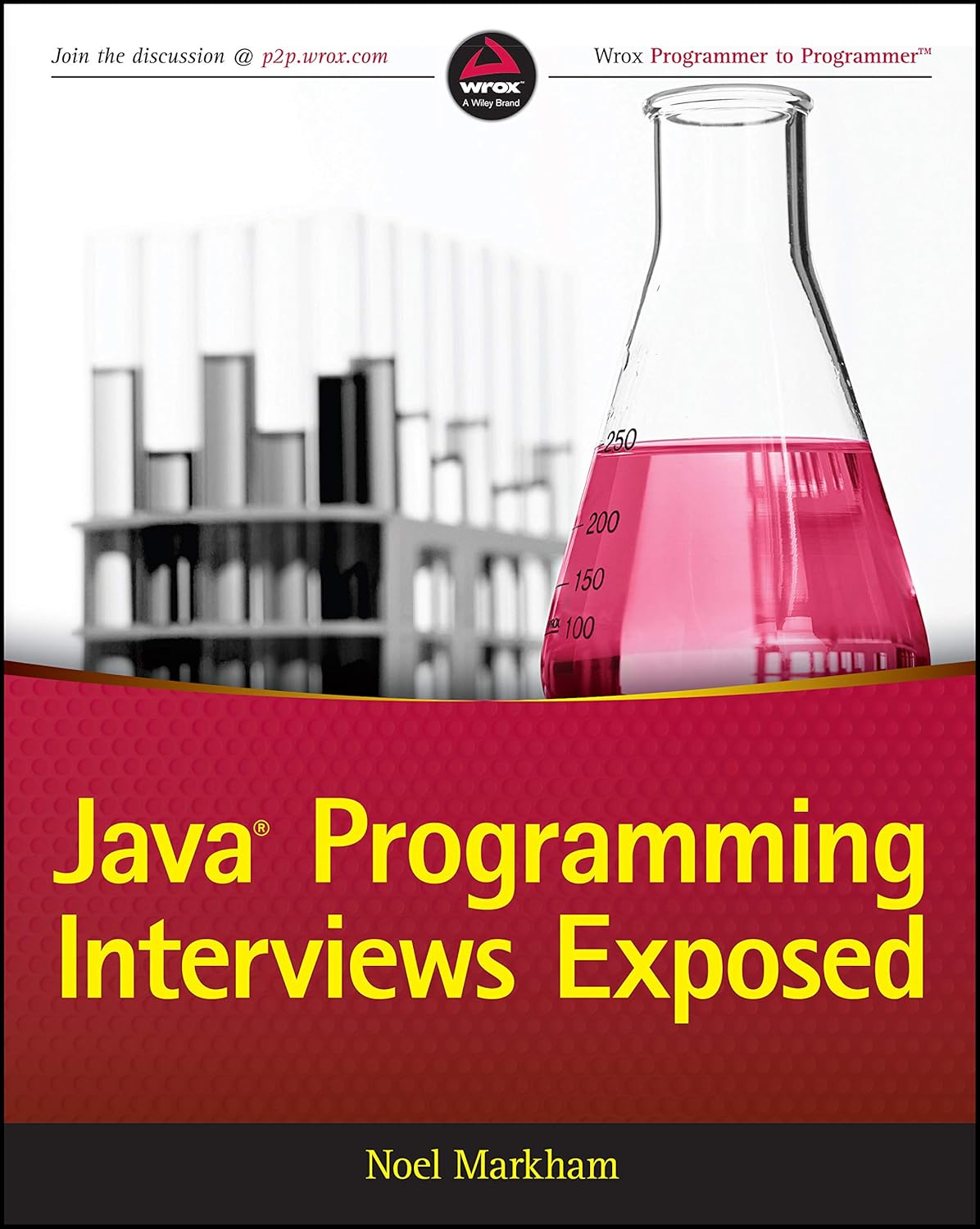
Java Programming Interviews Exposed
Foundations → Practitioner
This book is for Java developers who know the language but want a steadier way to prepare for technical interviews. The shift is clear: before reading, interview prep can feel like scattered review; after reading, it becomes a structured practice across questions, code, tests, and explanation. Preparation needs rhythm. The book builds that rhythm through interview formats, resume guidance, Big O notation, sorting, searching, data structures, design patterns, JUnit testing, JVM basics, concurrency, and common Java application components. It also reinforces habits that matter under pressure: write clearly, test your assumptions, explain tradeoffs, and understand the role before answering. This is not a shortcut into a job. It is a learning tool for turning Java knowledge into confident technical conversation, which supports better judgment long after the interview ends.
Capstone – The Java Engineering Arc
Java mastery is not built by learning one feature at a time. It is built by layering judgment. These books begin with foundations because good engineers first need a clear mental model of the language, its syntax, and its core libraries. They then move into object-oriented depth, where code becomes more than instructions and starts becoming design. From there, the arc moves into craft, patterns, algorithms, concurrency, performance, and JVM internals. Each layer strengthens how you reason about tradeoffs. Enterprise and cloud-native books then show how Java systems behave at scale, across teams, services, and production pressure. The AI books extend that foundation into emerging systems, where intelligence still needs structure, boundaries, and discipline. The arc is simple: learn the language, think in systems, write with care, measure what matters, and build for change. Over time, that discipline turns Java from a tool into engineering judgment.
Design better systems, avoid common traps, and build software that endures, from the fundamentals to enterprise scale.
Java mastery is not built in random steps. It grows in layers. First, you learn the language, its syntax, and its core libraries. Then you learn to think more clearly about objects, APIs, structure, and how code evolves over time. From there, you build the habits that make code easier to read, test, maintain, and extend. Algorithms sharpen problem-solving. Concurrency and performance deepen your understanding of how Java behaves under pressure. Frameworks, enterprise systems, and cloud-native patterns show how applications grow across teams, services, and production environments. AI adds a newer layer, but the same engineering discipline still applies.
This curated shelf is not just a list of books. It is a progression. Each stage builds on the one before it. Each book strengthens a specific layer of skill, from first exposure to deeper judgment. The goal is not to collect references or move fast through titles. The goal is to build understanding that compounds over time.
Good systems come from disciplined growth. So do good engineers.
Start Here – Foundations (First Exposure to Java)
Java For Dummies
Foundations
This book is for readers who are learning how Java programs are built from the ground up. The shift is clear: from seeing code as strange syntax to understanding how instructions, variables, methods, and objects work together. Start small. The book uses complete code examples, setup guidance, diagrams, exercises, and beginner-oriented explanations to make Java less abstract. It introduces the habit of writing, running, testing, and modifying code instead of only reading about concepts. It also gives early exposure to the JDK, IDEs, JShell, JavaFX, collections, streams, and Java 23 preview features. That pattern matters because early habits shape how developers read errors, trace logic, and build confidence. Over time, this foundation supports cleaner debugging, steadier practice, and better technical judgment.
Head First Java: A Brain-Friendly Guide
Foundations
This book is for someone who wants to learn Java by building a working mental model, not by memorizing syntax. The before and after shift is clear: before reading, Java can feel like disconnected rules; after reading, classes, objects, methods, variables, and the JVM start to fit together as one system. Start with the basics. The book uses visual explanations, exercises, puzzles, and code walkthroughs to make readers practice the ideas rather than just read about them. It also introduces object-oriented thinking, collections, exception handling, I/O, and threads in a way that keeps the focus on how Java programs actually behave. Treat it as a learning tool, not a shortcut. Over time, that kind of practice builds cleaner habits, stronger judgment, and a more durable foundation for writing Java code.
Core Java Volume I – Fundamentals
Foundations → Practitioner
This book is for programmers who already know how to think in code and want to understand Java with care. It helps move the reader from writing Java that merely runs to writing Java with a clearer grasp of language rules, libraries, tools, and tradeoffs. Details matter. The book builds that habit through sample programs, API notes, command-line practice, JShell, Eclipse setup, object-oriented programming, generics, collections, concurrency, annotations, and the module system. It also reflects Java 21, so the reader sees the language as it is used now, not only as it began. This is not a shortcut. It is a steady learning tool for building fluency in the language and the platform. Over time, that fluency becomes part of durable engineering judgment.
Java: The Complete Reference
Foundations → Practitioner
This book is for readers who want one broad place to understand Java as a language and as a working platform. It helps move a learner from scattered syntax knowledge to a more connected view of how Java programs are written, compiled, run, and extended. Start with structure. The book builds from data types, control statements, classes, inheritance, exceptions, and generics into libraries, streams, modules, concurrency utilities, and newer Java SE 21 features such as record patterns, sequenced collections, and virtual threads. It also gives readers a practical rhythm through examples, reference-style explanations, JShell, documentation comments, and single-file program execution. This is not a shortcut. It is a steady learning tool for building vocabulary, confidence, and context across the Java platform. Over time, that wider base supports better technical judgment and more durable engineering practice.
Developing Technical Judgement
Thinking in Java
Foundations → Practitioner
This book is for readers who already know basic programming and want to understand Java as a way of thinking, not just a list of syntax rules. Before reading, you may see classes, inheritance, interfaces, and exceptions as separate topics. After reading, you start seeing how Java uses objects, types, boundaries, and reuse to manage complexity. That shift matters. Bruce Eckel spends time on abstraction, hidden implementation, composition, polymorphism, containers, and error handling, which helps readers build a mental model for why code is shaped a certain way. The book also uses examples, exercises, and design discussion to make the learning active. It is not a shortcut. It is a patient tool for building judgment that can carry forward into durable Java practice.
Effective Java
Practitioner → Architect
Effective Java is for developers who already know Java and want to write with more care. The shift is simple: you move from code that works today to code that holds up under change. Judgment beats shortcuts. Joshua Bloch uses 90 focused items to show how small choices shape long-term quality, from static factory methods and builders to equals, hashCode, generics, lambdas, streams, exceptions, concurrency, and serialization. The value is not in memorizing rules. It is in learning how to think through API design, component boundaries, mutability, reuse, and failure. The book keeps returning to clarity, simplicity, correctness, robustness, flexibility, and maintainability. Over time, that practice helps a Java developer build stronger habits, make cleaner tradeoffs, and grow into durable engineering judgment.
Writing Code That Lasts (Craft & Structure)
Clean Code: A Handbook of Agile Software Craftsmanship
Practitioner → Architect
Clean Code is for developers who can already write working programs but want their code to age better inside real teams. The shift is simple: you move from making code pass to making code readable, changeable, and easier to trust. Small things matter. Robert C. Martin frames code as something other people must read, maintain, test, and reshape over time. The book builds that practice through naming, functions, comments, error handling, unit tests, classes, systems, concurrency, refactoring, and code smells. It does not offer a shortcut. It asks the reader to study code, clean code, and practice the judgment behind each change. Over time, that discipline helps a Java developer write with more care, reduce avoidable complexity, and grow toward durable engineering judgment.
Head First Design Patterns: A Brain-Friendly Guide
Practitioner → Architect
This book is for Java developers who know object-oriented basics but want to design code that handles change with less strain. The shift is clear: before reading, inheritance and interfaces can feel like isolated language tools; after reading, they become part of a larger design vocabulary. Change is constant. The book builds that practice through the SimUDuck and Weather Station examples, showing how to identify what varies, encapsulate it, program to an interface, favor composition over inheritance, and use patterns such as Strategy and Observer. It also teaches why shared pattern language helps teams stay at the design level instead of getting lost in implementation details. This is not a shortcut. It is a learning tool for building flexible code, clearer communication, and durable design judgment.
Core Computer Science Discipline
Data Structures and Algorithms in Java: A Project-Based Approach
Foundations → Practitioner
This book is for readers who already have some programming exposure and want to connect Java code with core computer science ideas. The shift is clear: before reading, data structures and algorithms can feel like abstract interview material; after reading, they become tools for solving real programming problems. Practice matters. The book builds that practice through Java implementations of arrays, lists, recursion, sorting, hashing, trees, heaps, graphs, and Big-O analysis. It also uses projects such as turtle graphics, Snake, generative art, password cracking, a search engine, and a recommendation engine to connect theory with working programs. This is not a shortcut. It is a hands-on learning tool for building problem-solving discipline, stronger implementation habits, and the judgment to choose better structures over time.
Modern Java & Concurrency
Modern Java in Action
Practitioner → Depth
This book is for Java developers who already know the language but want to write code that fits the way Java changed after lambdas, streams, and CompletableFuture. The shift is clear: before reading, you may treat collections, threads, and null handling as separate coding problems; after reading, you see how behavior parameterization, pipelines, Optional, and asynchronous APIs create a more consistent style. Code becomes more expressive. The book builds the practice of moving from loop-by-loop thinking to describing data processing with streams, while still paying attention to parallel processing and shared mutable state. It also gives a grounded path into modules and reactive programming without making them feel detached from everyday Java. Over time, this helps a developer build judgment about when language features clarify design and when they add unnecessary complexity.
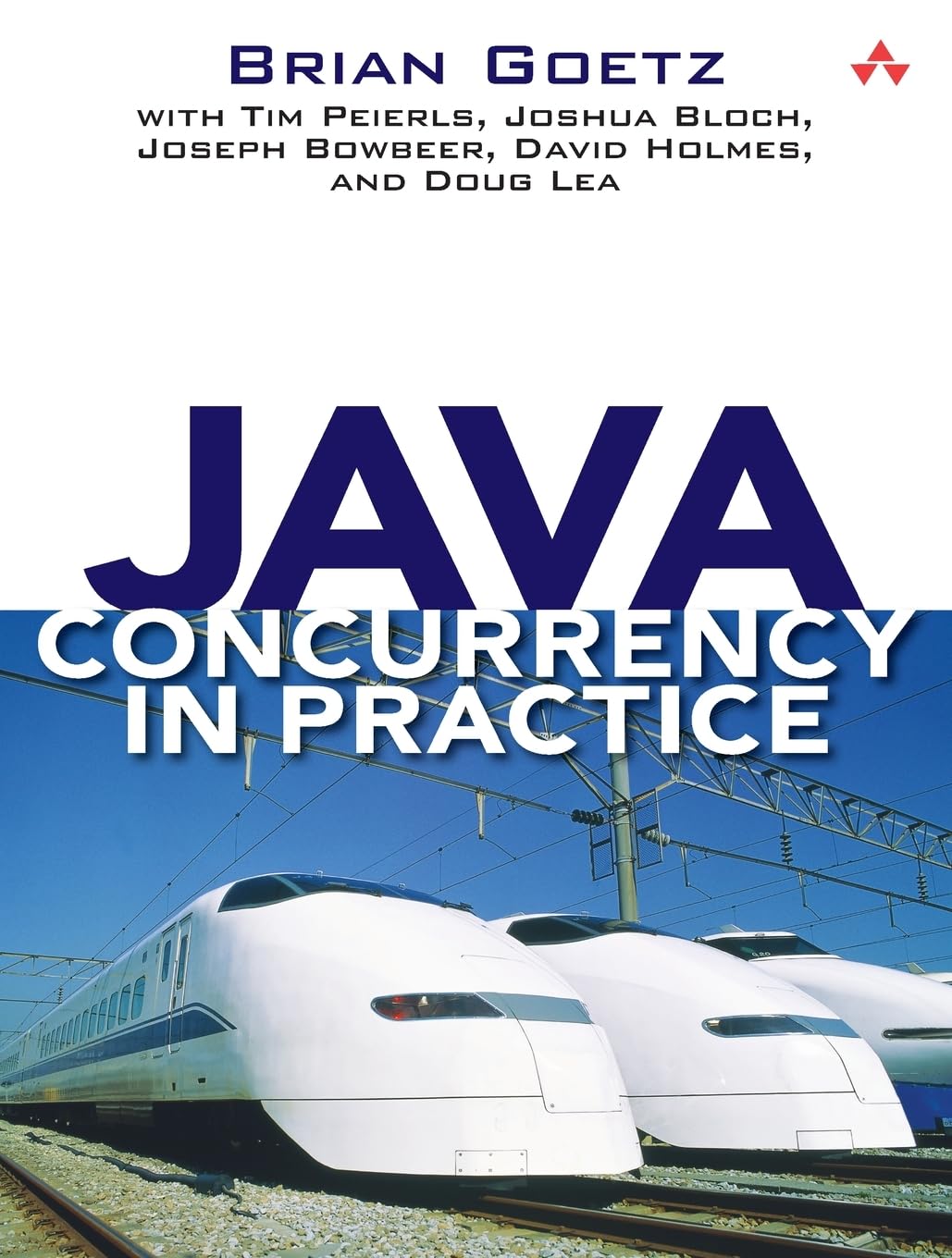
Java Concurrency in Practice
Practitioner → Depth
This book is for Java developers who already understand basic threading but want to stop treating concurrency as scattered API usage. The shift is clear: before reading, you may see synchronized, volatile, locks, executors, and concurrent collections as separate tools; after reading, you see them as part of a design discipline for protecting shared state. Correctness comes first. The book builds that discipline through thread safety, visibility, atomicity, safe publication, cancellation, shutdown, testing, and performance tradeoffs. It also shows why code can appear to work and still be broken under real timing, load, or interleaving. This is not a shortcut into parallel programming. It is a careful learning tool for building safer classes, clearer synchronization policies, and stronger judgment when Java systems need to run correctly under concurrency.
Performance & JVM Internals
Java Performance: The Definitive Guide
Practitioner → Depth
This book is for Java developers who can already build working applications but want to understand why those applications slow down under real conditions. The shift is clear: before reading, you may treat performance as tuning flags and faster code; after reading, you see it as measurement, evidence, and runtime behavior working together. Data comes first. The book builds that practice through benchmarking, profiling, garbage collection, JIT compilation, heap use, native memory, thread behavior, and tools such as Java Flight Recorder. It also keeps the reader honest about full-system testing, because a JVM issue may not be the real bottleneck. This is a learning tool for developing performance judgment, not a bag of shortcuts. Over time, that judgment helps developers make better tradeoffs when Java systems need to stay fast, stable, and understandable.
Optimizing Java: Practical Techniques for Improving JVM Application Performance
Practitioner → Depth
This book is for Java developers who already understand the language but want a more disciplined way to reason about runtime behavior. The shift is clear: before reading, performance can feel like scattered tuning advice; after reading, it becomes a measured practice built on evidence, models, and repeatable tests. Measurement comes first. The book builds that practice through JVM internals, HotSpot, garbage collection, JIT compilation, benchmarking, profiling, GC logs, and hardware-aware thinking. It also treats concurrency as part of the performance picture, with attention to the Java Memory Model, atomics, locks, executors, Fork/Join, and parallel streams. This is not a shortcut. It helps the reader build the patience to test carefully, interpret data honestly, and make stronger performance decisions over time.
Building Systems at Scale
Spring in Action
Practitioner → Architect
This book is for Java developers who want to move from writing isolated application code to understanding how a Spring application comes together as a working system. The shift is clear: before reading, Spring can feel like a collection of annotations and starters; after reading, you see controllers, data access, security, messaging, reactive APIs, monitoring, and deployment as connected parts of one application model. Structure matters. The book builds that practice through a hands-on project that uses Spring Boot, Spring MVC, Spring Data, Spring Security, Reactor, WebFlux, Actuator, JMX, container images, and Kubernetes deployment. It is not a shortcut into Spring. It is a learning tool for seeing how framework choices shape application structure, operating behavior, and long-term maintainability. Over time, that view helps developers make steadier decisions when building Java systems that need to grow.
Cloud Native Java: Designing Resilient Systems with Spring Boot, Spring Cloud, and Cloud Native
Practitioner → Architect
This book is for Java developers who already know how to build applications and now need to understand how those applications behave when they become distributed systems. The shift is clear: before reading, cloud native can feel like deployment vocabulary; after reading, it becomes a way to connect architecture, operations, testing, configuration, and delivery. Systems need discipline. The book builds that practice through Spring Boot, Spring Cloud, twelve-factor application ideas, microservices, observability, service gateways, messaging, and continuous delivery. It also keeps the reader close to real operating concerns: externalized configuration, integration testing, state, routing, and production feedback. This is not a shortcut into cloud native development. It is a learning tool for seeing how Java applications move from code to running systems. Over time, that view helps developers make steadier choices when software must scale, recover, and keep changing.
Jakarta EE Cookbook: Practical recipes for enterprise Java developers to deliver large scale applications with Jakarta EE
Practitioner → Architect
This book is for Java developers who already understand application basics and want a practical path into enterprise Jakarta EE work. The shift is clear: before reading, Jakarta EE can feel like a collection of APIs; after reading, it becomes a set of recipes for building services, securing applications, managing persistence, and deploying systems. Recipes reduce guesswork. The book builds that practice through JAX-RS, JSON-P, JSON-B, JSF, servlets, authentication, authorization, messaging, transactions, Eclipse MicroProfile, Docker, OpenShift, cloud, and continuous delivery. It also connects server-side development with larger concerns such as microservices, containers, and deployment pipelines. This is not a shortcut into enterprise Java. It is a hands-on learning tool for turning platform features into working application patterns and building steadier judgment over time.
AI & Emerging Java Systems
Spring AI in Action
Practitioner → Architect
This book is for developers who already build Spring applications and now want to add real intelligence to them. The shift is clear: from calling a model to designing AI systems with structure and guardrails. Intelligence needs architecture. Craig Walls shows how patterns like Retrieval-Augmented Generation and AI agents fit inside the Spring ecosystem without turning your codebase into an experiment. One habit this book builds is separating model logic from application boundaries, especially when working with embeddings, vector stores, and tool orchestration. That discipline matters. Over time, it helps teams build AI features that are testable, replaceable, and easier to reason about. For architects, it sharpens judgment around abstraction, provider flexibility, and system reliability. AI is not just prompts. It is system design. This book helps you design it with intention.
Fascicle: Understanding LangChain4j – v1.0.1: A Deep Dive Into LangChain4j 1.0.1
Practitioner → Architect
This book is for Java developers who are actively building AI features and beginning to shape architectural decisions around them. The shift is clear: from experimenting with prompts to designing structured AI systems grounded in retrieval, embeddings, and agent workflows. Structure matters. That pattern shows up in how the book treats RAG, vector databases, document splitting, and function calling as deliberate design choices rather than isolated tricks. You learn to separate model behavior from application responsibility, to manage context windows intentionally, and to treat hallucination control as an engineering concern. This discipline compounds over time. It helps you build AI features that are maintainable, testable, and aligned with real system constraints. That foundation prepares you to move from adding intelligence to applications toward shaping intelligent systems deliberately and responsibly.
Interview Preparation
Cracking the Coding Interview: 189 Programming Questions and Solutions
Foundations → Practitioner
This book is for developers who need to prepare for software engineering interviews where algorithms, coding, and communication are tested under pressure. The shift is clear: before reading, interview preparation can feel like memorizing answers; after reading, it becomes a practice of solving problems, explaining tradeoffs, writing code, and testing your thinking. Practice changes the outcome. The book builds that practice through Big O, data structures, recursion, dynamic programming, sorting, searching, system design, Java basics, threads and locks, behavioral questions, hints, and worked solutions. It also reinforces a disciplined interview rhythm: understand the problem, start with brute force, optimize, code carefully, and test. This is a learning tool, not a shortcut. Over time, that preparation helps developers strengthen problem-solving habits that matter beyond the interview itself.
Elements of Programming Interviews: The Insiders’ Guide
Foundations → Practitioner
This book is for developers who want interview preparation to become a structured practice, not a last-minute scramble. The shift is clear: before reading, coding interviews can feel like a pile of disconnected problems; after reading, they become a repeatable way to clarify, solve, code, test, and explain. Practice needs structure. The book builds that structure through data structures, algorithms, system design, Java solution code, complexity analysis, study plans, hints, and worked problem patterns. It also gives attention to the interview setting itself, including resumes, mock interviews, communication, company research, and offer negotiation. This is not a shortcut into interviewing. It is a learning tool for building problem-solving rhythm under pressure, and that rhythm can support stronger technical judgment long after the interview is over.
Java Programming Interviews Exposed
Foundations → Practitioner
This book is for Java developers who know the language but want a steadier way to prepare for technical interviews. The shift is clear: before reading, interview prep can feel like scattered review; after reading, it becomes a structured practice across questions, code, tests, and explanation. Preparation needs rhythm. The book builds that rhythm through interview formats, resume guidance, Big O notation, sorting, searching, data structures, design patterns, JUnit testing, JVM basics, concurrency, and common Java application components. It also reinforces habits that matter under pressure: write clearly, test your assumptions, explain tradeoffs, and understand the role before answering. This is not a shortcut into a job. It is a learning tool for turning Java knowledge into confident technical conversation, which supports better judgment long after the interview ends.
Capstone – The Java Engineering Arc
Java mastery is not built by learning one feature at a time. It is built by layering judgment. These books begin with foundations because good engineers first need a clear mental model of the language, its syntax, and its core libraries. They then move into object-oriented depth, where code becomes more than instructions and starts becoming design. From there, the arc moves into craft, patterns, algorithms, concurrency, performance, and JVM internals. Each layer strengthens how you reason about tradeoffs. Enterprise and cloud-native books then show how Java systems behave at scale, across teams, services, and production pressure. The AI books extend that foundation into emerging systems, where intelligence still needs structure, boundaries, and discipline. The arc is simple: learn the language, think in systems, write with care, measure what matters, and build for change. Over time, that discipline turns Java from a tool into engineering judgment.
Develop the clarity of purpose, responsibility, and long-term thinking to go from leading projects and processes to leading people.
Leadership is not a title or a role. It is a progression. It begins with internal discipline and ownership. It expands into how we build trust and alignment with others. It matures into designing systems that create focus and accountability. And it endures when culture carries the work forward beyond any one individual.
These books are arranged to reflect that journey. They move from Self to Team to System to Culture. Each work strengthens a different layer of leadership maturity, helping you build not just results, but responsibility, coherence, and long-term institutional health.
SELF – Internal Discipline and Ownership
First correct perception. Then assume ownership. Then examine motive. Then act with intentional discipline. Then connect credibility to relational trust.
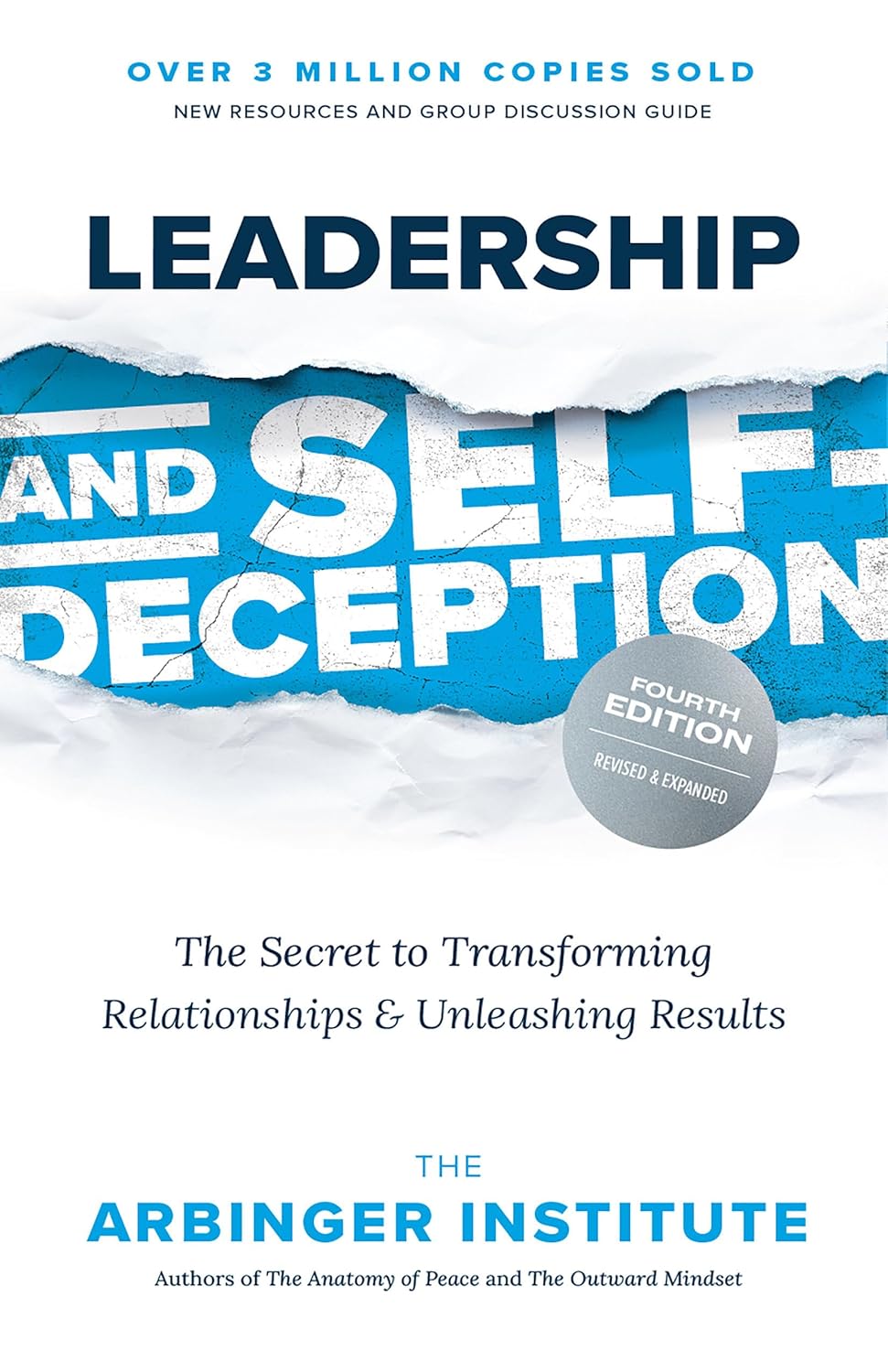
Leadership and Self-Deception
Leadership Lens: Self → Team
Leadership and Self-Deception argues that many leadership failures begin with an inward mindset. When leaders are “in the box,” they see others as obstacles or objects rather than people. This shifts leadership from blaming circumstances to examining one’s own mindset first. Anchored in the Self lens, the discipline is personal responsibility for perception, intent, and behavior. At the Team level, the book shows how self-deception erodes trust, weakens accountability, and fuels conflict, even when technical systems appear sound. The decision lens is simple but demanding – before correcting others, assess how you may be contributing to the problem. Conceptual in structure and delivered through narrative case study, the framework focuses on relational clarity rather than process mechanics. It is most useful for leaders facing recurring conflict or strained collaboration that structural fixes alone have not resolved.
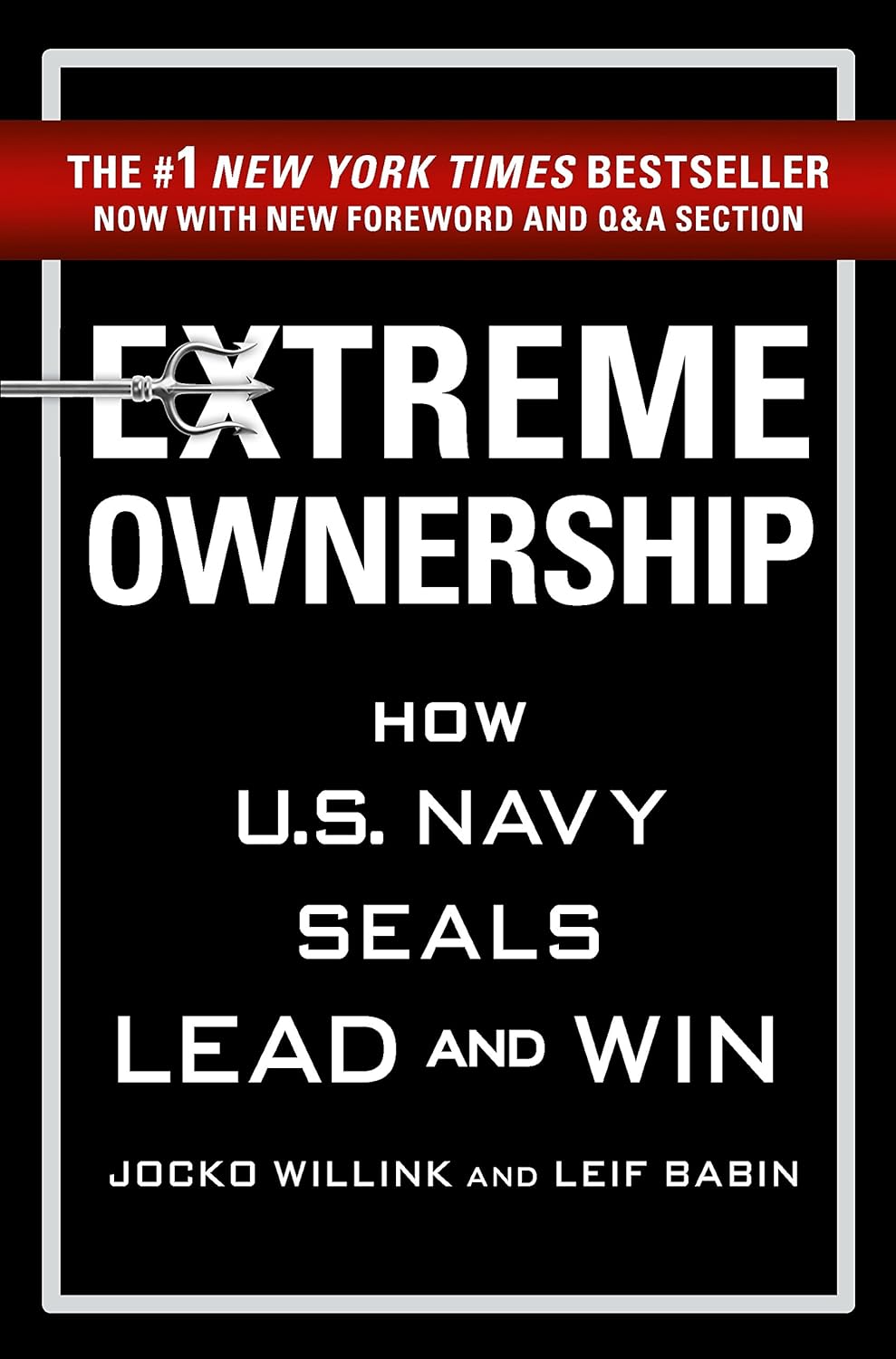
Extreme Ownership
Leadership Lens: Self → Team
Extreme Ownership argues that leaders are fully responsible for everything within their domain. This shifts leadership from blame to accountability, from excuses to ownership. Anchored in the Self lens, the discipline begins internally: check the ego, assume responsibility, and correct your own leadership first. At the Team level, the book emphasizes clear communication, decentralized command, alignment around mission, and the principle that there are no bad teams, only bad leaders. The decision lens is direct. When outcomes fall short, look inward before outward. The problems addressed include breakdown under pressure, misalignment, ego-driven conflict, and weak execution. Operational and tactical in level, the lessons are drawn from combat case studies and translated into business application. Most useful when accountability must be rebuilt from the inside out.
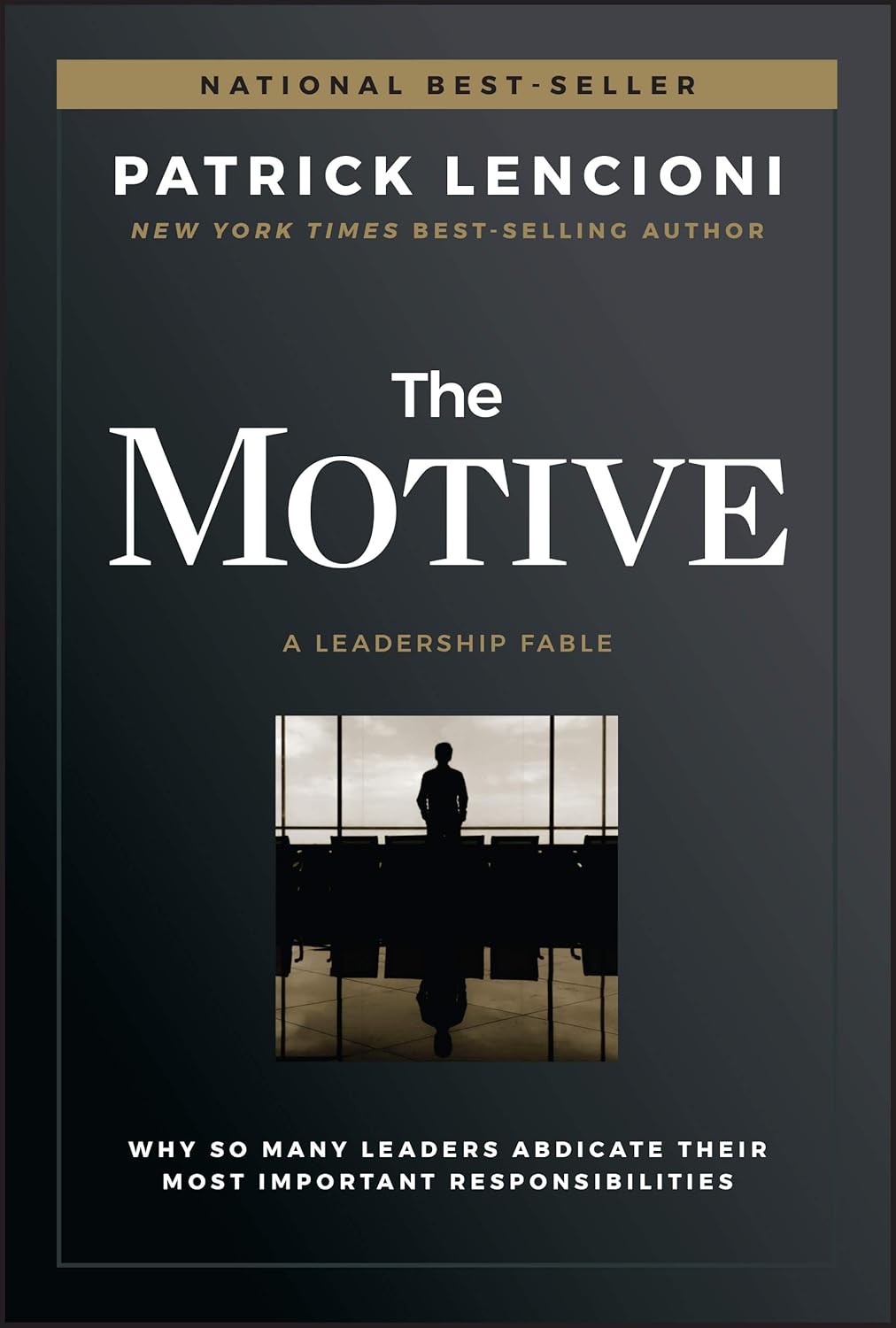
The Motive
Leadership Lens: Self → Team
The Motive argues that leadership failure often begins with the wrong motive. This shifts leadership from seeking status and rewards to embracing responsibility and discomfort. Anchored in the Self lens, the book distinguishes between reward-centered and responsibility-centered leadership and asks leaders to examine why they want the role. The discipline is internal first. At the Team level, the leader’s motive determines whether difficult conversations are addressed, clarity is reinforced, and cohesion is built at the executive table. The problems addressed include avoidance of conflict, lack of alignment, executive isolation, and unclear expectations. Conceptual in structure yet practical in implication, the fable format highlights how motive shapes behavior and outcomes. Most useful when leadership feels heavy and avoidance has begun to set in.
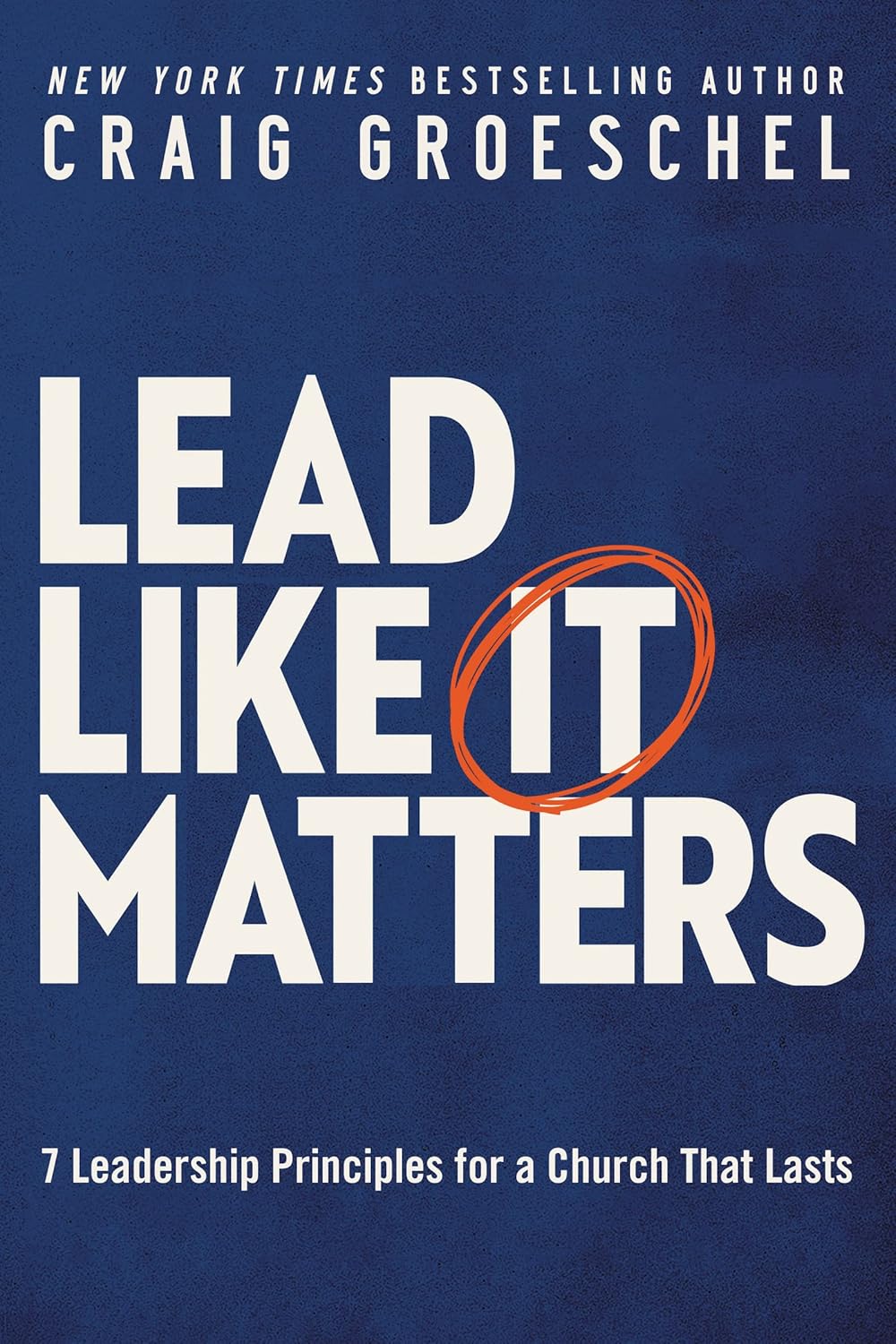
Lead Like It Matters
Leadership Lens: Self → Team
This book argues that leadership carries real weight and consequence, and that effectiveness increases when leaders act with ownership and intentionality. The shift is from passivity to responsibility, from drifting through decisions to leading on purpose. The emphasis sits first at the level of Self, where internal discipline and personal growth shape influence, and then at Team, where clarity and responsibility guide others. Through seven leadership principles, it develops a decision lens that asks leaders to assume responsibility for results rather than shift blame or minimize impact. The problems addressed are practical: inconsistency, lack of ownership, unclear direction, and the quiet erosion that follows. The level is applied and behavioral, offering concrete disciplines rather than abstract theory. This is most useful for leaders who sense that results reflect their posture more than their plans.
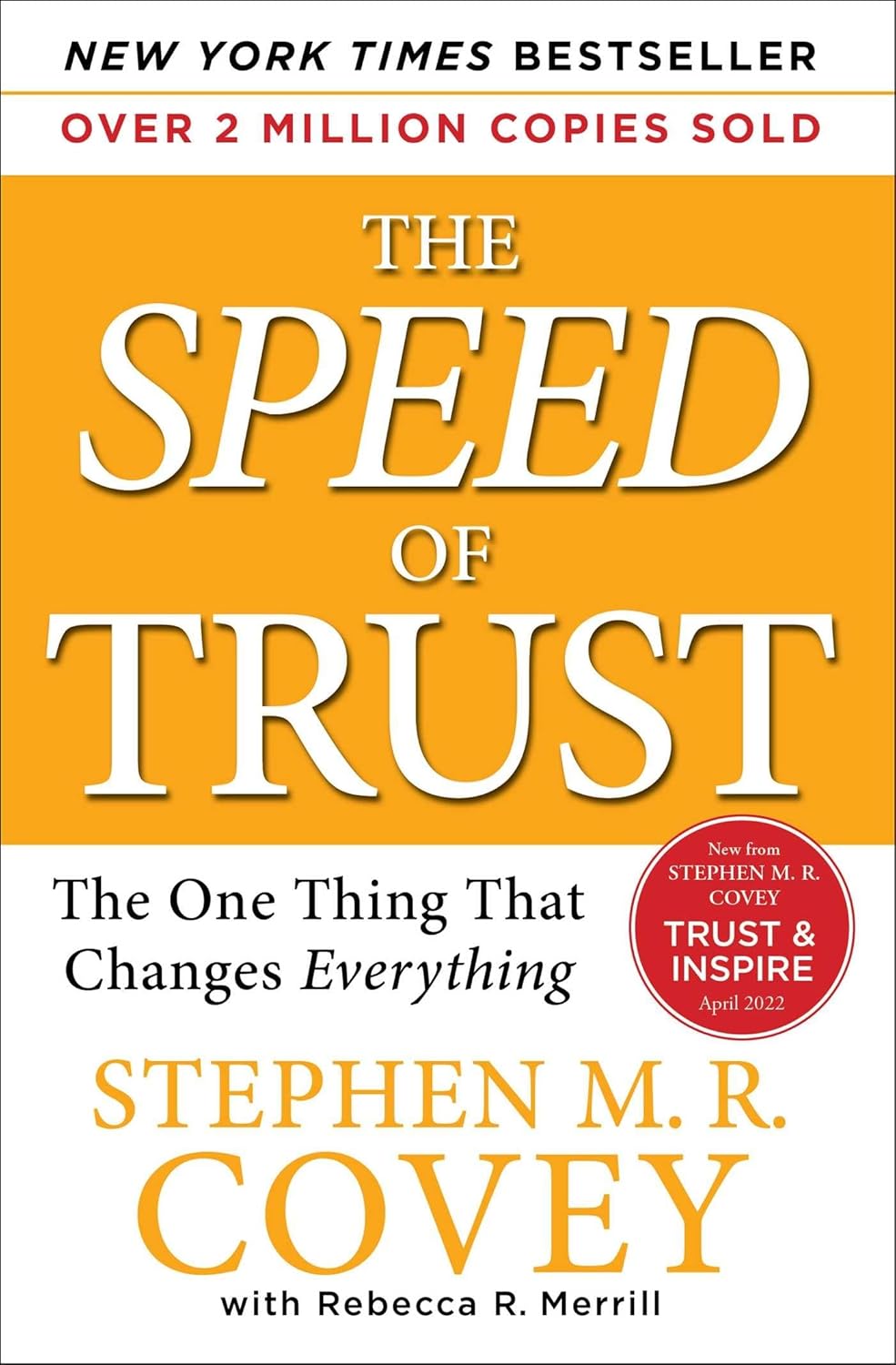
The SPEED of Trust
Leadership Lens: Self → Team
The SPEED of Trust argues that trust is not a soft value but an economic driver that increases speed and reduces cost. The shift is from viewing trust as a feeling to treating it as a measurable leadership discipline. At the Self level, the book grounds trust in credibility, built through character and competence. At the Team level, it outlines specific behaviors that strengthen cooperation and reduce friction. This pattern scales toward Culture, where high trust lowers hidden agendas and inefficiency. The decision lens is practical: build trust through integrity, clear intent, capability, and consistent results. The problems addressed are familiar to most organizations: low trust, political behavior, and slowed execution. The framework is conceptual yet applied, supported by defined behaviors and case examples. This is most useful for leaders who want to connect personal credibility with institutional performance.
TEAM – Relational Clarity and Accountability
Start with diagnosing dysfunction. Then elevate contribution. Then model ownership in practice. Then build safely. Then shape daily cultural signals. Then study institutional-level team stewardship under pressure.
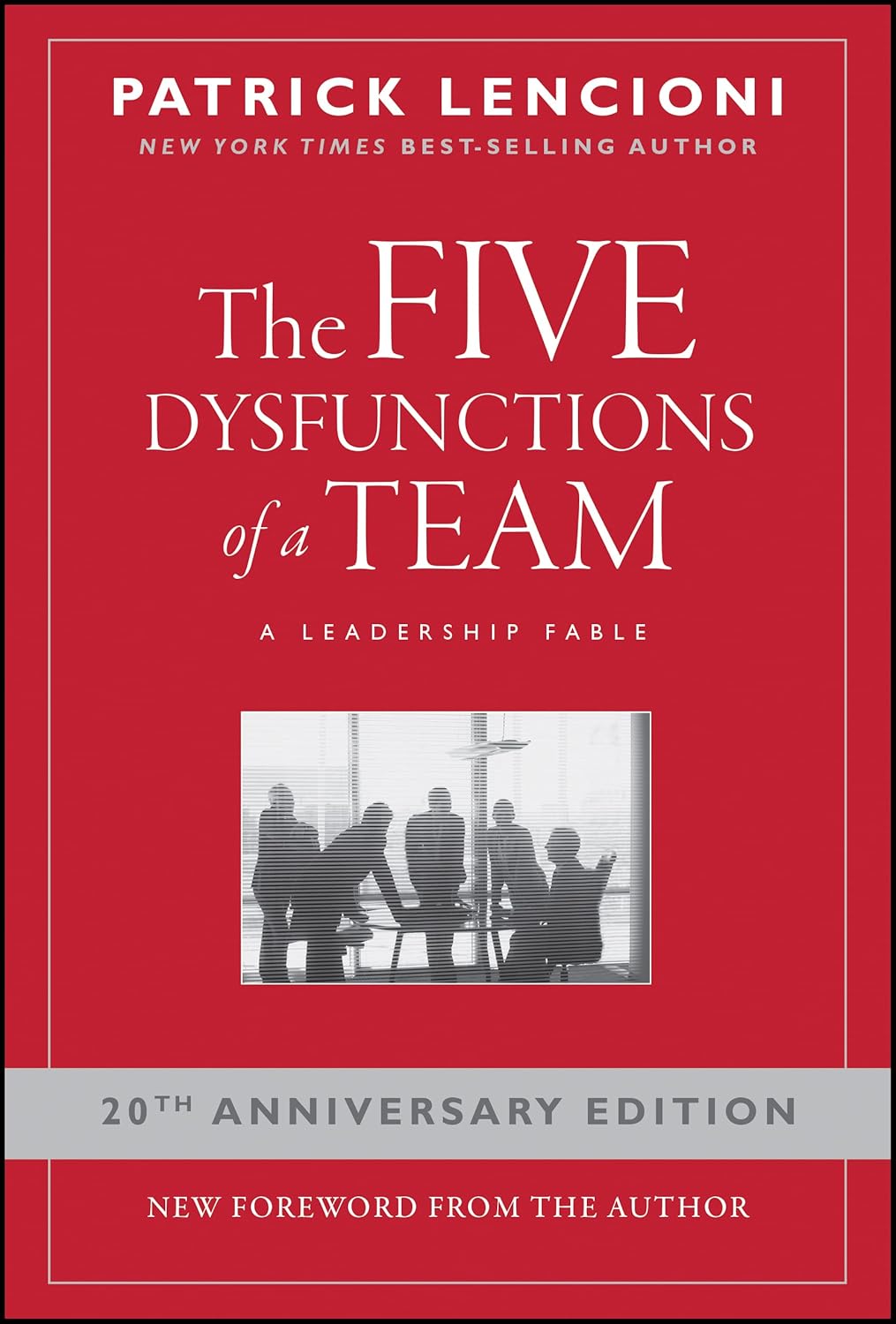
The Five Dysfunctions of a Team
Leadership Lens: Team
The Five Dysfunctions of a Team argues that team failure follows a predictable pattern of five dysfunctions: absence of trust, fear of conflict, lack of commitment, avoidance of accountability, and inattention to results. Lencioni presents this as a clear model, showing how relational breakdown compounds over time. The shift is from managing outcomes first to building trust first. That foundation enables healthy conflict, which drives commitment, accountability, and collective results. Anchored firmly in the Team lens, the book develops a disciplined way to diagnose political behavior, misalignment, and low accountability inside leadership groups. Its pyramid model offers a conceptual structure with practical application at the executive level. This is most useful for leaders responsible for aligning a senior team where performance issues reflect relational fractures rather than strategy gaps.
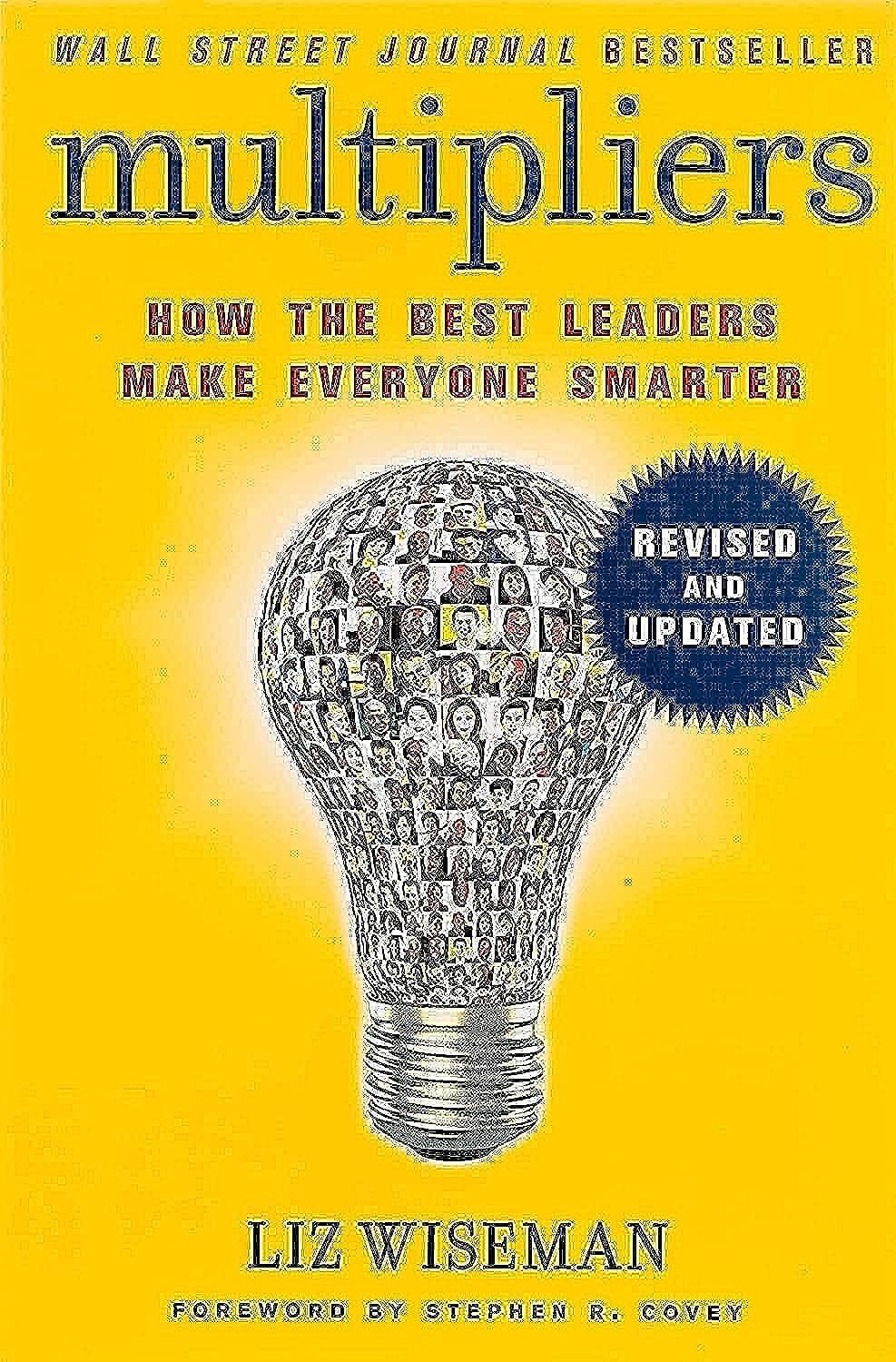
Multipliers (Revised and Updated)
Leadership Lens: Team
Multipliers argues that leaders either expand the intelligence around them or diminish it. The core shift is from being the smartest person in the room to creating a room where many people think well. This work sits squarely in the Team lens. It frames leadership as a set of behaviors that either amplify or restrict contribution. The multiplier disciplines – Talent Magnet, Liberator, Challenger, Debate Maker, and Investor – offer a practical decision lens: ask whether your presence increases capability or creates dependency. The book addresses underused talent, disengagement, and stalled innovation. Its orientation is behavioral and relational, grounded in research and illustrated through case examples. The level is conceptual with clear team-level application. It is most useful for leaders who sense their teams can do more and are willing to examine how their own habits shape that ceiling.
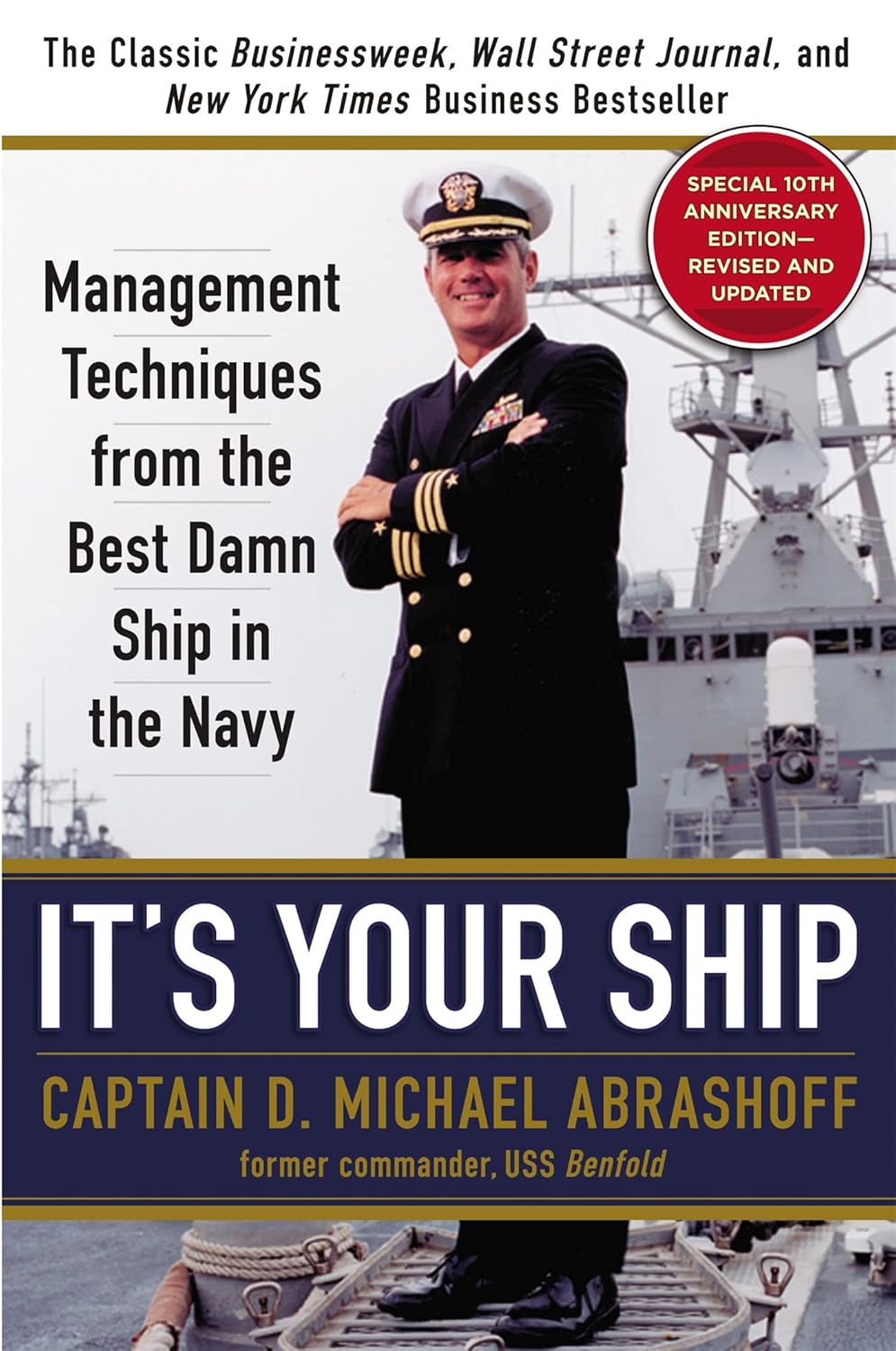
It’s Your Ship
Leadership Lens: Self → Team
Leadership, in this book, begins with ownership. Abrashoff argues that performance and morale reflect the leader’s standards and behavior, not the environment. This shift moves leadership from blaming constraints to accepting responsibility. Anchored in Self → Team, the discipline is straightforward: model the standard, listen aggressively, communicate a clear mission, and create ownership at every level. The decision lens is simple but demanding. When results fall short, ask what you can do differently before asking more of others. The problems addressed are practical: low morale, disengagement, rigid hierarchy, and poor execution. The level is operational, grounded in lived command experience rather than abstract theory. This is most useful for leaders stepping into a struggling team who need to reset expectations and rebuild trust through consistent action.
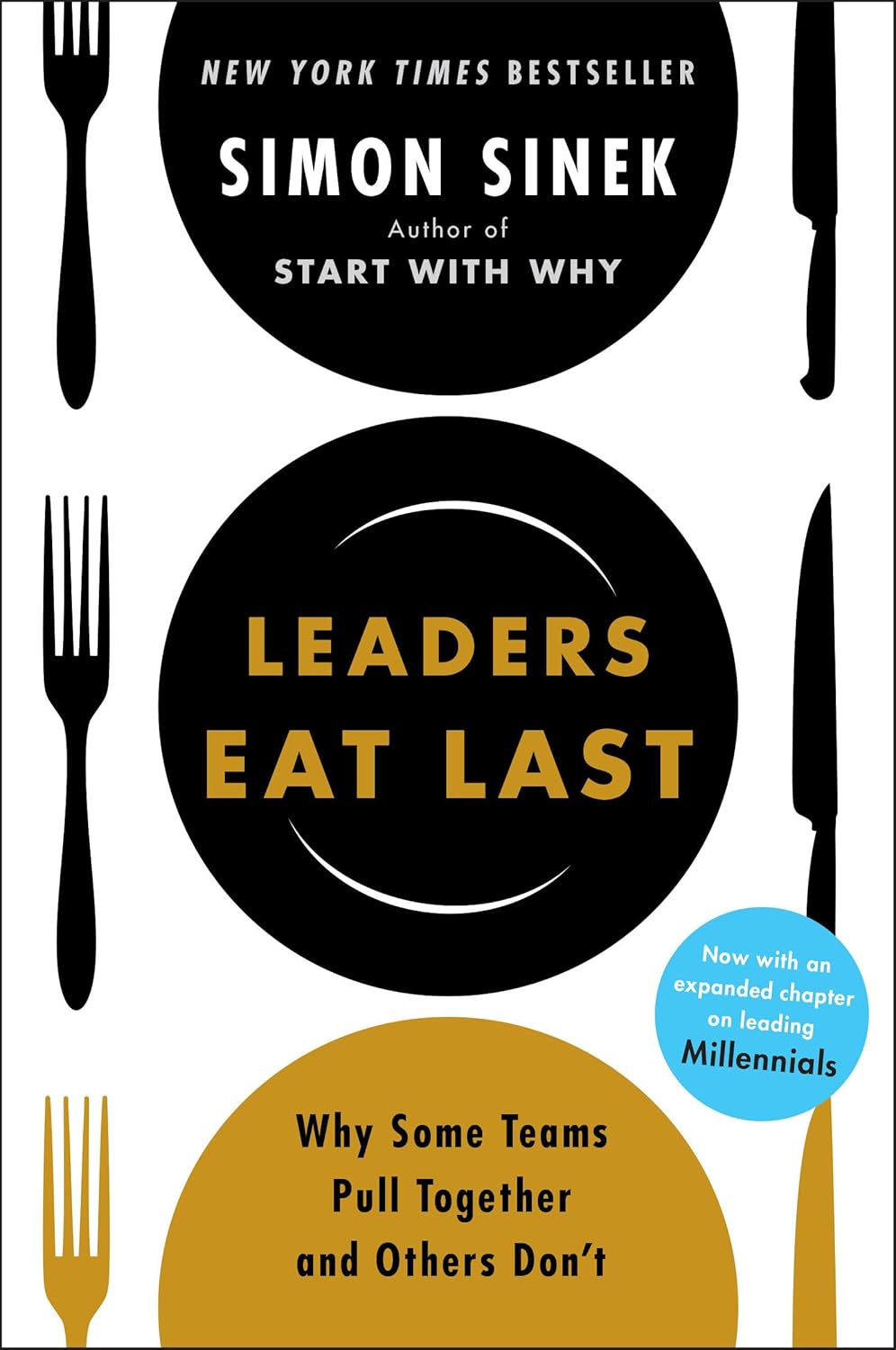
Leaders Eat Last
Leadership Lens: Team → Culture
Leaders Eat Last argues that strong organizations thrive when leaders create environments where people feel safe and protected. The shift is from managing metrics to safeguarding people. Anchored in the Team → Culture lens, the book centers on the “Circle of Safety,” where leaders prioritize the well-being of their teams over personal gain or short-term performance. This approach addresses distrust, internal competition, disengagement, and breakdowns in cooperation. The decision lens is clear: protect your people first, and performance follows. The work operates at a conceptual level with applied organizational implications, drawing on biological and social dynamics to explain why trust and belonging matter. It is most useful for leaders shaping team norms and seeking long-term cohesion rather than quick results.
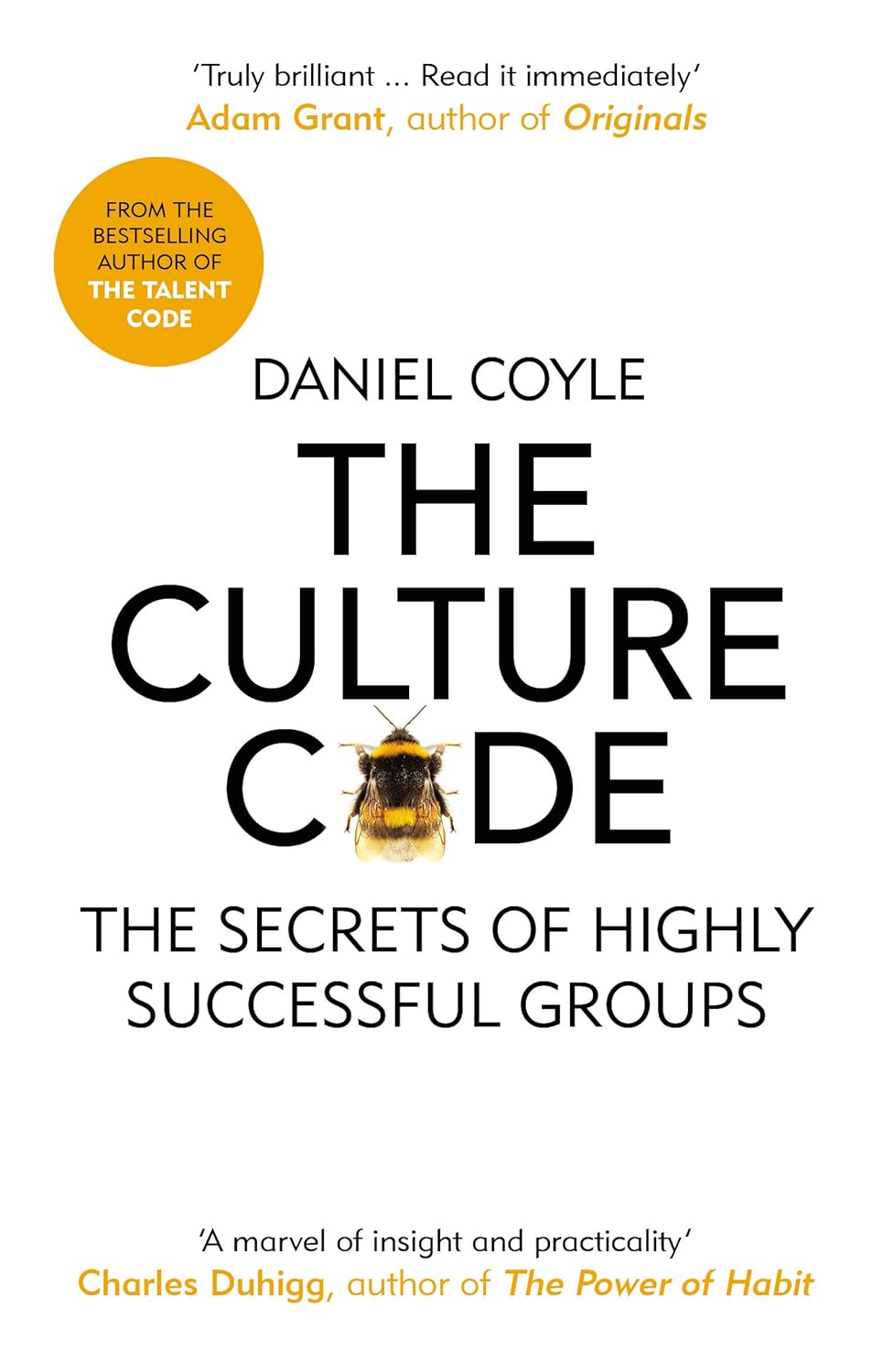
The Culture Code
Leadership Lens: Team → Culture
The Culture Code argues that strong cultures are not accidents; they are built through specific, repeatable behaviors that create trust and cooperation. Daniel Coyle identifies three core skills – Build Safety, Share Vulnerability, and Establish Purpose – that shape how groups perform. This shifts leadership from managing outcomes to shaping interactions. Instead of relying on charisma or slogans, leaders focus on small, consistent signals that reinforce belonging and shared goals. The book sits primarily at the Team level and extends into Culture, showing how daily relational behaviors compound into institutional norms. Its decision lens is practical: examine the signals you send and the environment they create. It addresses low trust, disengagement, fragmentation, and inconsistent performance through a behavioral model grounded in research and case studies. Conceptual yet actionable, it is most useful for leaders responsible for group cohesion and long-term cultural health.
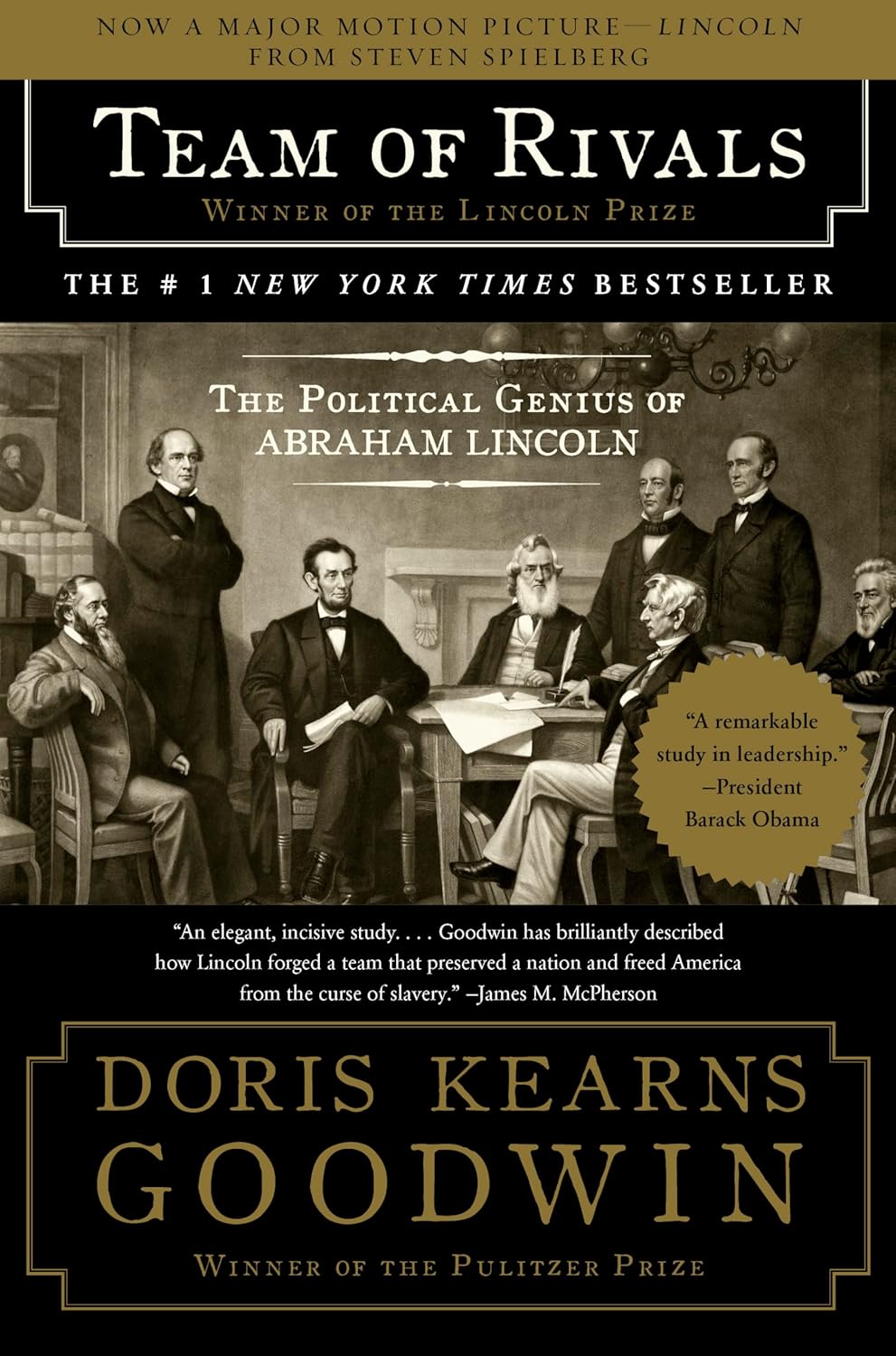
Team of Rivals
Leadership Lens: Team → Culture
This book argues that Abraham Lincoln’s strength as a leader lay in assembling a cabinet of political rivals and holding them together during national crisis. Instead of surrounding himself with loyalists, he chose capable opponents and built unity through patience, authority, and moral clarity. This shift moves leadership from personal dominance to disciplined stewardship of a diverse team. The focus sits at the Team stage, showing how structured debate and managed disagreement can strengthen executive decision-making. It extends into Culture through Lincoln’s commitment to preserving the Union and shaping national purpose under pressure. The narrative addresses division, rivalry, and crisis at an institutional level, offering a strategic and historical lens rather than a prescriptive model. It is most useful for leaders responsible for holding together strong personalities during moments of institutional strain. Most useful when leading through division where unity must be built, not assumed.
SYSTEM – Strategy, Structure and Alignment
Diagnose the challenge. Build reinforcing momentum. Install execution discipline. Then think structurally about differentiation and long-term advantage.
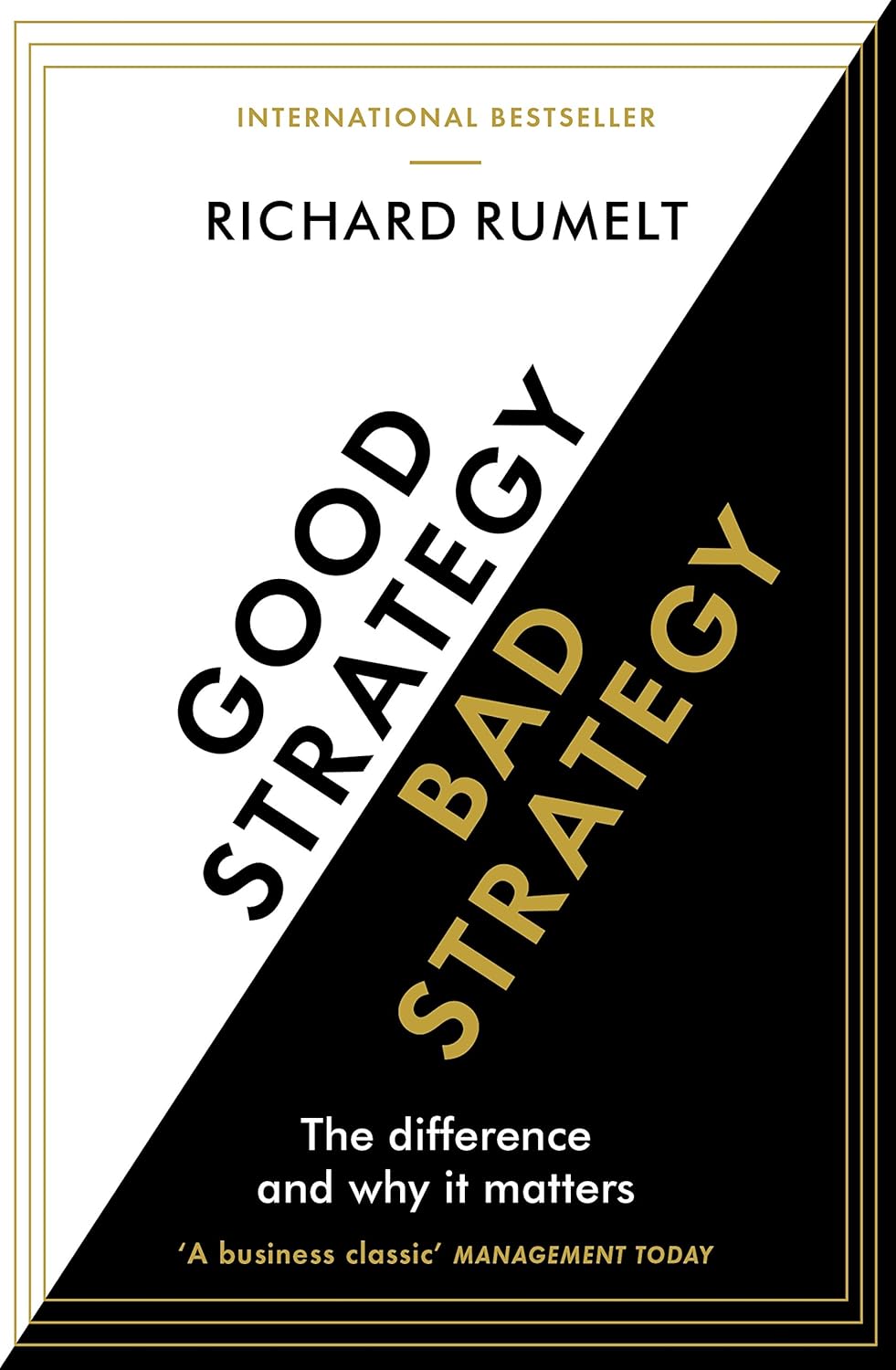
Good Strategy/Bad Strategy
Good strategy is a coherent response to a real challenge, not a list of goals or ambitions. This book shifts leadership from slogans to diagnosis, from aspiration to coordinated action. Anchored firmly in the System lens, Rumelt introduces the “kernel” of strategy: diagnosis, guiding policy, and coherent action. The discipline begins with a simple question: what is really going on here? From there, leaders are asked to choose, focus, and align resources in a way that addresses the core problem. It also names the hallmarks of bad strategy, including fluff and the failure to face the challenge. The level is conceptual and strategic, but the implications are operational. Most useful when a team or organization is busy yet drifting, and clarity must replace activity.
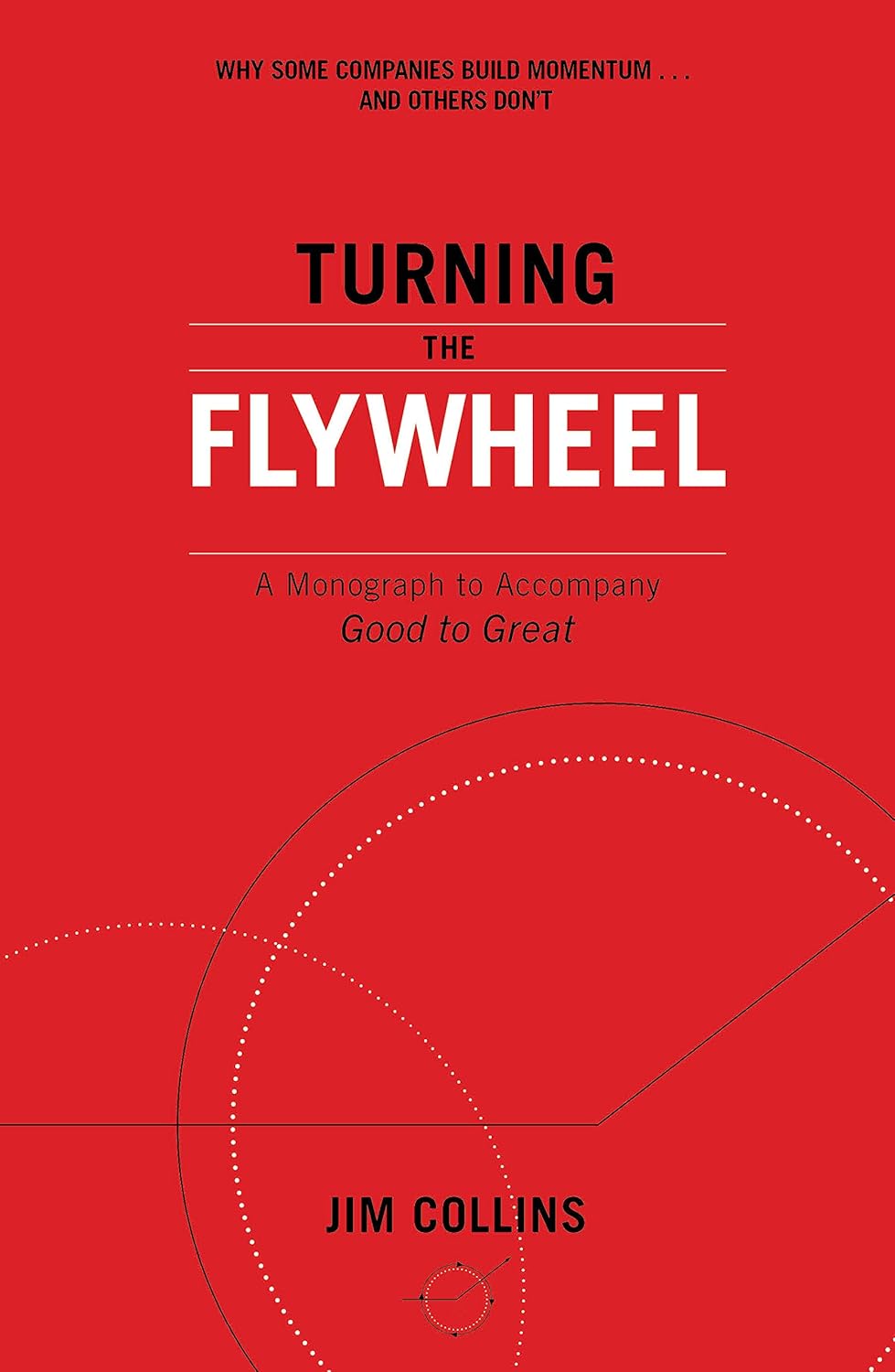
Turning the Flywheel
Leadership Lens: System
Turning the Flywheel argues that great organizations build momentum through a reinforcing sequence of disciplined actions, not through dramatic breakthroughs. This shifts leadership from chasing the Next Big Thing to designing and sustaining a coherent system. The focus is clearly at the System level: define the few essential components, arrange them in causal order, and execute each turn with discipline. Collins offers the flywheel model and the discipline of firing bullets before cannonballs as decision lenses for extending momentum without reckless bets. The book addresses stalled growth, reactive strategy shifts, and the erosion that comes from abandoning core architecture. Conceptual and strategic in level, yet grounded in case evidence, it helps leaders clarify how their specific flywheel turns and how to renew it without dismantling it. Most useful when momentum feels fragile and the temptation to pivot is strongest.
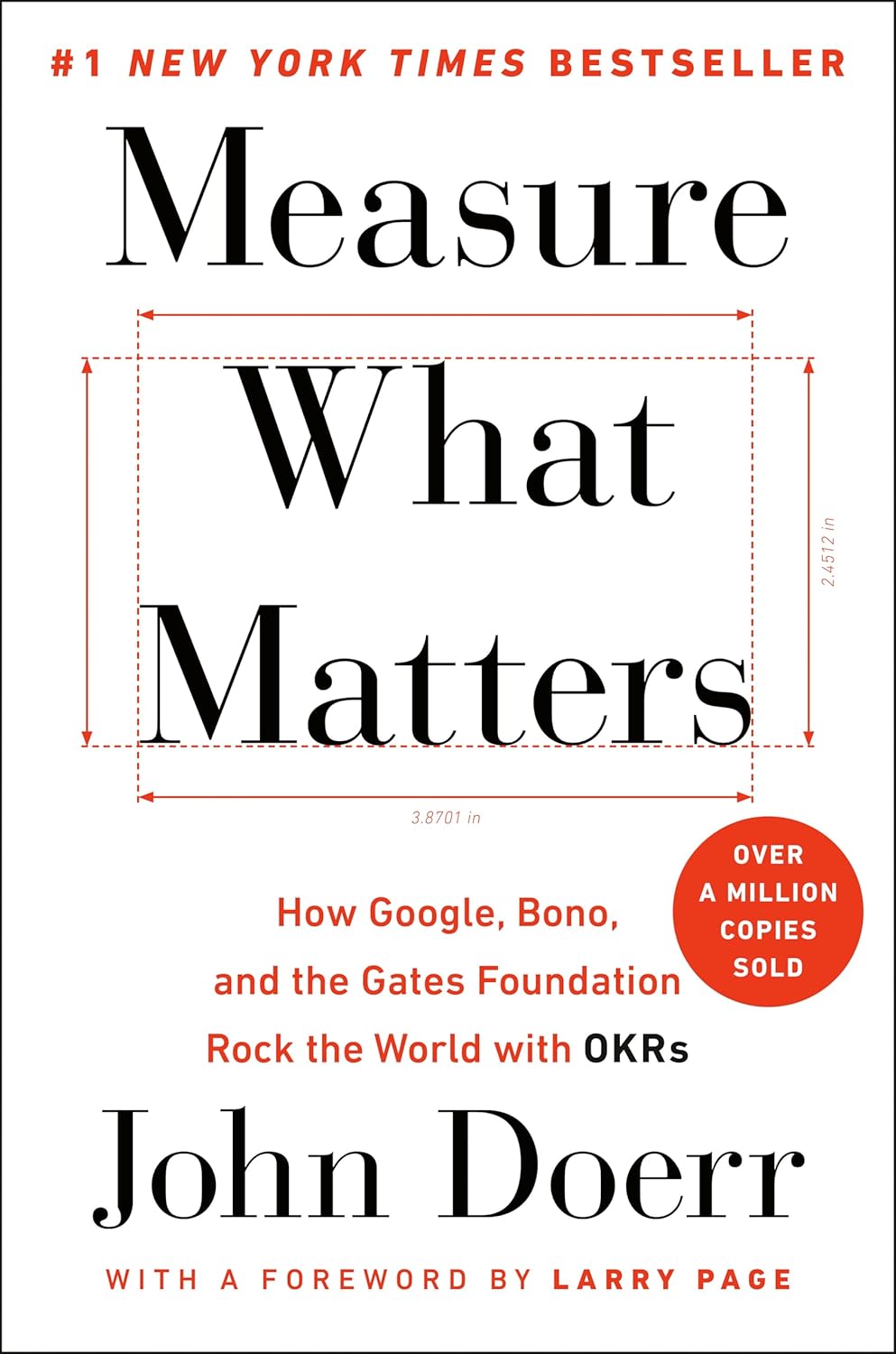
Measure What Matters
Leadership Lens: System → Culture
Measure What Matters argues that organizations achieve focus and measurable progress through disciplined use of Objectives and Key Results. This shifts leadership from activity without clarity to structured, transparent execution. Anchored primarily in the System lens, OKRs function as an operating model: define a small number of objectives, pair them with measurable key results, and review progress regularly. The discipline is to prioritize what matters most each cycle and align teams around shared, visible commitments. At the Culture level, the framework reinforces accountability, transparency, and focus across the organization. The problems addressed are misalignment, siloed effort, weak accountability, and distraction by secondary work. Strategic in design yet operational in practice, it offers a structured way to translate ambition into coordinated action. Most useful when alignment and accountability need structure, not more urgency.
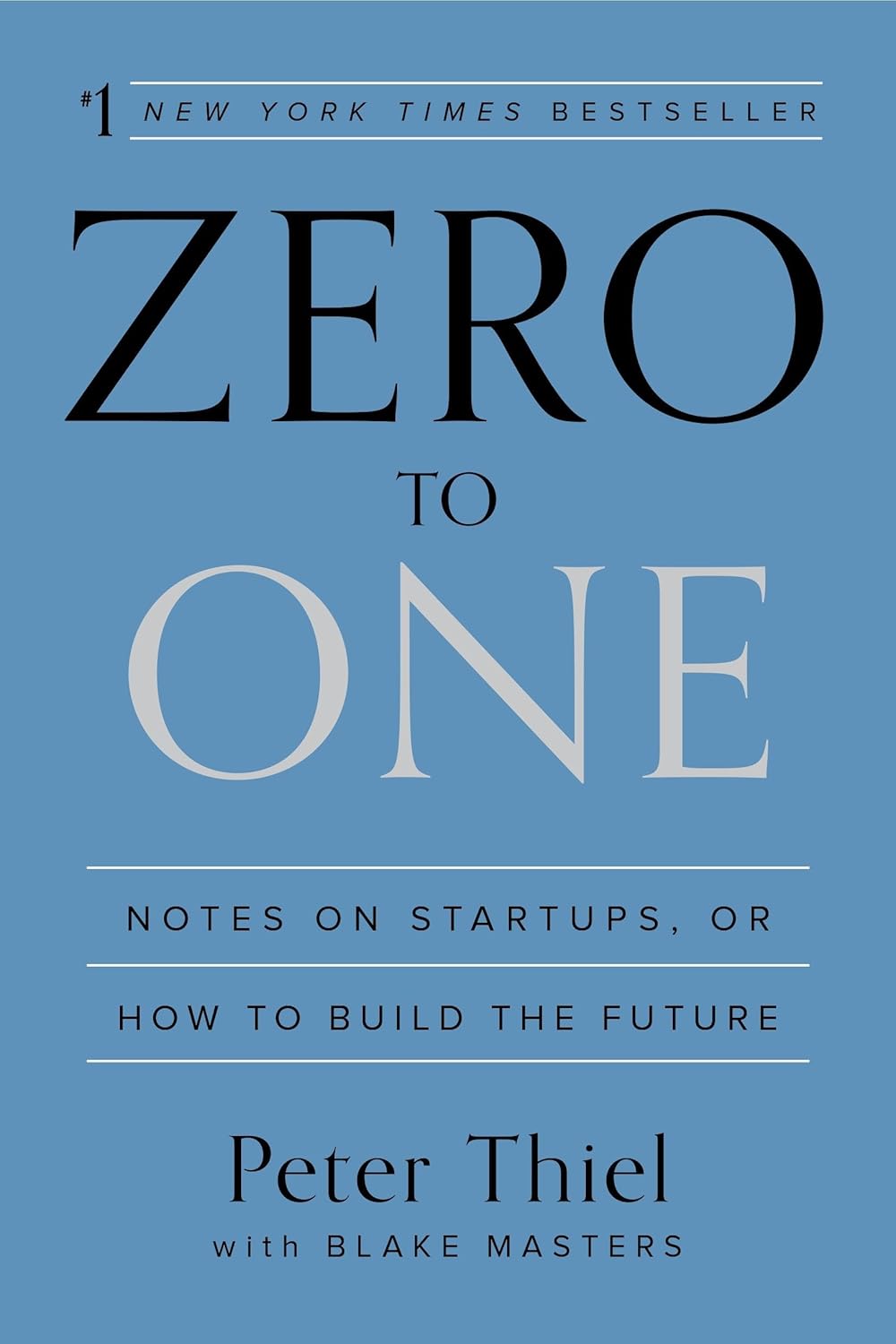
Zero to One
Leadership Lens: Self → System
Zero to One argues that real progress comes from creating something new, not copying what already exists. It shifts leadership from competing in crowded markets to building a differentiated position that others cannot easily replicate. At the Self level, it calls for definite optimism: leaders must commit to a specific vision of the future rather than rely on chance or diversification. At the System level, it frames strategy around creative monopoly, long-term planning, and structural advantage. The discipline is clear. Choose a unique path. Avoid perfect competition. Build a company designed to be the last mover, not just the first. The problems addressed include commoditized markets, incremental thinking, and short-termism. Conceptual and strategic in level, it challenges founders to think independently about how value is created. Most useful when building from scratch and clarity about differentiation matters most.
SYSTEM → CULTURE – Institutional Maturity and Longevity
Adopt a long-term orientation. Build cohesive clarity. Design principled economic systems. Then enforce cultural standards through talent discipline.
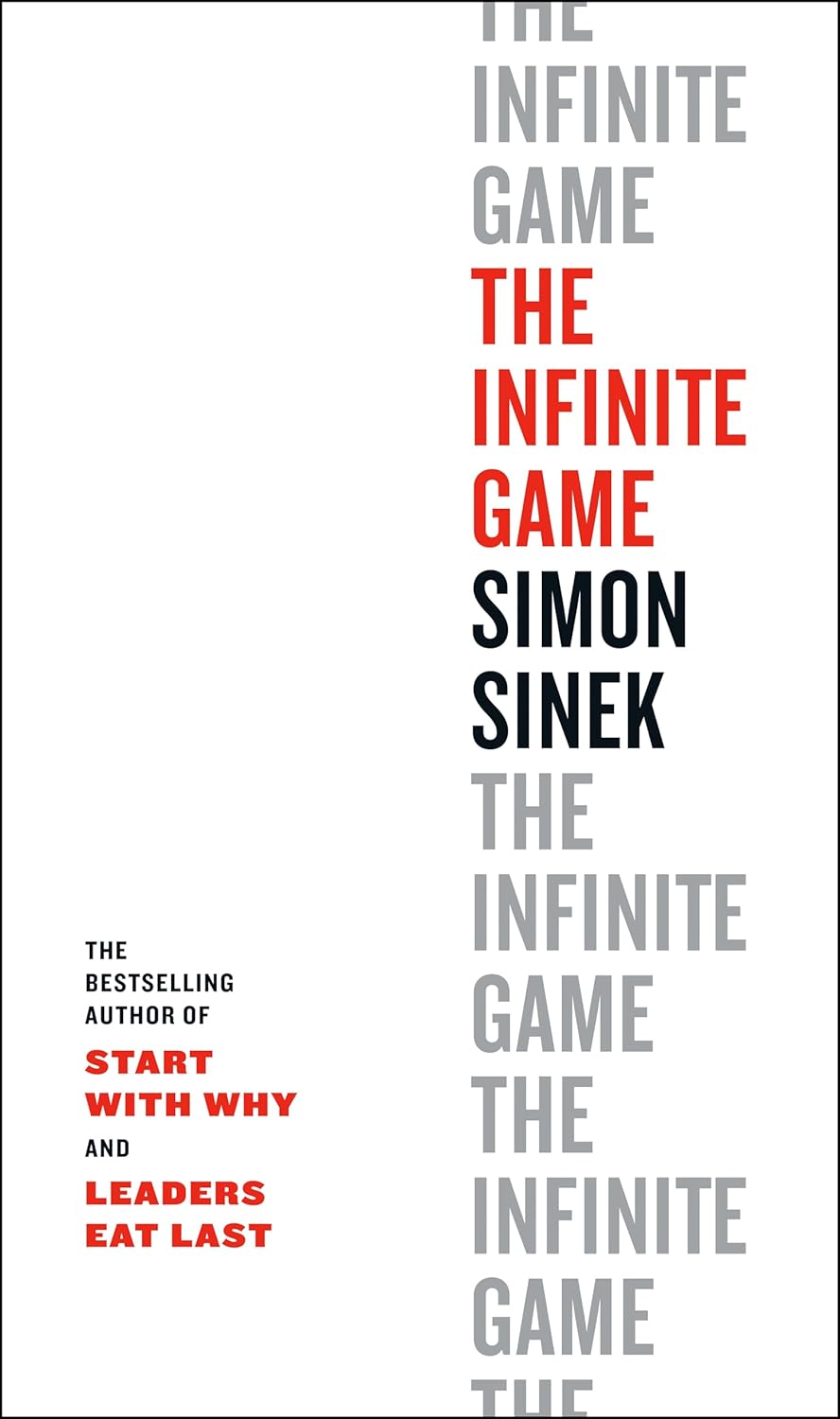
The Infinite Game
Leadership Lens: System → Culture
The Infinite Game argues that business and leadership operate in a game with no finish line. This shifts leadership from winning quarters to sustaining an institution. Anchored in the System and Culture lenses, the book distinguishes between finite and infinite games and outlines five practices required for infinite-minded leadership, including advancing a Just Cause and building trusting teams. The discipline is to align decisions with long-term continuity rather than short-term victory. It addresses declining trust, ethical fading, short-term financial obsession, and cultural deterioration. Conceptual and strategic in level, the argument reframes how leaders define success and endurance. The emphasis is not on beating competitors, but on remaining worthy of participation over time. Most useful when short-term wins are undermining long-term health.
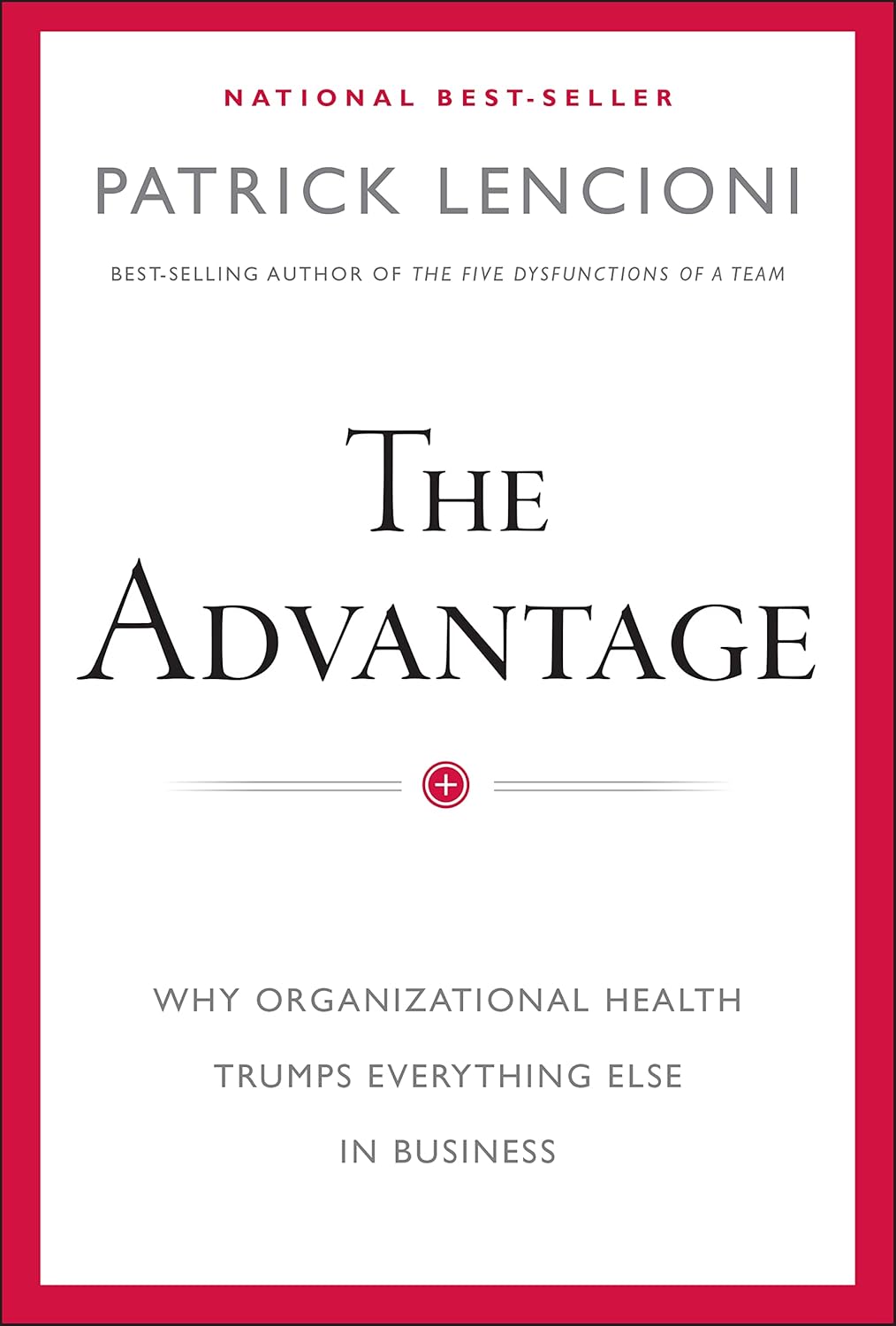
The Advantage
Leadership Lens: Team → Culture
The central claim of this book is simple: organizational health is the ultimate competitive advantage. Not strategy alone. Not finance. Health. Lencioni argues that when a leadership team is cohesive and clear, performance follows. The shift is from managing complexity to cultivating clarity and cohesion. Anchored in Team → Culture, the discipline begins with building a cohesive leadership team grounded in trust, conflict, commitment, accountability, and results, then extends to creating, overcommunicating, and reinforcing clarity across the organization. The decision lens is direct: prioritize behavioral cohesion and alignment over technical sophistication. The problems addressed are politics, confusion, misalignment, and low morale at the executive level. The model is strategic with operational application, offering prescriptive disciplines supported by case examples. Most useful when a leadership team senses drift beneath outward performance.
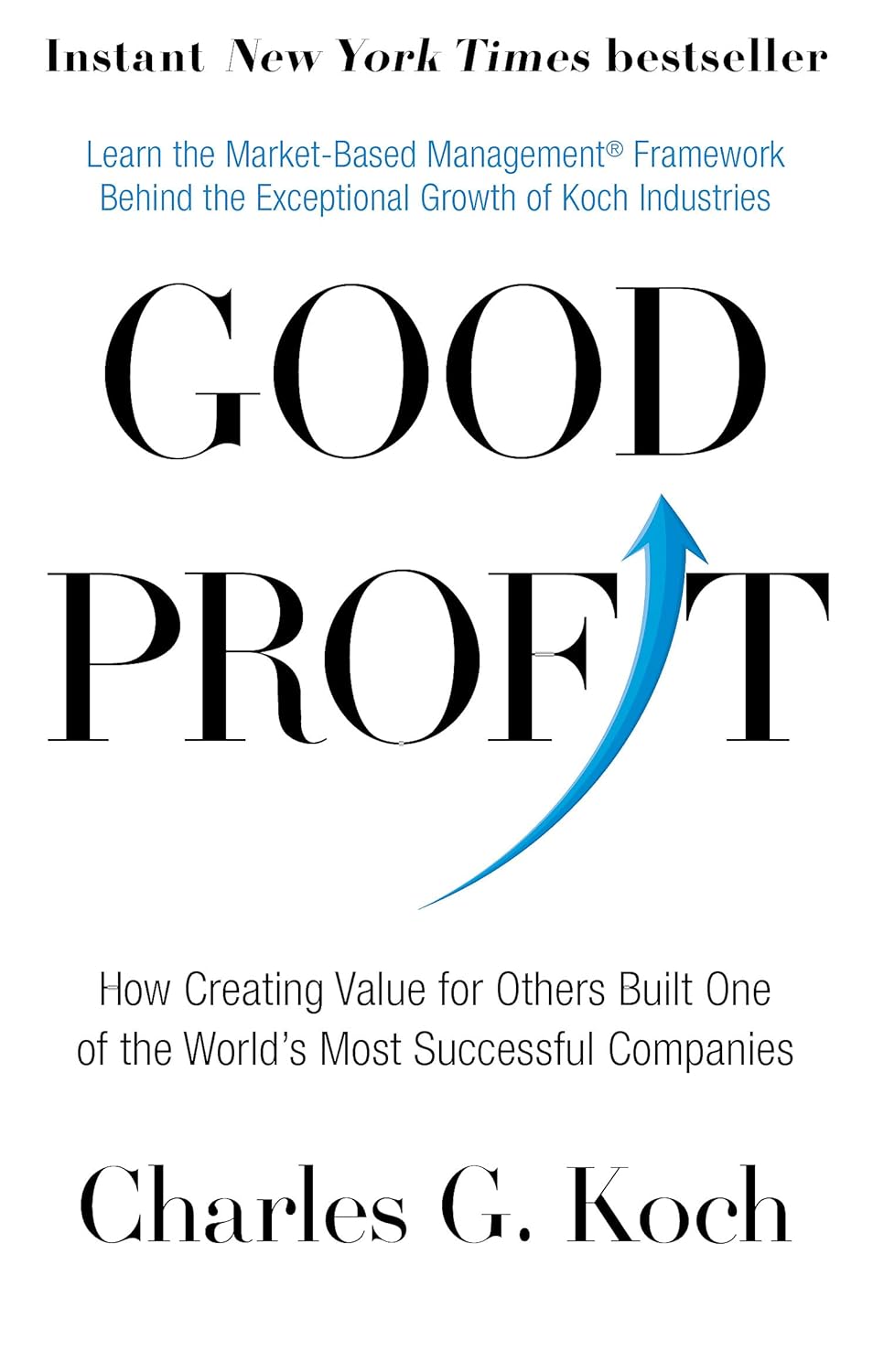
Good Profit
Leadership Lens: System → Culture
Good Profit argues that long-term profitability must be rooted in creating real value for society, not extracting short-term gain. Charles Koch presents Market-Based Management as an integrated framework for aligning decision rights, incentives, knowledge, and talent around principled value creation. The shift is from managing for quarterly optics to managing for durable contribution. Anchored in the System → Culture stages, the book develops a strategic discipline: design structures and incentives that reward integrity, innovation, and economic value. It addresses short-termism, misaligned incentives, bureaucratic drag, and destructive profit-seeking. The orientation is systemic and strategic, supported by business examples rather than abstract theory. This is most useful for leaders responsible for shaping institutional design and long-term direction, especially when growth pressures begin to erode principle.
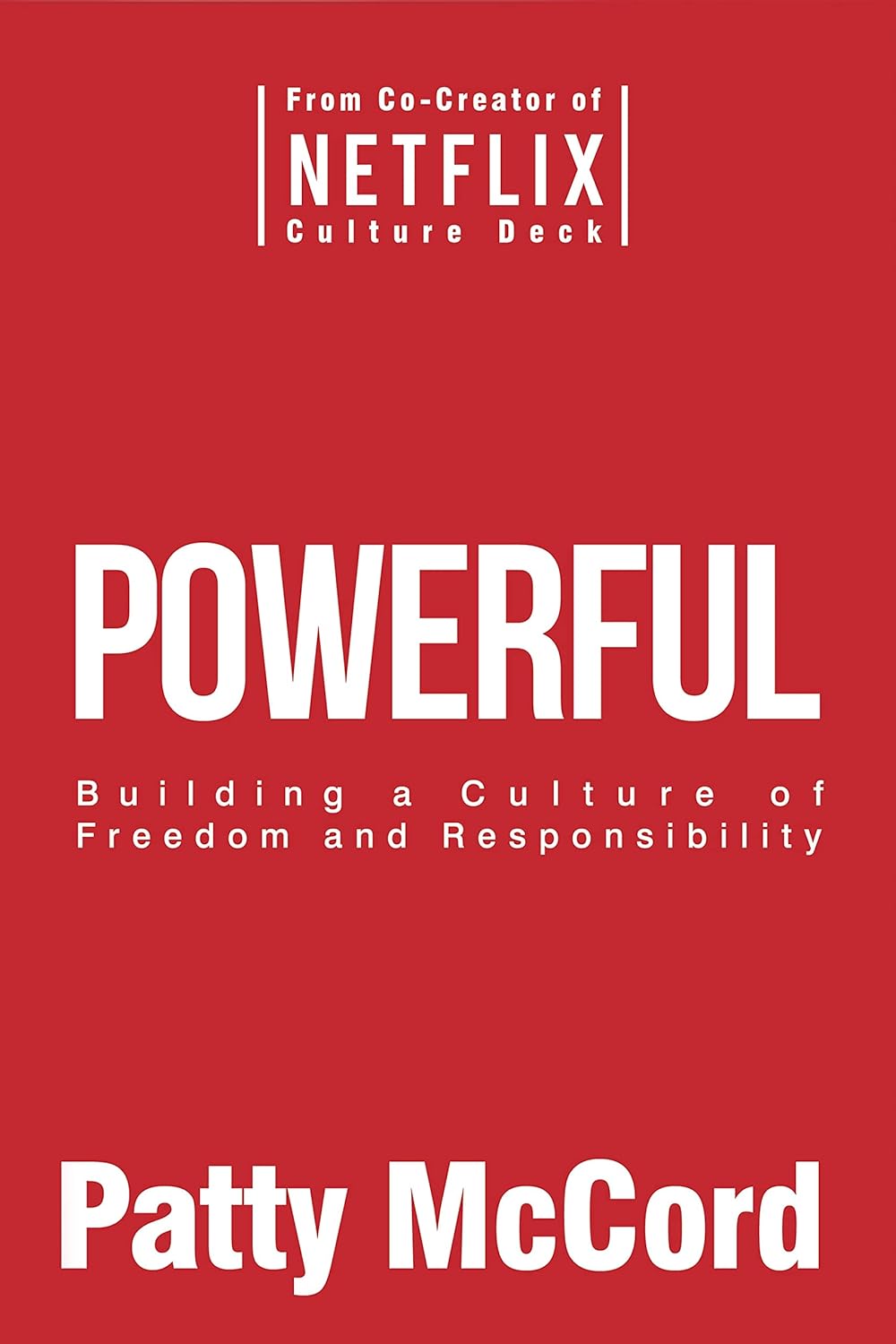
Powerful
Leadership Lens: Team → Culture
Powerful argues that high performance does not come from perks or elaborate HR processes, but from honesty, accountability, and disciplined talent management. Patty McCord makes the case that leaders must build strong teams through talent density, candid feedback, and clear expectations. This is a shift from managing through process to leading through adult-to-adult responsibility. The primary lens is Team, extending into Culture as these practices shape norms of candor and ownership across the organization. The decision discipline is direct: treat people as responsible adults, hire and retain high performers, and address performance issues without delay. The problems it tackles are mediocrity, avoidance of difficult conversations, and overreliance on policy. The guidance is practical and operational, grounded in executive experience. It is most useful for leaders rebuilding standards or resetting cultural expectations. Most useful when performance conversations are being avoided or standards have quietly slipped.
Capstone – The Leadership Arc
Leadership is not a collection of techniques. It is a progression of responsibility.
It begins with the mirror. Before strategy, before culture, before performance, there is motive and mindset. If you cannot confront ego, assume ownership, and examine your intent, every system you build will eventually reflect your blind spots. Credibility is earned through character and competence. Trust is built through consistent behavior. Leadership begins when pointing fingers stops.
From there, leadership becomes relational. Teams fail in patterns. Trust must come before conflict. Conflict must lead to commitment. Commitment must produce accountability. Strong leaders do not dominate rooms. They create rooms where others think well. They protect people. They hold standards. They multiply talent rather than control it. Culture is not declared. It is signaled, daily, through what leaders’ reward and what they tolerate.
Then leadership becomes structural. Good strategy always starts with diagnosis. Momentum comes from coherent systems, not bursts of energy. Focus requires measurable objectives. Differentiation requires deliberate design. Incentives must reinforce value creation, not politics. Execution is not about urgency. It is about alignment.
Finally, leadership matures into stewardship. Institutions outlast individuals. Short-term wins are not the goal. Health is. Durable profit is rooted in real contribution. A just cause sustains effort beyond quarterly results. Systems must support principle. Culture must carry clarity forward.
Taken together, these nineteen books tell one story: leadership is the disciplined integration of Self, Team, System, and Culture. It is the work of building something that performs with integrity and endures with purpose.
You are not only delivering results. You are shaping the kind of organization those results create over time.
Develop the clarity of purpose, responsibility, and long-term thinking to go from leading projects and processes to leading people.
Leadership is not a title or a role. It is a progression. It begins with internal discipline and ownership. It expands into how we build trust and alignment with others. It matures into designing systems that create focus and accountability. And it endures when culture carries the work forward beyond any one individual.
These books are arranged to reflect that journey. They move from Self to Team to System to Culture. Each work strengthens a different layer of leadership maturity, helping you build not just results, but responsibility, coherence, and long-term institutional health.
SELF – Internal Discipline and Ownership
First correct perception. Then assume ownership. Then examine motive. Then act with intentional discipline. Then connect credibility to relational trust.
Leadership and Self-Deception
Leadership Lens: Self → Team
Leadership and Self-Deception argues that many leadership failures begin with an inward mindset. When leaders are “in the box,” they see others as obstacles or objects rather than people. This shifts leadership from blaming circumstances to examining one’s own mindset first. Anchored in the Self lens, the discipline is personal responsibility for perception, intent, and behavior. At the Team level, the book shows how self-deception erodes trust, weakens accountability, and fuels conflict, even when technical systems appear sound. The decision lens is simple but demanding – before correcting others, assess how you may be contributing to the problem. Conceptual in structure and delivered through narrative case study, the framework focuses on relational clarity rather than process mechanics. It is most useful for leaders facing recurring conflict or strained collaboration that structural fixes alone have not resolved.
Extreme Ownership
Leadership Lens: Self → Team
Extreme Ownership argues that leaders are fully responsible for everything within their domain. This shifts leadership from blame to accountability, from excuses to ownership. Anchored in the Self lens, the discipline begins internally: check the ego, assume responsibility, and correct your own leadership first. At the Team level, the book emphasizes clear communication, decentralized command, alignment around mission, and the principle that there are no bad teams, only bad leaders. The decision lens is direct. When outcomes fall short, look inward before outward. The problems addressed include breakdown under pressure, misalignment, ego-driven conflict, and weak execution. Operational and tactical in level, the lessons are drawn from combat case studies and translated into business application. Most useful when accountability must be rebuilt from the inside out.
The Motive
Leadership Lens: Self → Team
The Motive argues that leadership failure often begins with the wrong motive. This shifts leadership from seeking status and rewards to embracing responsibility and discomfort. Anchored in the Self lens, the book distinguishes between reward-centered and responsibility-centered leadership and asks leaders to examine why they want the role. The discipline is internal first. At the Team level, the leader’s motive determines whether difficult conversations are addressed, clarity is reinforced, and cohesion is built at the executive table. The problems addressed include avoidance of conflict, lack of alignment, executive isolation, and unclear expectations. Conceptual in structure yet practical in implication, the fable format highlights how motive shapes behavior and outcomes. Most useful when leadership feels heavy and avoidance has begun to set in.
Lead Like It Matters
Leadership Lens: Self → Team
This book argues that leadership carries real weight and consequence, and that effectiveness increases when leaders act with ownership and intentionality. The shift is from passivity to responsibility, from drifting through decisions to leading on purpose. The emphasis sits first at the level of Self, where internal discipline and personal growth shape influence, and then at Team, where clarity and responsibility guide others. Through seven leadership principles, it develops a decision lens that asks leaders to assume responsibility for results rather than shift blame or minimize impact. The problems addressed are practical: inconsistency, lack of ownership, unclear direction, and the quiet erosion that follows. The level is applied and behavioral, offering concrete disciplines rather than abstract theory. This is most useful for leaders who sense that results reflect their posture more than their plans.
The SPEED of Trust
Leadership Lens: Self → Team
The SPEED of Trust argues that trust is not a soft value but an economic driver that increases speed and reduces cost. The shift is from viewing trust as a feeling to treating it as a measurable leadership discipline. At the Self level, the book grounds trust in credibility, built through character and competence. At the Team level, it outlines specific behaviors that strengthen cooperation and reduce friction. This pattern scales toward Culture, where high trust lowers hidden agendas and inefficiency. The decision lens is practical: build trust through integrity, clear intent, capability, and consistent results. The problems addressed are familiar to most organizations: low trust, political behavior, and slowed execution. The framework is conceptual yet applied, supported by defined behaviors and case examples. This is most useful for leaders who want to connect personal credibility with institutional performance.
TEAM – Relational Clarity and Accountability
Start with diagnosing dysfunction. Then elevate contribution. Then model ownership in practice. Then build safely. Then shape daily cultural signals. Then study institutional-level team stewardship under pressure.
The Five Dysfunctions of a Team
Leadership Lens: Team
The Five Dysfunctions of a Team argues that team failure follows a predictable pattern of five dysfunctions: absence of trust, fear of conflict, lack of commitment, avoidance of accountability, and inattention to results. Lencioni presents this as a clear model, showing how relational breakdown compounds over time. The shift is from managing outcomes first to building trust first. That foundation enables healthy conflict, which drives commitment, accountability, and collective results. Anchored firmly in the Team lens, the book develops a disciplined way to diagnose political behavior, misalignment, and low accountability inside leadership groups. Its pyramid model offers a conceptual structure with practical application at the executive level. This is most useful for leaders responsible for aligning a senior team where performance issues reflect relational fractures rather than strategy gaps.
Multipliers (Revised and Updated)
Leadership Lens: Team
Multipliers argues that leaders either expand the intelligence around them or diminish it. The core shift is from being the smartest person in the room to creating a room where many people think well. This work sits squarely in the Team lens. It frames leadership as a set of behaviors that either amplify or restrict contribution. The multiplier disciplines – Talent Magnet, Liberator, Challenger, Debate Maker, and Investor – offer a practical decision lens: ask whether your presence increases capability or creates dependency. The book addresses underused talent, disengagement, and stalled innovation. Its orientation is behavioral and relational, grounded in research and illustrated through case examples. The level is conceptual with clear team-level application. It is most useful for leaders who sense their teams can do more and are willing to examine how their own habits shape that ceiling.
It’s Your Ship
Leadership Lens: Self → Team
Leadership, in this book, begins with ownership. Abrashoff argues that performance and morale reflect the leader’s standards and behavior, not the environment. This shift moves leadership from blaming constraints to accepting responsibility. Anchored in Self → Team, the discipline is straightforward: model the standard, listen aggressively, communicate a clear mission, and create ownership at every level. The decision lens is simple but demanding. When results fall short, ask what you can do differently before asking more of others. The problems addressed are practical: low morale, disengagement, rigid hierarchy, and poor execution. The level is operational, grounded in lived command experience rather than abstract theory. This is most useful for leaders stepping into a struggling team who need to reset expectations and rebuild trust through consistent action.
Leaders Eat Last
Leadership Lens: Team → Culture
Leaders Eat Last argues that strong organizations thrive when leaders create environments where people feel safe and protected. The shift is from managing metrics to safeguarding people. Anchored in the Team → Culture lens, the book centers on the “Circle of Safety,” where leaders prioritize the well-being of their teams over personal gain or short-term performance. This approach addresses distrust, internal competition, disengagement, and breakdowns in cooperation. The decision lens is clear: protect your people first, and performance follows. The work operates at a conceptual level with applied organizational implications, drawing on biological and social dynamics to explain why trust and belonging matter. It is most useful for leaders shaping team norms and seeking long-term cohesion rather than quick results.
The Culture Code
Leadership Lens: Team → Culture
The Culture Code argues that strong cultures are not accidents; they are built through specific, repeatable behaviors that create trust and cooperation. Daniel Coyle identifies three core skills – Build Safety, Share Vulnerability, and Establish Purpose – that shape how groups perform. This shifts leadership from managing outcomes to shaping interactions. Instead of relying on charisma or slogans, leaders focus on small, consistent signals that reinforce belonging and shared goals. The book sits primarily at the Team level and extends into Culture, showing how daily relational behaviors compound into institutional norms. Its decision lens is practical: examine the signals you send and the environment they create. It addresses low trust, disengagement, fragmentation, and inconsistent performance through a behavioral model grounded in research and case studies. Conceptual yet actionable, it is most useful for leaders responsible for group cohesion and long-term cultural health.
Team of Rivals
Leadership Lens: Team → Culture
This book argues that Abraham Lincoln’s strength as a leader lay in assembling a cabinet of political rivals and holding them together during national crisis. Instead of surrounding himself with loyalists, he chose capable opponents and built unity through patience, authority, and moral clarity. This shift moves leadership from personal dominance to disciplined stewardship of a diverse team. The focus sits at the Team stage, showing how structured debate and managed disagreement can strengthen executive decision-making. It extends into Culture through Lincoln’s commitment to preserving the Union and shaping national purpose under pressure. The narrative addresses division, rivalry, and crisis at an institutional level, offering a strategic and historical lens rather than a prescriptive model. It is most useful for leaders responsible for holding together strong personalities during moments of institutional strain. Most useful when leading through division where unity must be built, not assumed.
SYSTEM – Strategy, Structure and Alignment
Diagnose the challenge. Build reinforcing momentum. Install execution discipline. Then think structurally about differentiation and long-term advantage.
Good Strategy/Bad Strategy
Good strategy is a coherent response to a real challenge, not a list of goals or ambitions. This book shifts leadership from slogans to diagnosis, from aspiration to coordinated action. Anchored firmly in the System lens, Rumelt introduces the “kernel” of strategy: diagnosis, guiding policy, and coherent action. The discipline begins with a simple question: what is really going on here? From there, leaders are asked to choose, focus, and align resources in a way that addresses the core problem. It also names the hallmarks of bad strategy, including fluff and the failure to face the challenge. The level is conceptual and strategic, but the implications are operational. Most useful when a team or organization is busy yet drifting, and clarity must replace activity.
Turning the Flywheel
Leadership Lens: System
Turning the Flywheel argues that great organizations build momentum through a reinforcing sequence of disciplined actions, not through dramatic breakthroughs. This shifts leadership from chasing the Next Big Thing to designing and sustaining a coherent system. The focus is clearly at the System level: define the few essential components, arrange them in causal order, and execute each turn with discipline. Collins offers the flywheel model and the discipline of firing bullets before cannonballs as decision lenses for extending momentum without reckless bets. The book addresses stalled growth, reactive strategy shifts, and the erosion that comes from abandoning core architecture. Conceptual and strategic in level, yet grounded in case evidence, it helps leaders clarify how their specific flywheel turns and how to renew it without dismantling it. Most useful when momentum feels fragile and the temptation to pivot is strongest.
Measure What Matters
Leadership Lens: System → Culture
Measure What Matters argues that organizations achieve focus and measurable progress through disciplined use of Objectives and Key Results. This shifts leadership from activity without clarity to structured, transparent execution. Anchored primarily in the System lens, OKRs function as an operating model: define a small number of objectives, pair them with measurable key results, and review progress regularly. The discipline is to prioritize what matters most each cycle and align teams around shared, visible commitments. At the Culture level, the framework reinforces accountability, transparency, and focus across the organization. The problems addressed are misalignment, siloed effort, weak accountability, and distraction by secondary work. Strategic in design yet operational in practice, it offers a structured way to translate ambition into coordinated action. Most useful when alignment and accountability need structure, not more urgency.
Zero to One
Leadership Lens: Self → System
Zero to One argues that real progress comes from creating something new, not copying what already exists. It shifts leadership from competing in crowded markets to building a differentiated position that others cannot easily replicate. At the Self level, it calls for definite optimism: leaders must commit to a specific vision of the future rather than rely on chance or diversification. At the System level, it frames strategy around creative monopoly, long-term planning, and structural advantage. The discipline is clear. Choose a unique path. Avoid perfect competition. Build a company designed to be the last mover, not just the first. The problems addressed include commoditized markets, incremental thinking, and short-termism. Conceptual and strategic in level, it challenges founders to think independently about how value is created. Most useful when building from scratch and clarity about differentiation matters most.
SYSTEM → CULTURE – Institutional Maturity and Longevity
Adopt a long-term orientation. Build cohesive clarity. Design principled economic systems. Then enforce cultural standards through talent discipline.
The Infinite Game
Leadership Lens: System → Culture
The Infinite Game argues that business and leadership operate in a game with no finish line. This shifts leadership from winning quarters to sustaining an institution. Anchored in the System and Culture lenses, the book distinguishes between finite and infinite games and outlines five practices required for infinite-minded leadership, including advancing a Just Cause and building trusting teams. The discipline is to align decisions with long-term continuity rather than short-term victory. It addresses declining trust, ethical fading, short-term financial obsession, and cultural deterioration. Conceptual and strategic in level, the argument reframes how leaders define success and endurance. The emphasis is not on beating competitors, but on remaining worthy of participation over time. Most useful when short-term wins are undermining long-term health.
The Advantage
Leadership Lens: Team → Culture
The central claim of this book is simple: organizational health is the ultimate competitive advantage. Not strategy alone. Not finance. Health. Lencioni argues that when a leadership team is cohesive and clear, performance follows. The shift is from managing complexity to cultivating clarity and cohesion. Anchored in Team → Culture, the discipline begins with building a cohesive leadership team grounded in trust, conflict, commitment, accountability, and results, then extends to creating, overcommunicating, and reinforcing clarity across the organization. The decision lens is direct: prioritize behavioral cohesion and alignment over technical sophistication. The problems addressed are politics, confusion, misalignment, and low morale at the executive level. The model is strategic with operational application, offering prescriptive disciplines supported by case examples. Most useful when a leadership team senses drift beneath outward performance.
Good Profit
Leadership Lens: System → Culture
Good Profit argues that long-term profitability must be rooted in creating real value for society, not extracting short-term gain. Charles Koch presents Market-Based Management as an integrated framework for aligning decision rights, incentives, knowledge, and talent around principled value creation. The shift is from managing for quarterly optics to managing for durable contribution. Anchored in the System → Culture stages, the book develops a strategic discipline: design structures and incentives that reward integrity, innovation, and economic value. It addresses short-termism, misaligned incentives, bureaucratic drag, and destructive profit-seeking. The orientation is systemic and strategic, supported by business examples rather than abstract theory. This is most useful for leaders responsible for shaping institutional design and long-term direction, especially when growth pressures begin to erode principle.
Powerful
Leadership Lens: Team → Culture
Powerful argues that high performance does not come from perks or elaborate HR processes, but from honesty, accountability, and disciplined talent management. Patty McCord makes the case that leaders must build strong teams through talent density, candid feedback, and clear expectations. This is a shift from managing through process to leading through adult-to-adult responsibility. The primary lens is Team, extending into Culture as these practices shape norms of candor and ownership across the organization. The decision discipline is direct: treat people as responsible adults, hire and retain high performers, and address performance issues without delay. The problems it tackles are mediocrity, avoidance of difficult conversations, and overreliance on policy. The guidance is practical and operational, grounded in executive experience. It is most useful for leaders rebuilding standards or resetting cultural expectations. Most useful when performance conversations are being avoided or standards have quietly slipped.
Capstone – The Leadership Arc
Leadership is not a collection of techniques. It is a progression of responsibility.
It begins with the mirror. Before strategy, before culture, before performance, there is motive and mindset. If you cannot confront ego, assume ownership, and examine your intent, every system you build will eventually reflect your blind spots. Credibility is earned through character and competence. Trust is built through consistent behavior. Leadership begins when pointing fingers stops.
From there, leadership becomes relational. Teams fail in patterns. Trust must come before conflict. Conflict must lead to commitment. Commitment must produce accountability. Strong leaders do not dominate rooms. They create rooms where others think well. They protect people. They hold standards. They multiply talent rather than control it. Culture is not declared. It is signaled, daily, through what leaders’ reward and what they tolerate.
Then leadership becomes structural. Good strategy always starts with diagnosis. Momentum comes from coherent systems, not bursts of energy. Focus requires measurable objectives. Differentiation requires deliberate design. Incentives must reinforce value creation, not politics. Execution is not about urgency. It is about alignment.
Finally, leadership matures into stewardship. Institutions outlast individuals. Short-term wins are not the goal. Health is. Durable profit is rooted in real contribution. A just cause sustains effort beyond quarterly results. Systems must support principle. Culture must carry clarity forward.
Taken together, these nineteen books tell one story: leadership is the disciplined integration of Self, Team, System, and Culture. It is the work of building something that performs with integrity and endures with purpose.
You are not only delivering results. You are shaping the kind of organization those results create over time.
Discern the work that matters and make steady progress toward it. These practical books can help you focus your attention, build positive habits, and manage your energy.
Together, they move you from being busy but not effective to executing with clarity and purpose. The through line is simple: choose fewer priorities, design systems that support them, protect your attention, and repeat what works. Focus sharpens direction. Execution builds reliability. Energy sustains effort. Compounding turns small, disciplined actions into meaningful long-term results. This is not about time hacks or intensity bursts. It is about steady progress, thoughtful constraints, and habits that endure. Read in sequence, these books form a practical curriculum for doing less, working better, and building capability that strengthens over time.
Framework Lens: Focus → Execution → Energy → Compounding.
Focus
Discern what matters. Protect attention.
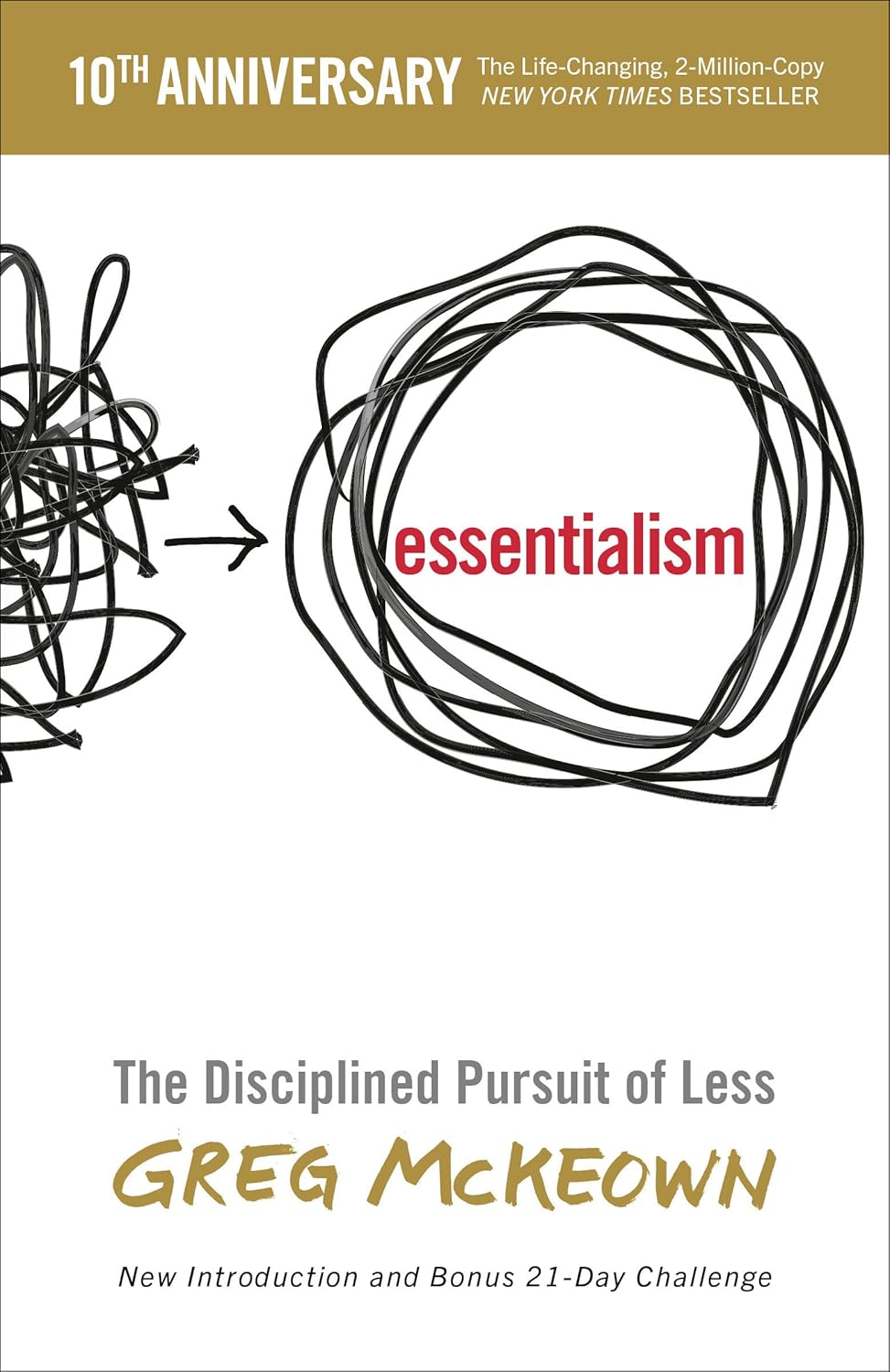
Essentialism
Productivity Lens: Focus → Execution
Essentialism argues that productivity increases when we deliberately pursue less but better. The shift is from reactive busyness to intentional execution. Instead of saying yes to every request, it teaches you to identify the vital few and eliminate the trivial many. That discipline anchors this book in Focus first, then Execution. The Explore, Eliminate, Execute model offers a structured way to clarify priorities and act on them with consistency. The decision lens is simple but demanding: if it is not essential, remove it. This addresses overcommitment, distraction, and diluted effort, which often create the feeling of being busy but not effective. Conceptual in structure and practical in application, it blends narrative examples with prescriptive practices and reflective exercises. It is most useful when your calendar is full, but your progress feels scattered.
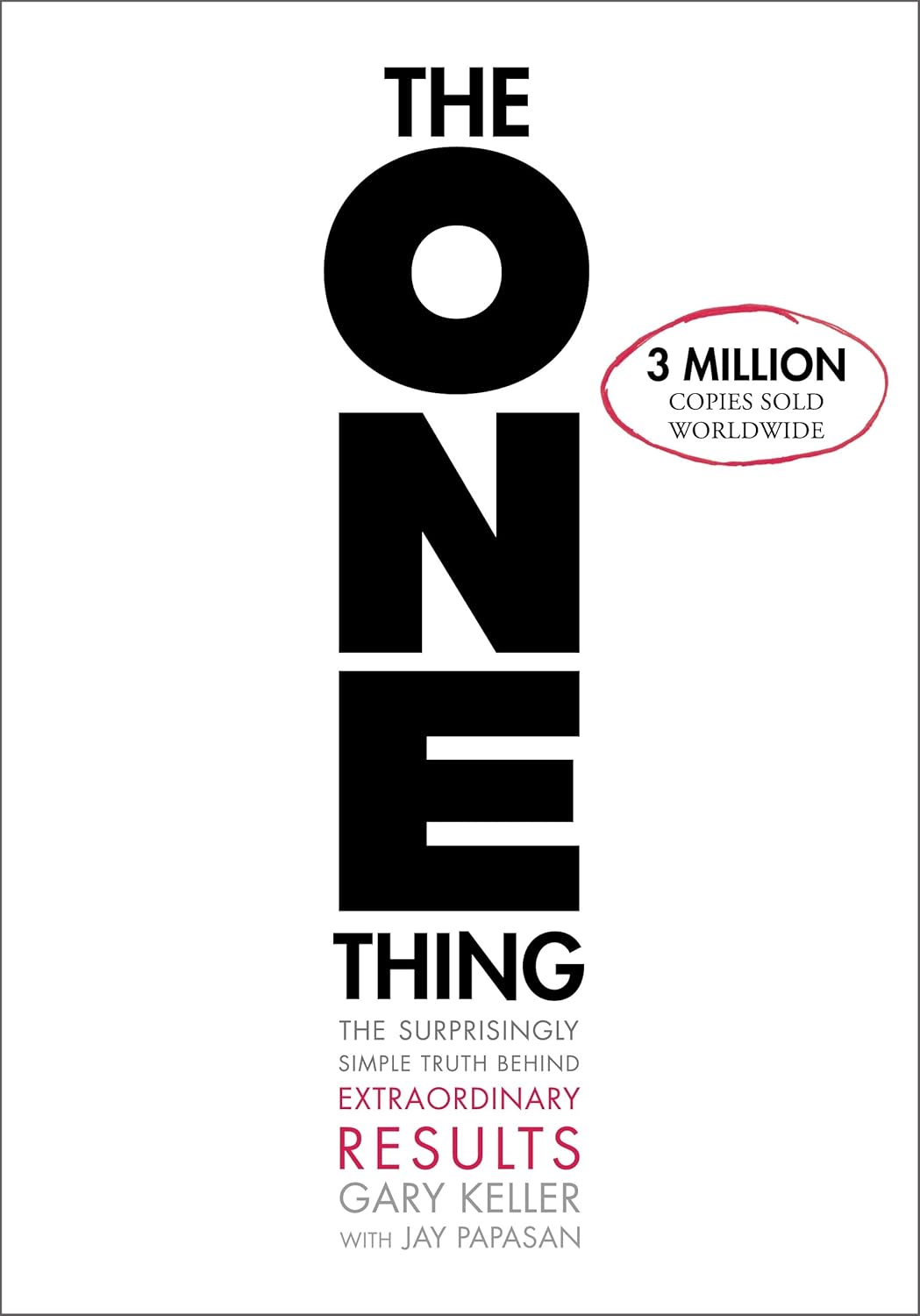
The ONE Thing
Productivity Lens: Focus → Execution
Extraordinary results come from narrowing attention to the one task that matters most. This book argues that productivity does not improve by doing more, but by identifying the single action that makes everything else easier or unnecessary. The shift is from juggling many priorities to committing to one essential priority at a time. Anchored in Focus → Execution, it develops the discipline of asking the Focusing Question and protecting time for what truly drives results. The decision lens is simple: eliminate competing priorities and act on the highest-leverage task. It addresses multitasking, diluted effort, and fragmented goals. Conceptual in framing but practical in application, it offers structured techniques such as time blocking and goal setting to the now. Most useful when work feels scattered and progress depends on sharper priority clarity.
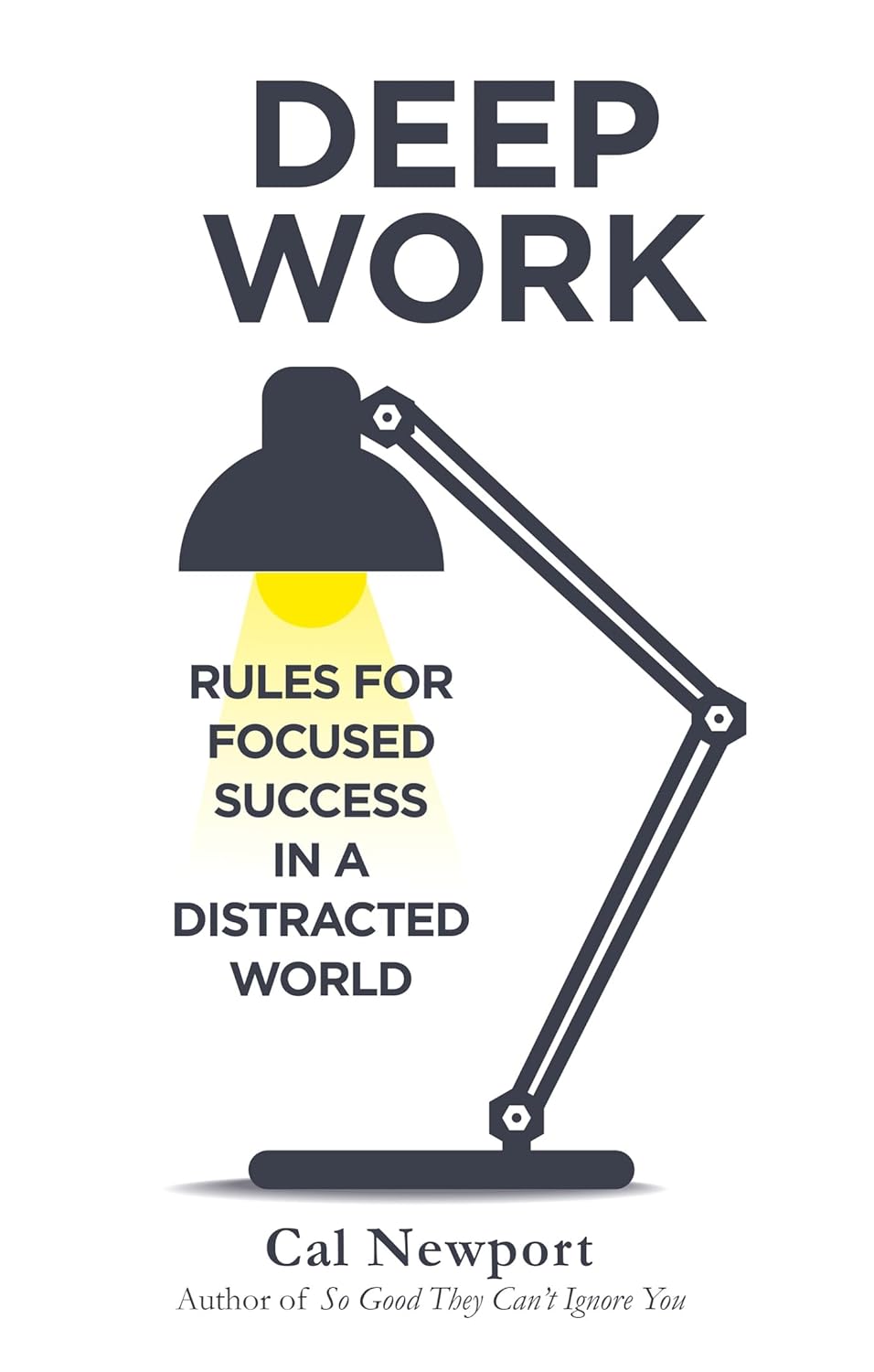
Deep Work
Productivity Lens: Focus → Execution
Deep Work argues that the ability to concentrate without distraction on cognitively demanding tasks is both rare and valuable in today’s economy. This book shifts you from shallow busyness to deliberate concentration, from reacting to noise to producing meaningful value. Anchored in Focus → Execution, it defines deep work clearly and then offers four structured rules to make it a repeatable discipline. The decision lens is simple: prioritize demanding work that creates new value and reduce the shallow tasks that fragment attention. It addresses constant distraction, declining cognitive capacity, and the habit of mistaking activity for progress. The model is conceptual but supported by practical rules and structured practices. This is most useful for professionals who sense their attention slipping and want a disciplined system for sustained concentration.
Digital Minimalism
Productivity Lens: Focus → Execution
Digital Minimalism argues that intentional and selective use of digital technologies leads to a more focused and meaningful life. The shift is from reactive consumption to deliberate use. Instead of letting tools shape attention, you decide which technologies serve deeply held values and define how they are used. Anchored in Focus → Execution, the book develops a clear decision lens: adopt technology only when it directly supports what matters most and operate it under explicit rules. A structured thirty-day digital declutter process translates philosophy into disciplined action. It addresses digital distraction, compulsive technology use, fragmented attention, and shallow leisure. The model is conceptual yet practical, supported by research, case examples, and prescriptive guidance. This is most useful for professionals who feel constantly connected yet rarely present, and who want to rebuild attention as a long-term capability rather than rely on short-term detox efforts. Best read when constant connectivity begins to erode clarity and depth.
Execution
Translate clarity into reliable action.
Getting Things Done
Productivity Lens: Focus → Execution
Productivity improves when every commitment is captured in a trusted system instead of held in the mind. Getting Things Done centers on Execution first, then Focus. It introduces a structured workflow for capturing, clarifying, organizing, reflecting, and engaging with tasks so that nothing relies on memory alone. This shift moves you from mental overload and reactive work patterns to clear next actions and deliberate follow-through. The discipline is practical and operational. Determine the next physical action. Assign it to the right list and context. Review regularly. The method addresses stress, forgotten commitments, and scattered attention by replacing vague intention with visible structure. Its value is not speed but reliability. Over time, that reliability frees attention for higher-quality thinking. Most useful when your workload feels heavy and your mind feels crowded.
Great at Work
Productivity Lens: Focus → Execution
Great performance, this book argues, comes from working smarter rather than simply working more. The core shift is from busyness to disciplined selectivity. Instead of spreading effort across many priorities, top performers choose a few and then apply sustained, structured effort. Within the Focus → Execution lens, the book emphasizes selecting a small number of meaningful priorities and rejecting low value tasks. It then translates that clarity into practice through seven work smart principles grounded in empirical research. The decision lens is practical: reduce overload, collaborate with discipline, and concentrate effort where it matters most. The problems addressed include overwork, excessive collaboration, and diluted attention. Conceptual in structure but applied in workplace settings, it is most useful for professionals who feel productive yet suspect their effort is scattered.
Compounding
Make progress durable.
Atomic Habits
Productivity Lens: Execution → Compounding
Small, consistent changes in behavior produce remarkable long-term results. This book makes the case that meaningful improvement does not come from dramatic action, but from the compound effect of tiny, repeatable habits. The shift is from chasing motivation to building systems that make progress automatic. Anchored in Execution → Compounding, it develops practical disciplines such as Habit Stacking, the Two Minute Rule, and operating within the Goldilocks Zone. The decision lens is straightforward: choose tiny actions you can sustain daily and let repetition do the heavy lifting. It addresses inconsistent follow-through, reliance on willpower, and stalled progress. Conceptual in framing yet operational in guidance, it offers structured techniques grounded in behavioral psychology. Most useful when long-term goals feel distant and the path forward requires steady, incremental gains rather than intensity.
Capstone – The Productivity Arc
Productivity is not about doing more. It is about doing what matters and doing it well over time. When you clarify your priorities, protect your attention, build reliable systems, and repeat small actions consistently, progress becomes steady instead of forced. The real shift is from reacting to demands to directing your effort with intention. These books, read together, form a practical path. First, decide what deserves your focus. Then build the structure to execute. Finally, install habits that compound quietly in the background. The result is not intensity. It is durability. Over time, that durability becomes capability. And capability, sustained across years, becomes meaningful work.
Discern the work that matters and make steady progress toward it. These practical books can help you focus your attention, build positive habits, and manage your energy.
Together, they move you from being busy but not effective to executing with clarity and purpose. The through line is simple: choose fewer priorities, design systems that support them, protect your attention, and repeat what works. Focus sharpens direction. Execution builds reliability. Energy sustains effort. Compounding turns small, disciplined actions into meaningful long-term results. This is not about time hacks or intensity bursts. It is about steady progress, thoughtful constraints, and habits that endure. Read in sequence, these books form a practical curriculum for doing less, working better, and building capability that strengthens over time.
Framework Lens: Focus → Execution → Energy → Compounding.
Focus
Discern what matters. Protect attention.
Essentialism
Productivity Lens: Focus → Execution
Essentialism argues that productivity increases when we deliberately pursue less but better. The shift is from reactive busyness to intentional execution. Instead of saying yes to every request, it teaches you to identify the vital few and eliminate the trivial many. That discipline anchors this book in Focus first, then Execution. The Explore, Eliminate, Execute model offers a structured way to clarify priorities and act on them with consistency. The decision lens is simple but demanding: if it is not essential, remove it. This addresses overcommitment, distraction, and diluted effort, which often create the feeling of being busy but not effective. Conceptual in structure and practical in application, it blends narrative examples with prescriptive practices and reflective exercises. It is most useful when your calendar is full, but your progress feels scattered.
The ONE Thing
Productivity Lens: Focus → Execution
Extraordinary results come from narrowing attention to the one task that matters most. This book argues that productivity does not improve by doing more, but by identifying the single action that makes everything else easier or unnecessary. The shift is from juggling many priorities to committing to one essential priority at a time. Anchored in Focus → Execution, it develops the discipline of asking the Focusing Question and protecting time for what truly drives results. The decision lens is simple: eliminate competing priorities and act on the highest-leverage task. It addresses multitasking, diluted effort, and fragmented goals. Conceptual in framing but practical in application, it offers structured techniques such as time blocking and goal setting to the now. Most useful when work feels scattered and progress depends on sharper priority clarity.
Deep Work
Productivity Lens: Focus → Execution
Deep Work argues that the ability to concentrate without distraction on cognitively demanding tasks is both rare and valuable in today’s economy. This book shifts you from shallow busyness to deliberate concentration, from reacting to noise to producing meaningful value. Anchored in Focus → Execution, it defines deep work clearly and then offers four structured rules to make it a repeatable discipline. The decision lens is simple: prioritize demanding work that creates new value and reduce the shallow tasks that fragment attention. It addresses constant distraction, declining cognitive capacity, and the habit of mistaking activity for progress. The model is conceptual but supported by practical rules and structured practices. This is most useful for professionals who sense their attention slipping and want a disciplined system for sustained concentration.
Digital Minimalism
Productivity Lens: Focus → Execution
Digital Minimalism argues that intentional and selective use of digital technologies leads to a more focused and meaningful life. The shift is from reactive consumption to deliberate use. Instead of letting tools shape attention, you decide which technologies serve deeply held values and define how they are used. Anchored in Focus → Execution, the book develops a clear decision lens: adopt technology only when it directly supports what matters most and operate it under explicit rules. A structured thirty-day digital declutter process translates philosophy into disciplined action. It addresses digital distraction, compulsive technology use, fragmented attention, and shallow leisure. The model is conceptual yet practical, supported by research, case examples, and prescriptive guidance. This is most useful for professionals who feel constantly connected yet rarely present, and who want to rebuild attention as a long-term capability rather than rely on short-term detox efforts. Best read when constant connectivity begins to erode clarity and depth.
Execution
Translate clarity into reliable action.
Getting Things Done
Productivity Lens: Focus → Execution
Productivity improves when every commitment is captured in a trusted system instead of held in the mind. Getting Things Done centers on Execution first, then Focus. It introduces a structured workflow for capturing, clarifying, organizing, reflecting, and engaging with tasks so that nothing relies on memory alone. This shift moves you from mental overload and reactive work patterns to clear next actions and deliberate follow-through. The discipline is practical and operational. Determine the next physical action. Assign it to the right list and context. Review regularly. The method addresses stress, forgotten commitments, and scattered attention by replacing vague intention with visible structure. Its value is not speed but reliability. Over time, that reliability frees attention for higher-quality thinking. Most useful when your workload feels heavy and your mind feels crowded.
Great at Work
Productivity Lens: Focus → Execution
Great performance, this book argues, comes from working smarter rather than simply working more. The core shift is from busyness to disciplined selectivity. Instead of spreading effort across many priorities, top performers choose a few and then apply sustained, structured effort. Within the Focus → Execution lens, the book emphasizes selecting a small number of meaningful priorities and rejecting low value tasks. It then translates that clarity into practice through seven work smart principles grounded in empirical research. The decision lens is practical: reduce overload, collaborate with discipline, and concentrate effort where it matters most. The problems addressed include overwork, excessive collaboration, and diluted attention. Conceptual in structure but applied in workplace settings, it is most useful for professionals who feel productive yet suspect their effort is scattered.
Compounding
Make progress durable.
Atomic Habits
Productivity Lens: Execution → Compounding
Small, consistent changes in behavior produce remarkable long-term results. This book makes the case that meaningful improvement does not come from dramatic action, but from the compound effect of tiny, repeatable habits. The shift is from chasing motivation to building systems that make progress automatic. Anchored in Execution → Compounding, it develops practical disciplines such as Habit Stacking, the Two Minute Rule, and operating within the Goldilocks Zone. The decision lens is straightforward: choose tiny actions you can sustain daily and let repetition do the heavy lifting. It addresses inconsistent follow-through, reliance on willpower, and stalled progress. Conceptual in framing yet operational in guidance, it offers structured techniques grounded in behavioral psychology. Most useful when long-term goals feel distant and the path forward requires steady, incremental gains rather than intensity.
Capstone – The Productivity Arc
Productivity is not about doing more. It is about doing what matters and doing it well over time. When you clarify your priorities, protect your attention, build reliable systems, and repeat small actions consistently, progress becomes steady instead of forced. The real shift is from reacting to demands to directing your effort with intention. These books, read together, form a practical path. First, decide what deserves your focus. Then build the structure to execute. Finally, install habits that compound quietly in the background. The result is not intensity. It is durability. Over time, that durability becomes capability. And capability, sustained across years, becomes meaningful work.
No matter your journey, these resources will help you develop the character and confidence to stay grounded for the long road ahead. These books are not about quick change or surface motivation. They help you slow down, notice your patterns, choose with more care, and build the inner strength to keep going when life becomes difficult. Together, they move you from impulse to intention, from reaction to responsibility, and from fragile confidence to steadier growth. Awareness helps you see what is happening inside you. Discipline helps you practice a better response. Perspective helps you interpret life with more wisdom. Resilience helps you remain steady under pressure. Read together, these books form a practical path for becoming more honest, mature, grounded, and prepared for the long work of growth.
Framework Lens: Awareness → Discipline → Perspective → Resilience.
Awareness
Notice the patterns that shape your inner life.
Emotional Agility
Self-Growth Lens: Awareness → Discipline
Emotional Agility is about learning to relate to thoughts, emotions, and behaviors with enough space to choose a wiser response. Susan David frames growth as a movement from rigidity to agility, from being hooked by old stories to acting with intention and values. In the Self-Growth lens, this belongs in Awareness → Discipline. Awareness begins by noticing emotional autopilot, self-defeating thoughts, bottling, brooding, and the difference between a feeling and a command. Discipline comes through the book’s four-part process: Showing Up, Stepping Out, Walking Your Why, and Moving On. The book addresses avoidance, stress, anxiety, difficult transitions, procrastination, and the gap between daily behavior and deeper intention. It is conceptual, psychological, reflective, and practical. Most useful when emotions are loud, but the next step needs to be chosen with honesty, steadiness, and care rather than impulse.

the untethered soul
Self-Growth Lens: Awareness → Discipline
the untethered soul is about inner freedom through the practice of noticing the voice, emotions, and disturbances inside without becoming identified with them. Michael A. Singer frames growth as a movement from being pulled by mental chatter and emotional reaction to standing back as the awareness that observes them. In the Self-Growth lens, this belongs in Awareness → Discipline. Awareness begins with seeing the inner voice, the “inner roommate,” fear, stored pain, and the habit of closing for protection. Discipline comes through the repeated practice of relaxing, releasing, staying centered, remaining open, and not letting the mind or heart’s reactions run the whole life. The book is reflective, spiritual, psychological, conceptual, and practical. Most useful when the inner voice has become too loud, and the next step is to stop obeying the noise and begin choosing steadiness, openness, and release with greater care.
Daring Greatly
Self-Growth Lens: Awareness → Resilience
Daring Greatly is about understanding vulnerability as part of courage, connection, and wholehearted living, rather than treating it as weakness. Brené Brown frames growth as a movement from hiding behind shame, scarcity, perfectionism, and emotional armor to showing up with more honesty and steadiness. In the Self-Growth lens, this belongs in Awareness → Resilience. Awareness begins by noticing the “never enough” patterns, the fear of being seen, and the ways self-worth gets tied to approval or performance. Resilience comes through shame resilience: recognizing shame, practicing critical awareness, reaching out, and speaking shame without losing courage, compassion, or connection. The book is conceptual, psychological, reflective, relational, and practical. Most useful when the fear of being seen has started to cost more than the protection it promised, and the next step is to stop protecting an image and show up with boundaries, courage, and grounded self-worth.
Reboot
Self-Growth Lens: Awareness → Resilience
Reboot argues that better humans make better leaders, and that leadership can become a path for growing up when people examine the inner patterns that shape their work and life. This is a move from reaction to awareness, and from hidden fear to steadier responsibility. In the Self-Growth lens, it belongs most clearly in Awareness → Resilience. Colonna develops radical self-inquiry as the core practice: stand still, listen inward, name the stories you carry, and ask how you may be creating conditions you say you do not want. The book addresses isolation, overwhelm, shame, exhaustion, self-deception, and the habit of mistaking motion or success for meaning. It is reflective, psychological, practical, and spiritual in tone, using personal narrative, coaching stories, and journaling questions. Best read when life looks successful on the outside, but the inner work can no longer be avoided.
Discipline
Turn insight into honest practice.
The Road Less Traveled
Self-Growth Lens: Discipline → Perspective
The Road Less Traveled frames growth as the long work of facing life honestly, accepting responsibility, and using discipline to move through pain rather than avoid it. The shift is from avoidance to responsibility, from reacting to difficulty to meeting it with steadier judgment. In the Self-Growth lens, this belongs most clearly in Discipline → Perspective. Peck’s four tools – delaying gratification, accepting responsibility, dedication to truth, and balancing – give the book its structure, while his wider argument connects mental and spiritual growth as a lifelong process. It addresses procrastination, refusal of responsibility, distorted views of reality, emotional immaturity, dependency, and confusion about love. The level is conceptual, reflective, psychological, spiritual, and practical. Read this when growth cannot remain an idea and must become a more honest way of living. Most useful when you are ready to move from insight to responsibility.
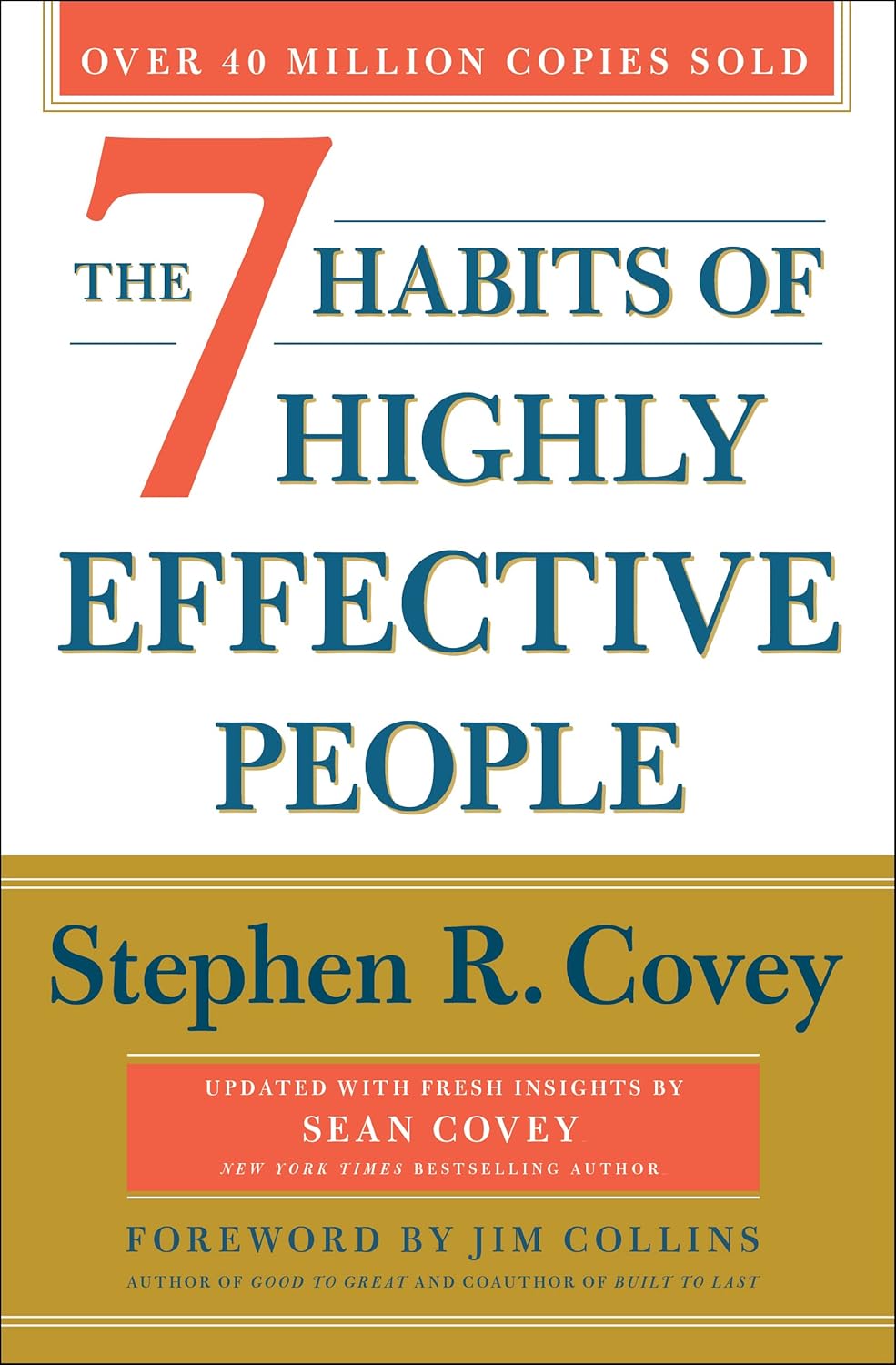
The 7 Habits of Highly Effective People
Self-Growth Lens: Awareness → Discipline
The 7 Habits of Highly Effective People begins with a steady claim: lasting growth starts inside, with the way we see, choose, and practice our lives. It moves the reader from reaction to awareness, and then from awareness to disciplined responsibility. In the Self-Growth lens, this book belongs in Awareness → Discipline because it asks readers to examine their paradigms, motives, commitments, and habits before trying to change outward results. The decision lens is practical: choose responses based on values, begin with the end in mind, put first things first, and renew the capacity that supports the work. It addresses quick-fix thinking, reactive behavior, weak commitments, misplaced priorities, and low-trust relationships at both a conceptual and practical level. Most useful when you want a structured way to move from impulse toward intention, especially in work, family, and personal responsibility.

the year of less
Self-Growth Lens: Awareness → Discipline
The Year of Less is about learning what sits underneath the habit of wanting more. Cait Flanders uses a yearlong shopping ban to examine spending, clutter, impulse, avoidance, and the stories that made consumption feel normal. The shift is from impulse to intention: from buying to feel better, toward noticing the trigger, naming the pattern, and choosing a different response. In the Self-Growth lens, this belongs in Awareness → Discipline. Awareness comes through honest attention to emotional habits and self-deception. Discipline comes through clear rules, an approved shopping list, decluttering, replacement limits, and public accountability. The book addresses mindless spending, retail therapy, debt, clutter, and the difficulty of sustaining change. It is reflective and practical, shaped as a month-by-month memoir rather than a system manual. Most useful when someone wants growth to begin with restraint, honesty, and simpler choices, but still needs to understand what keeps pulling them back to old habits.
Perspective
Learn to see growth, failure, and difficulty with a wider frame.
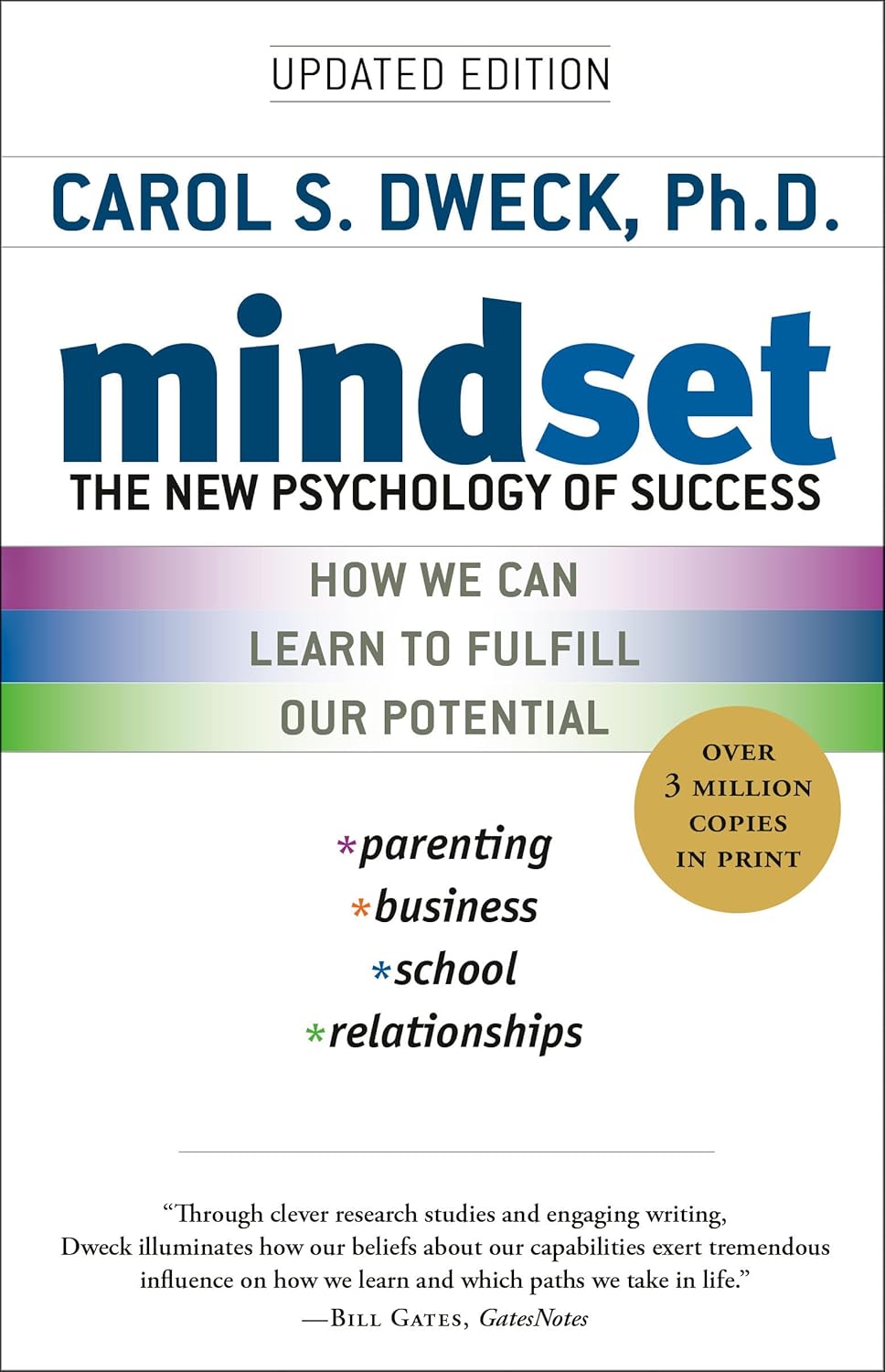
Mindset
Self-Growth Lens: Awareness → Perspective
Mindset is about how our beliefs about ability shape the way we learn, fail, try, and change. Carol Dweck’s core frame is simple: some people treat ability as fixed, while others see it as something that can grow through effort, strategy, feedback, and help. The shift is from proving yourself to developing yourself. In the Self-Growth lens, this belongs in Awareness → Perspective. Awareness comes from noticing when fear of failure, fragile confidence, labels, or the need for validation are guiding behavior. Perspective comes from reframing failure, effort, talent, and potential as part of a longer growth process. The book is conceptual and psychological, but it uses studies, stories, and practical reflection to make the pattern visible. Most useful when someone wants to move from self-judgment toward learning, steadier effort, and a more honest view of growth.
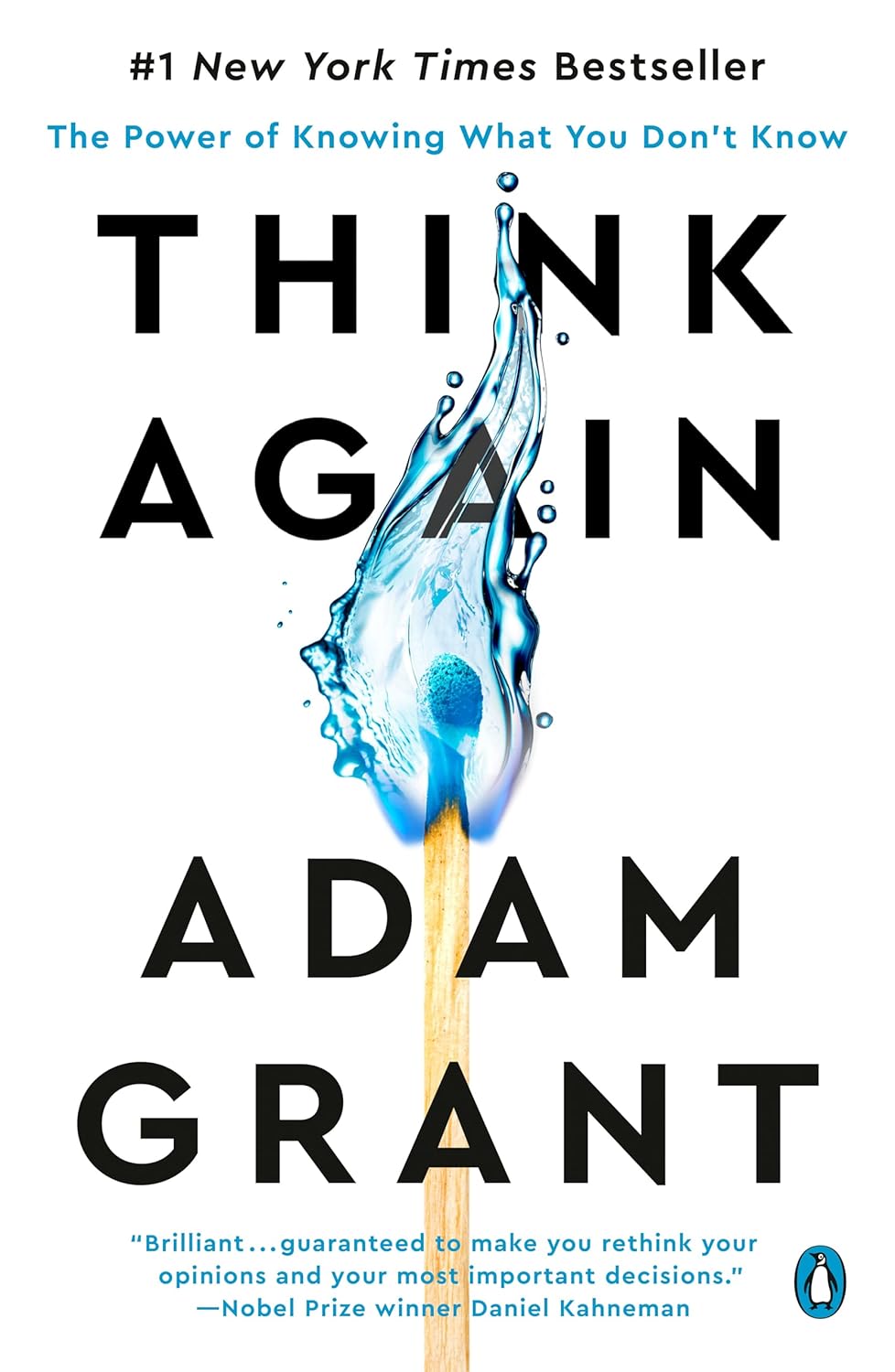
Think Again
Self-Growth Lens: Awareness → Perspective
Think Again is about the discipline of rethinking what we assume, defend, and attach to our identity. It moves growth from fixed certainty to honest revision, from protecting old opinions to testing them with humility. In the Awareness stage, the book helps readers notice blind spots, overconfidence, and the role identity plays in making beliefs harder to question. In the Perspective stage, it reframes learning as a practice of mental flexibility, where opinions are treated as hypotheses and evidence is allowed to change the conclusion. The book addresses resistance to change, polarized disagreement, and the difficulty of opening our own minds and other people’s minds. Its level is conceptual, psychological, reflective, and practical. Most useful when someone wants to grow with more humility, better judgment, and the maturity to revise what no longer holds, especially when certainty is starting to cost more than it protects.
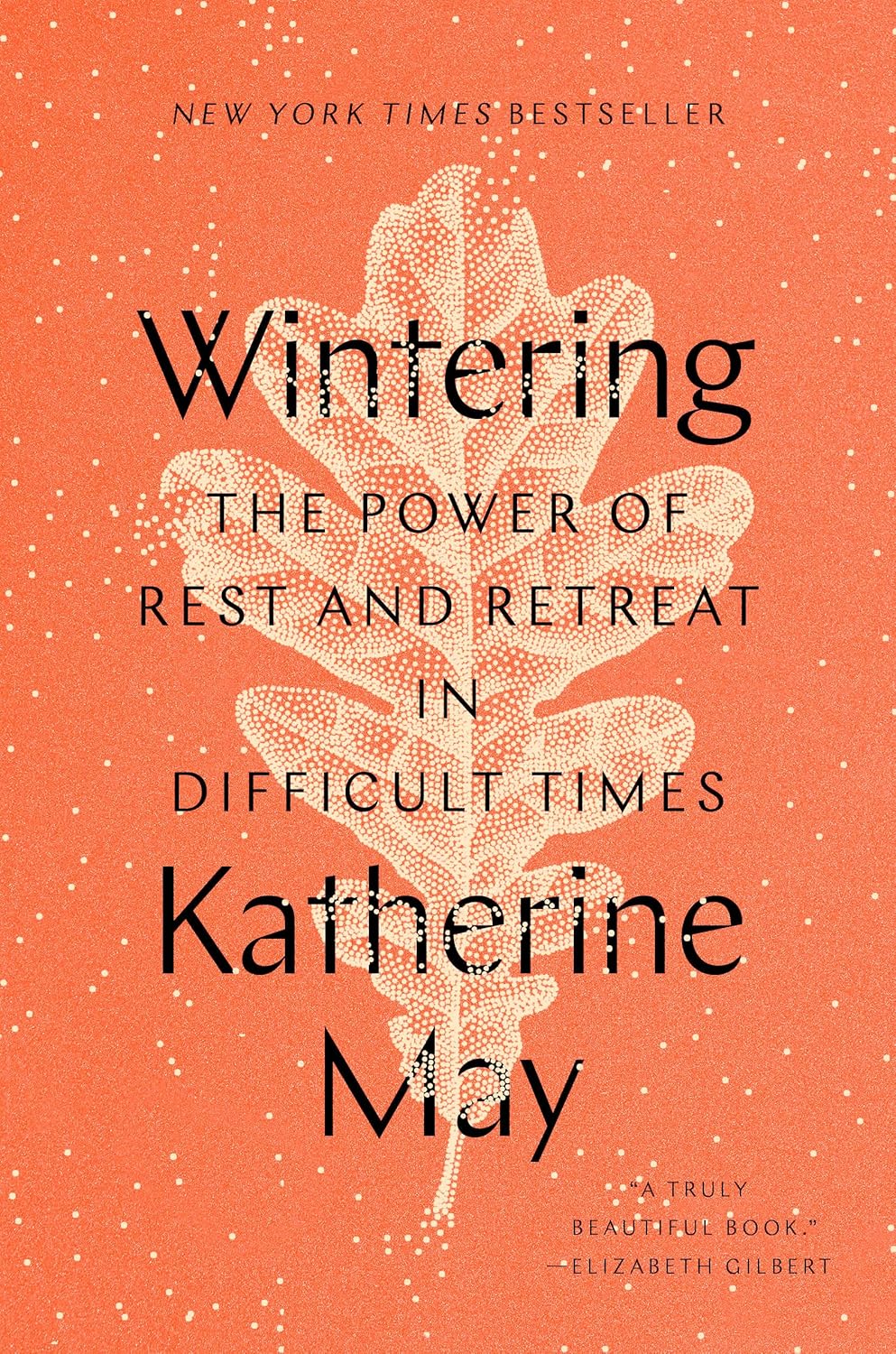
Wintering
Self-Growth Lens: Perspective → Resilience
Wintering is about learning to live through difficult seasons rather than denying them, rushing past them, or treating them as private failure. Katherine May uses winter as a frame for illness, loss, exhaustion, transition, and the quiet work of recovery. The shift is from fighting the season to learning how to move through it with care. In the Self-Growth lens, this belongs in Perspective → Resilience. Perspective comes from seeing hard seasons as part of life’s pattern, not as proof that something has gone wrong. Resilience comes from rest, retreat, preparation, adaptation, and accepting limits without losing steadiness. The book is reflective, personal, practical, psychological, spiritual, and nature based. Most useful when someone is tired of pretending it is always summer and needs a calmer way to understand struggle, conserve strength, and wait for life to begin changing again.
Resilience
Stay steady when life asks more of you.
The Obstacle Is the Way
Self-Growth Lens: Perspective → Resilience
The Obstacle Is the Way is about meeting difficulty through clear perception, disciplined action, and cultivated will. Ryan Holiday frames obstacles not as final barriers, but as material to be understood, acted on, and endured with steadiness. The shift is from reaction to responsibility: from being blocked by fear, frustration, or confusion, toward seeing clearly, choosing what is within control, and taking the next right action. In the Self-Growth lens, this belongs in Perspective → Resilience. Perspective comes from reframing obstacles through objectivity, control, and the Stoic idea that what stands in the way can become the way. Resilience comes from persistence, pragmatism, inner strength, and the ability to keep acting when outcomes remain uncertain. The book is conceptual, practical, philosophical, historical, and reflective. Most useful when obstacles feel personal, but the wiser path is to face difficulty without giving fear the final word: see clearly, act responsibly, and endure with steadiness.

Man’s Search for Meaning
Self-Growth Lens: Perspective → Resilience
Man’s Search for Meaning is about the human search for meaning, even under suffering, loss, and extreme pressure. Viktor Frankl frames meaning not as an abstract idea, but as something discovered through work, love, responsibility, and the attitude one takes toward unavoidable suffering. The shift is from asking what life should give us to asking what life requires of us. In the Self-Growth lens, this belongs in Perspective → Resilience. Perspective comes from seeing suffering, hope, and responsibility through a wider frame of meaning. Resilience comes from inner freedom, endurance, and the capacity to choose one’s response when circumstances cannot be controlled. The book is reflective, psychological, spiritual, existential, conceptual, and practical. Most useful when life feels stripped down, and the deeper work is to face suffering without losing responsibility, dignity, or meaning.
Capstone – The Self-Growth Arc
Self-growth is not about becoming someone else. It is about becoming more honest, steady, and responsible with the life already in your hands. These books begin with awareness because growth starts when you can see your patterns clearly. They move into discipline because insight must become practice. They then widen into perspective, where failure, change, and uncertainty can be understood with more maturity. Finally, they end in resilience, where meaning and steadiness matter more than comfort or control. The arc is simple: see clearly, choose carefully, think wisely, and endure faithfully. Over time, that kind of growth builds internal stability. It helps you stay grounded, not only when life is clear, but also when the road ahead is long.
No matter your journey, these resources will help you develop the character and confidence to stay grounded for the long road ahead. These books are not about quick change or surface motivation. They help you slow down, notice your patterns, choose with more care, and build the inner strength to keep going when life becomes difficult. Together, they move you from impulse to intention, from reaction to responsibility, and from fragile confidence to steadier growth. Awareness helps you see what is happening inside you. Discipline helps you practice a better response. Perspective helps you interpret life with more wisdom. Resilience helps you remain steady under pressure. Read together, these books form a practical path for becoming more honest, mature, grounded, and prepared for the long work of growth.
Framework Lens: Awareness → Discipline → Perspective → Resilience.
Awareness
Notice the patterns that shape your inner life.
Emotional Agility
Self-Growth Lens: Awareness → Discipline
Emotional Agility is about learning to relate to thoughts, emotions, and behaviors with enough space to choose a wiser response. Susan David frames growth as a movement from rigidity to agility, from being hooked by old stories to acting with intention and values. In the Self-Growth lens, this belongs in Awareness → Discipline. Awareness begins by noticing emotional autopilot, self-defeating thoughts, bottling, brooding, and the difference between a feeling and a command. Discipline comes through the book’s four-part process: Showing Up, Stepping Out, Walking Your Why, and Moving On. The book addresses avoidance, stress, anxiety, difficult transitions, procrastination, and the gap between daily behavior and deeper intention. It is conceptual, psychological, reflective, and practical. Most useful when emotions are loud, but the next step needs to be chosen with honesty, steadiness, and care rather than impulse.
the untethered soul
Self-Growth Lens: Awareness → Discipline
the untethered soul is about inner freedom through the practice of noticing the voice, emotions, and disturbances inside without becoming identified with them. Michael A. Singer frames growth as a movement from being pulled by mental chatter and emotional reaction to standing back as the awareness that observes them. In the Self-Growth lens, this belongs in Awareness → Discipline. Awareness begins with seeing the inner voice, the “inner roommate,” fear, stored pain, and the habit of closing for protection. Discipline comes through the repeated practice of relaxing, releasing, staying centered, remaining open, and not letting the mind or heart’s reactions run the whole life. The book is reflective, spiritual, psychological, conceptual, and practical. Most useful when the inner voice has become too loud, and the next step is to stop obeying the noise and begin choosing steadiness, openness, and release with greater care.
Daring Greatly
Self-Growth Lens: Awareness → Resilience
Daring Greatly is about understanding vulnerability as part of courage, connection, and wholehearted living, rather than treating it as weakness. Brené Brown frames growth as a movement from hiding behind shame, scarcity, perfectionism, and emotional armor to showing up with more honesty and steadiness. In the Self-Growth lens, this belongs in Awareness → Resilience. Awareness begins by noticing the “never enough” patterns, the fear of being seen, and the ways self-worth gets tied to approval or performance. Resilience comes through shame resilience: recognizing shame, practicing critical awareness, reaching out, and speaking shame without losing courage, compassion, or connection. The book is conceptual, psychological, reflective, relational, and practical. Most useful when the fear of being seen has started to cost more than the protection it promised, and the next step is to stop protecting an image and show up with boundaries, courage, and grounded self-worth.
Reboot
Self-Growth Lens: Awareness → Resilience
Reboot argues that better humans make better leaders, and that leadership can become a path for growing up when people examine the inner patterns that shape their work and life. This is a move from reaction to awareness, and from hidden fear to steadier responsibility. In the Self-Growth lens, it belongs most clearly in Awareness → Resilience. Colonna develops radical self-inquiry as the core practice: stand still, listen inward, name the stories you carry, and ask how you may be creating conditions you say you do not want. The book addresses isolation, overwhelm, shame, exhaustion, self-deception, and the habit of mistaking motion or success for meaning. It is reflective, psychological, practical, and spiritual in tone, using personal narrative, coaching stories, and journaling questions. Best read when life looks successful on the outside, but the inner work can no longer be avoided.
Discipline
Turn insight into honest practice.
The Road Less Traveled
Self-Growth Lens: Discipline → Perspective
The Road Less Traveled frames growth as the long work of facing life honestly, accepting responsibility, and using discipline to move through pain rather than avoid it. The shift is from avoidance to responsibility, from reacting to difficulty to meeting it with steadier judgment. In the Self-Growth lens, this belongs most clearly in Discipline → Perspective. Peck’s four tools – delaying gratification, accepting responsibility, dedication to truth, and balancing – give the book its structure, while his wider argument connects mental and spiritual growth as a lifelong process. It addresses procrastination, refusal of responsibility, distorted views of reality, emotional immaturity, dependency, and confusion about love. The level is conceptual, reflective, psychological, spiritual, and practical. Read this when growth cannot remain an idea and must become a more honest way of living. Most useful when you are ready to move from insight to responsibility.
The 7 Habits of Highly Effective People
Self-Growth Lens: Awareness → Discipline
The 7 Habits of Highly Effective People begins with a steady claim: lasting growth starts inside, with the way we see, choose, and practice our lives. It moves the reader from reaction to awareness, and then from awareness to disciplined responsibility. In the Self-Growth lens, this book belongs in Awareness → Discipline because it asks readers to examine their paradigms, motives, commitments, and habits before trying to change outward results. The decision lens is practical: choose responses based on values, begin with the end in mind, put first things first, and renew the capacity that supports the work. It addresses quick-fix thinking, reactive behavior, weak commitments, misplaced priorities, and low-trust relationships at both a conceptual and practical level. Most useful when you want a structured way to move from impulse toward intention, especially in work, family, and personal responsibility.
the year of less
Self-Growth Lens: Awareness → Discipline
The Year of Less is about learning what sits underneath the habit of wanting more. Cait Flanders uses a yearlong shopping ban to examine spending, clutter, impulse, avoidance, and the stories that made consumption feel normal. The shift is from impulse to intention: from buying to feel better, toward noticing the trigger, naming the pattern, and choosing a different response. In the Self-Growth lens, this belongs in Awareness → Discipline. Awareness comes through honest attention to emotional habits and self-deception. Discipline comes through clear rules, an approved shopping list, decluttering, replacement limits, and public accountability. The book addresses mindless spending, retail therapy, debt, clutter, and the difficulty of sustaining change. It is reflective and practical, shaped as a month-by-month memoir rather than a system manual. Most useful when someone wants growth to begin with restraint, honesty, and simpler choices, but still needs to understand what keeps pulling them back to old habits.
Perspective
Learn to see growth, failure, and difficulty with a wider frame.
Mindset
Self-Growth Lens: Awareness → Perspective
Mindset is about how our beliefs about ability shape the way we learn, fail, try, and change. Carol Dweck’s core frame is simple: some people treat ability as fixed, while others see it as something that can grow through effort, strategy, feedback, and help. The shift is from proving yourself to developing yourself. In the Self-Growth lens, this belongs in Awareness → Perspective. Awareness comes from noticing when fear of failure, fragile confidence, labels, or the need for validation are guiding behavior. Perspective comes from reframing failure, effort, talent, and potential as part of a longer growth process. The book is conceptual and psychological, but it uses studies, stories, and practical reflection to make the pattern visible. Most useful when someone wants to move from self-judgment toward learning, steadier effort, and a more honest view of growth.
Think Again
Self-Growth Lens: Awareness → Perspective
Think Again is about the discipline of rethinking what we assume, defend, and attach to our identity. It moves growth from fixed certainty to honest revision, from protecting old opinions to testing them with humility. In the Awareness stage, the book helps readers notice blind spots, overconfidence, and the role identity plays in making beliefs harder to question. In the Perspective stage, it reframes learning as a practice of mental flexibility, where opinions are treated as hypotheses and evidence is allowed to change the conclusion. The book addresses resistance to change, polarized disagreement, and the difficulty of opening our own minds and other people’s minds. Its level is conceptual, psychological, reflective, and practical. Most useful when someone wants to grow with more humility, better judgment, and the maturity to revise what no longer holds, especially when certainty is starting to cost more than it protects.
Wintering
Self-Growth Lens: Perspective → Resilience
Wintering is about learning to live through difficult seasons rather than denying them, rushing past them, or treating them as private failure. Katherine May uses winter as a frame for illness, loss, exhaustion, transition, and the quiet work of recovery. The shift is from fighting the season to learning how to move through it with care. In the Self-Growth lens, this belongs in Perspective → Resilience. Perspective comes from seeing hard seasons as part of life’s pattern, not as proof that something has gone wrong. Resilience comes from rest, retreat, preparation, adaptation, and accepting limits without losing steadiness. The book is reflective, personal, practical, psychological, spiritual, and nature based. Most useful when someone is tired of pretending it is always summer and needs a calmer way to understand struggle, conserve strength, and wait for life to begin changing again.
Resilience
Stay steady when life asks more of you.
The Obstacle Is the Way
Self-Growth Lens: Perspective → Resilience
The Obstacle Is the Way is about meeting difficulty through clear perception, disciplined action, and cultivated will. Ryan Holiday frames obstacles not as final barriers, but as material to be understood, acted on, and endured with steadiness. The shift is from reaction to responsibility: from being blocked by fear, frustration, or confusion, toward seeing clearly, choosing what is within control, and taking the next right action. In the Self-Growth lens, this belongs in Perspective → Resilience. Perspective comes from reframing obstacles through objectivity, control, and the Stoic idea that what stands in the way can become the way. Resilience comes from persistence, pragmatism, inner strength, and the ability to keep acting when outcomes remain uncertain. The book is conceptual, practical, philosophical, historical, and reflective. Most useful when obstacles feel personal, but the wiser path is to face difficulty without giving fear the final word: see clearly, act responsibly, and endure with steadiness.
Man’s Search for Meaning
Self-Growth Lens: Perspective → Resilience
Man’s Search for Meaning is about the human search for meaning, even under suffering, loss, and extreme pressure. Viktor Frankl frames meaning not as an abstract idea, but as something discovered through work, love, responsibility, and the attitude one takes toward unavoidable suffering. The shift is from asking what life should give us to asking what life requires of us. In the Self-Growth lens, this belongs in Perspective → Resilience. Perspective comes from seeing suffering, hope, and responsibility through a wider frame of meaning. Resilience comes from inner freedom, endurance, and the capacity to choose one’s response when circumstances cannot be controlled. The book is reflective, psychological, spiritual, existential, conceptual, and practical. Most useful when life feels stripped down, and the deeper work is to face suffering without losing responsibility, dignity, or meaning.
Capstone – The Self-Growth Arc
Self-growth is not about becoming someone else. It is about becoming more honest, steady, and responsible with the life already in your hands. These books begin with awareness because growth starts when you can see your patterns clearly. They move into discipline because insight must become practice. They then widen into perspective, where failure, change, and uncertainty can be understood with more maturity. Finally, they end in resilience, where meaning and steadiness matter more than comfort or control. The arc is simple: see clearly, choose carefully, think wisely, and endure faithfully. Over time, that kind of growth builds internal stability. It helps you stay grounded, not only when life is clear, but also when the road ahead is long.
Personal branding is not a fuzzy marketing term. Even if you are allergic to the idea of “selling yourself,” these books will help you connect with honesty and purpose, whether you are leading a team or updating your LinkedIn profile.
At its core, personal branding is about alignment. Alignment between who you are and how you show up. Between what you believe and what you build. Between the work you do and the reputation that follows. When that alignment is missing, noise increases. When it is present, credibility compounds.
This is not a list of popular titles. It is a curated shelf organized as a progression. First, clarity. Then positioning. Then platform. Finally, trust. You can read them in any order, but they are grouped to reflect how reputation is built over time.
Foundation – Identity and Standards
Clarity precedes visibility.
Order from personal philosophy → disciplined focused → compounding behavior → relational mindset. That is, it begins with internal standards, moves into focus and trade-offs, then discipline and compounding, then ambition, then relational generosity, and finally courageous action.

The Four Agreements: A Toltec Wisdom Book
Personal Branding Lens: Clarity → Trust
This book is for individuals seeking Clarity and Trust in how they show up each day. The tension is internal: inherited beliefs shape behavior, yet most people remain unaware of them. Before reading, reactions feel automatic. After reading, behavior becomes intentional. Awareness changes everything. The four agreements – be impeccable with your word, don’t take anything personally, don’t make assumptions, and always do your best – create a simple behavioral structure. Impeccability reframes integrity as not using your word against yourself or others. Not taking things personally dissolves unnecessary emotional friction. Repetition makes the master. Over time, these agreements shift reputation from reactive to steady. The book does not offer positioning tactics or platform strategies; it strengthens inner discipline. Used consistently, it builds credibility through daily conduct and supports long-term identity maturity rooted in integrity rather than impression.
The Subtle Art of Not Giving a F*ck: A Counterintuitive Approach to Living a Good Life
Personal Branding Lens: Clarity → Trust
This book is for readers working at the Clarity and Trust stages of personal branding. Before reading, success often feels like chasing constant positivity and approval. After reading, it becomes a deliberate choice about which values deserve attention and which do not. Choose your values carefully. The central idea that values shape behavior reframes personal growth as responsibility, not image management. By owning reactions and embracing discomfort, the reader shifts from external validation to internal standards. The argument that meaningful struggle matters more than superficial happiness reinforces consistency over performance. This is not about being indifferent. It is about being selective. Used well, it strengthens value alignment and builds long-term credibility grounded in deliberate choice rather than noise.
Essentialism: The Disciplined Pursuit of Less
Personal Branding Lens: Clarity → Trust
This book is for professionals who feel stretched thin and want sharper focus in their work and identity. Essentialism centers on the disciplined pursuit of less. It argues that success comes not from doing more, but from exploring, eliminating, and executing only what is vital. The shift is clear: from reacting to every demand to deliberately choosing what is “absolutely” necessary. Less but better. Through rigorous prioritization, boundary setting, and acceptance of trade-offs, the book frames clarity as a daily decision filter. It is not about productivity hacks. It is about deciding what truly matters and protecting it. For personal branding, that discipline strengthens both Clarity and Trust. When your actions consistently reflect what you say is essential, reputation compounds over time.
The ONE Thing: The Surprisingly Simple Truth Behind Extraordinary Results
Personal Branding Lens: Clarity → Trust
This book is for builders who feel scattered and want sharper clarity in how they invest their time and energy. Before reading, effort is divided across many priorities. After reading, decisions revolve around one essential question: What is the ONE Thing that makes everything else easier or unnecessary? Focus changes everything. The “Focusing Question” and the discipline of time blocking create a structure for narrowing attention to what truly matters. By challenging multitasking and balance myths, the book reframes success as sequential and deliberate. In the Personal Branding Lens, this strengthens Clarity by defining what deserves attention and Trust by reinforcing consistent execution. Used well, it helps translate long-term vision into daily action and build credibility through disciplined follow-through.
The Slight Edge: Turning Simple Disciplines into Massive Success and Happiness
Personal Branding Lens: Clarity → Trust
This book is for individuals building long-term reputation through disciplined action rather than dramatic reinvention. Its core idea is simple: small daily choices compound over time. Before reading, success feels tied to big moves and visible breakthroughs. After reading, progress becomes the result of repeated, ordinary decisions. The “Slight Edge” principle reframes growth as consistency applied patiently. Small actions matter. The book challenges short-term comfort and replaces it with a long view anchored in philosophy, habits, and compounding results. Within the Personal Branding Lens, it strengthens Clarity by sharpening awareness of daily choices, and it reinforces Trust through steady, disciplined behavior. It does not offer positioning tactics or visibility strategies. It offers something quieter. Used well, it builds credibility through consistency and helps shape a reputation grounded in long-term character rather than short-term intensity.
So Good They Can’t Ignore You: Why Skills Trump Passion in the Quest for Work You Love
Personal Branding Lens: Clarity → Trust
This book is for professionals who feel pressure to “follow their passion” but suspect that advice is incomplete. The shift is simple: from chasing passion to building rare and valuable skills. Newport challenges the passion hypothesis and introduces the craftsman mindset, focusing on the value you produce rather than the value you receive. Skills create leverage. He defines career capital as the foundation for autonomy and impact, earned through deliberate practice and disciplined improvement. In personal branding terms, this is about Clarity first. You define yourself by the quality of your contribution, not by slogans about purpose. Trust follows. As you accumulate career capital, your reputation compounds because your work becomes difficult to ignore. Read this as a thinking tool for long-term positioning built on substance, not sentiment, and for an identity shaped by mastery rather than mood.

Range: Why Generalists Triumph in a Specialized World
Personal Branding Lens: Clarity → Positioning
This book is for professionals who feel pressure to specialize early and narrow their identity too soon. Before reading, you may believe depth alone defines value. After reading, you see breadth as strategic. David Epstein challenges early specialization and contrasts “kind” environments with “wicked” ones where rules shift and feedback is unclear. That distinction matters. In complex fields, range supports adaptability. Through research on sampling periods and interdisciplinary achievement, the book reframes how you think about career development and differentiation. Under the Personal Branding Lens, it sharpens Clarity by redefining what strength looks like and strengthens Positioning by showing how generalists can thrive where narrow experts stall. It is not a rejection of skill. It is a reordering of assumptions. Over time, that broader base can compound into a reputation for insight that crosses boundaries rather than staying confined within them.
Think and Grow Rich
Personal Branding Lens: Clarity → Trust
This book is for individuals working at the Clarity and Trust stages of their personal brand. Before reading, ambition may feel scattered and reactive. After reading, purpose becomes defined and disciplined. Clarity precedes influence. Hill centers the idea of a definite chief aim, combined with belief, persistence, and organized planning. The Master Mind principle reinforces that coordinated effort and aligned alliances strengthen outcomes. These ideas do not describe market positioning or platform building. They focus on internal alignment and consistent behavior. The shift is from vague desire to structured intent. Used as a thinking tool, the book encourages deliberate thought, resilient action, and long-term cooperation. Over time, that discipline shapes reputation through consistency and reliability rather than visibility alone.
Give and Take: A Revolutionary Approach to Success
Personal Branding Lens: Clarity → Trust
This book is for professionals shaping their identity and long-term reputation. Adam Grant introduces three reciprocity styles: givers, takers, and matchers. That framework creates clarity. Before reading, success may feel like competition; after reading, you see how contribution patterns shape outcomes. The shift is from short-term advantage to long-term reputation. Grant uses research and case examples to show how generosity, when practiced wisely, influences network strength and career trajectory. He also distinguishes selfless giving from “otherish” giving that includes self-protection. That nuance matters. In the Personal Branding Lens, the book sharpens Clarity by helping you define how you show up in relationships, and it strengthens Trust by framing contribution as strategic, not naive. It is not a formula for being nice. It is a lens for building relational capital that compounds over time and matures into durable professional credibility.
Be Fearless: 5 Principles for a Life of Breakthroughs and Purpose
Personal Branding Lens: Clarity → Trust
This book is for professionals who feel ready for greater impact but hesitate at the edge of risk. Jean Case outlines five principles, including making a big bet, learning from failure, and reaching beyond your bubble. Fearlessness is a discipline. The shift is from cautious incremental action to intentional, principle-driven breakthroughs rooted in purpose. Under the Personal Branding Lens, the book strengthens Clarity by defining a repeatable mindset for courageous action, and Trust by emphasizing accountability, resilience, and learning through experimentation. Case frames impact as the result of proactive decisions rather than comfort. The case studies ground the principles in real behavior. This is not a formula for visibility. It is a thinking tool for those who want their reputation to reflect conviction, disciplined risk-taking, and long-term contribution.
Framing – Differentiation and Message
Positioning defines relevance.
Order from category thinking → message clarity → persuasion mechanics → professional signaling. That is, this moves from macro differentiation to narrative clarity, then authority positioning, then persuasion, then profile-level signaling.
Blue Ocean Strategy: Expanded Edition: How to Create Uncontested Market Space and Make the Competition Irrelevant.
Personal Branding Lens: Clarity → Positioning
This book is for professionals and founders who are stuck competing in crowded markets and want to rethink how they differentiate. Before reading, positioning often feels reactive, shaped by rivals and existing categories. After reading, positioning becomes a deliberate act of creating new space. Compete differently. The core idea of value innovation reframes differentiation as breaking the value-cost trade-off rather than choosing between premium and low cost. The tools and principles for reconstructing market boundaries and reaching beyond existing demand offer a structured way to shift from rivalry to relevance. Through its formulation and execution principles, the book functions as a positioning lens, not a branding tactic. Used well, it strengthens long-term strategic clarity and supports the building of a brand rooted in distinct value rather than comparison.
Building a StoryBrand 2.0: Clarify Your Message So Customers Will Listen
Personal Branding Lens: Clarity → Positioning
This book is for founders, creators, and advisors whose message feels scattered or overly complex. If your audience seems confused, this framework helps you move from unclear communication to a simple, structured narrative. Clarity creates traction. Miller introduces a seven-part storytelling model that positions the customer as the hero and the brand as the guide. That shift alone reframes how you speak about your work. Instead of listing features, you define the problem, the solution, and the transformation outcome. The result is tighter messaging and stronger positioning rooted in customer understanding. This is not a branding slogan exercise. It is a communication discipline. Over time, clear messaging compounds into credibility, and credibility shapes how your identity matures in the marketplace.
The Millionaire Messenger: Make a Difference and a Fortune Sharing Your Advice
Personal Branding Lens: Clarity → Positioning
This book is for professionals who sense they have valuable experience but have not yet defined it as a clear message. It centers on Clarity and Positioning. Burchard argues that life story, expertise, and hard-won lessons can become structured advice when tied to a specific audience and transformation outcome. Before reading, your experience feels personal and scattered. After reading, it becomes organized and intentional. The concept of the “expert industry” reframes advice as an economic asset rather than casual insight. He walks through identifying a target audience, shaping a promise, and building authority through books, seminars, and information products. Message matters. The book works as a thinking tool for those ready to treat knowledge as a disciplined offering instead of a hobby. Over time, that discipline compounds into reputation and durable authority.
The Advertising Solution: Influence Prospects, Multiply Sales, and Promote Your Brand
Personal Branding Lens: Positioning
This book is for professionals who need sharper Positioning in crowded markets. Before reading, you may advertise broadly and hope for response. After reading, you think in terms of defined prospects, structured offers, and measurable outcomes. Positioning beats noise. The authors center their approach on understanding target audiences and crafting benefit-driven messaging aligned to specific segments. They treat advertising as a systematic process, built on offer creation, headline strategy, calls to action, and disciplined testing. The focus on tracking and metrics reinforces that message-market fit is not guesswork. This is not about creativity alone. It is about structured persuasion. Used well, it becomes a thinking tool for aligning your message with the right people and strengthening long-term brand credibility through consistent, value-driven communication.
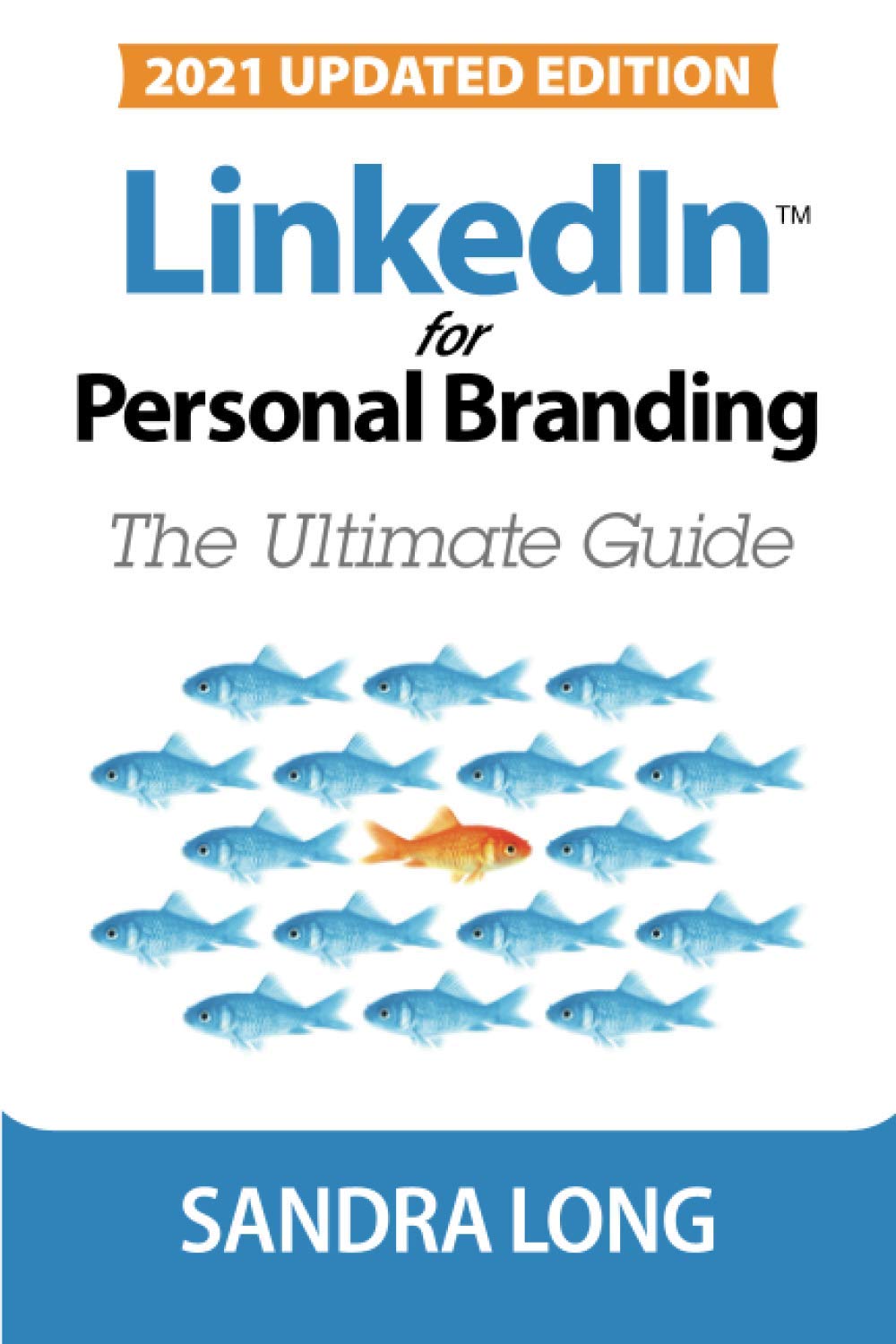
LinkedIn for Personal Branding: The Ultimate Guide
Personal Branding Lens: Positioning
This book is for professionals who want to move from having a LinkedIn profile to owning a clear, searchable position in a crowded marketplace. Before reading, many users treat LinkedIn as an online resume; after reading, they approach it as a structured positioning asset. Clarity comes first. Sandra Long emphasizes defining your professional value before optimizing headlines, summaries, and experience sections. The focus on keyword strategy and search discoverability ties directly to Positioning, helping you stand out in LinkedIn results rather than blending in. She also highlights recommendations, endorsements, and consistent engagement as credibility signals within the platform’s ecosystem. The book works as a practical thinking tool, guiding how to align message, profile structure, and activity. Used consistently, it supports long-term professional visibility and a reputation built on relevance and contribution.
Systems – Distribution and Reach
Platform amplifies positioning.
Order from ownership → expression → social leverage → publishing → growth acceleration → entry tactic. That is, this begins with building owned assets, then daily creative visibility, then social ecosystem leverage, then formal publishing, then tactical content sequencing, and finally then aggressive scaling.
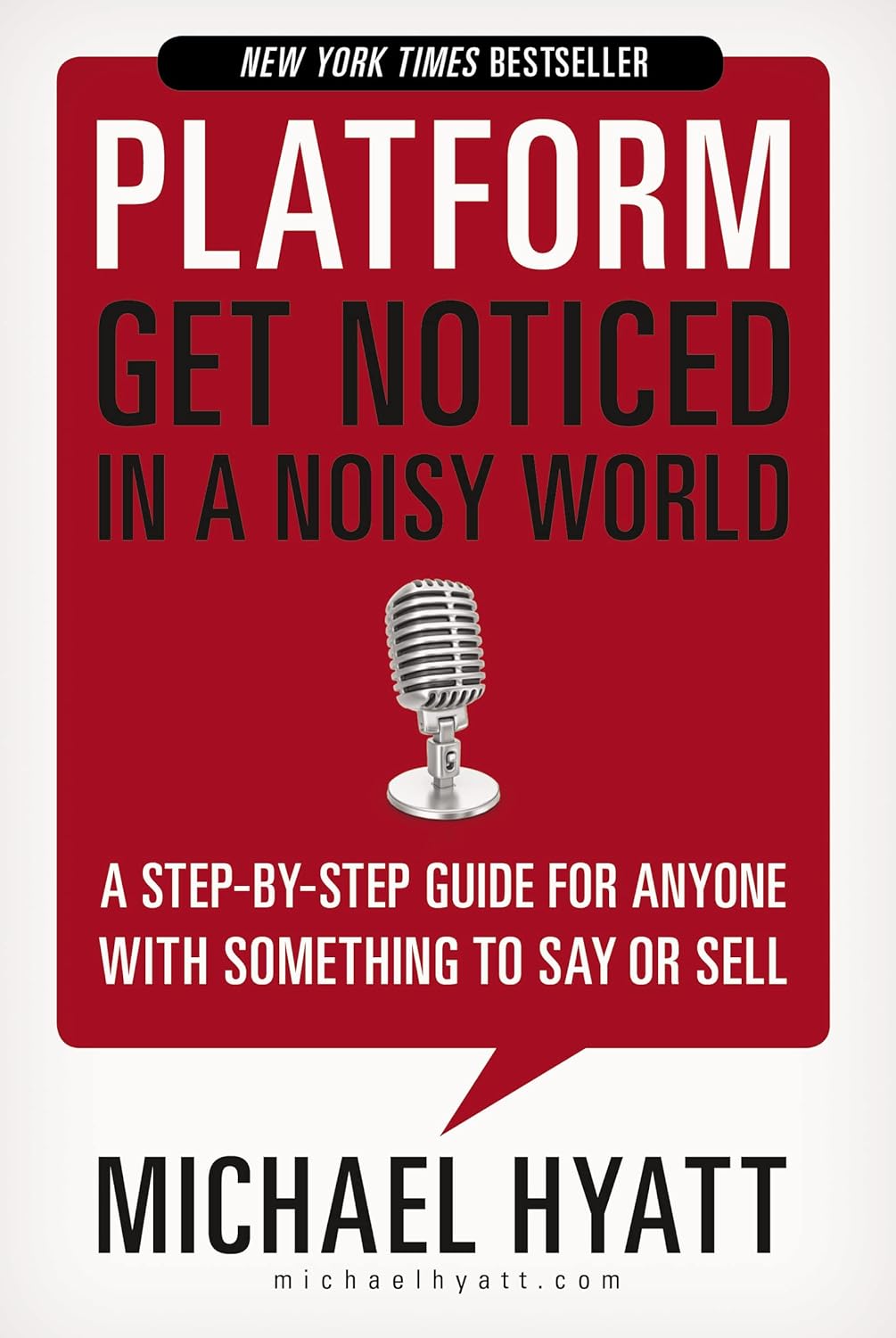
Platform: Get Noticed in a Noisy World
Personal Branding Lens: Platform, Trust
This book is for builders who know their message matters but lack the visibility to amplify it. Before reading, effort feels scattered across blogs, social media, and speaking without cohesion. After reading, visibility becomes a deliberate system. Build the platform first. Hyatt defines a platform as the tools, channels, and relationships that enable someone to be heard, and he offers a practical roadmap from clarifying your message to establishing a home base and leveraging social media. The shift is from random posting to structured presence. The emphasis on audience focus, niche selection, and consistent value anchors the Platform lens, while authenticity and long-term engagement strengthen Trust. Framed as a structured framework rather than theory, it encourages disciplined visibility that compounds over time. Used well, it helps translate message into sustained influence with credibility.
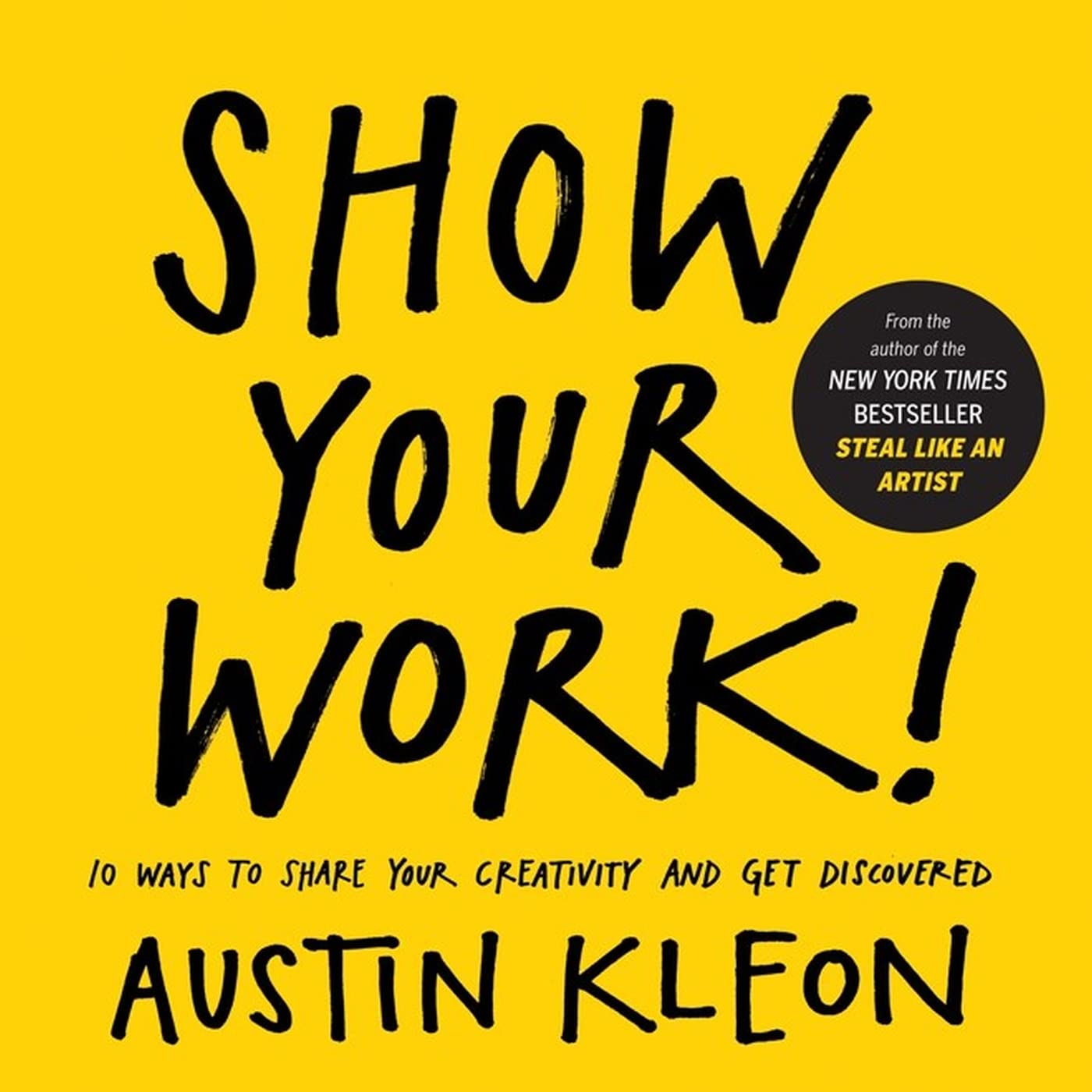
Show Your Work!: 10 Ways to Share Your Creativity and Get Discovered
Personal Branding Lens: Clarity → Platform
This book is for creators who hesitate to publish until their work feels finished. Austin Kleon argues that progress builds audience. Not perfection. The shift is simple but concrete: move from hiding finished work to sharing learning in public. Through short chapters and ten guiding principles, he frames “showing your work” as a daily practice of documenting process, teaching what you know, and using online platforms as distribution channels. The emphasis is not on polished branding but on consistent visibility. In the Personal Branding Lens, this begins with Clarity, understanding what you are making and learning, and extends to Platform, using the internet to share it steadily. It functions as a thinking tool about momentum and openness rather than a formula for virality. Over time, consistent sharing shapes reputation more than isolated breakthroughs ever will.
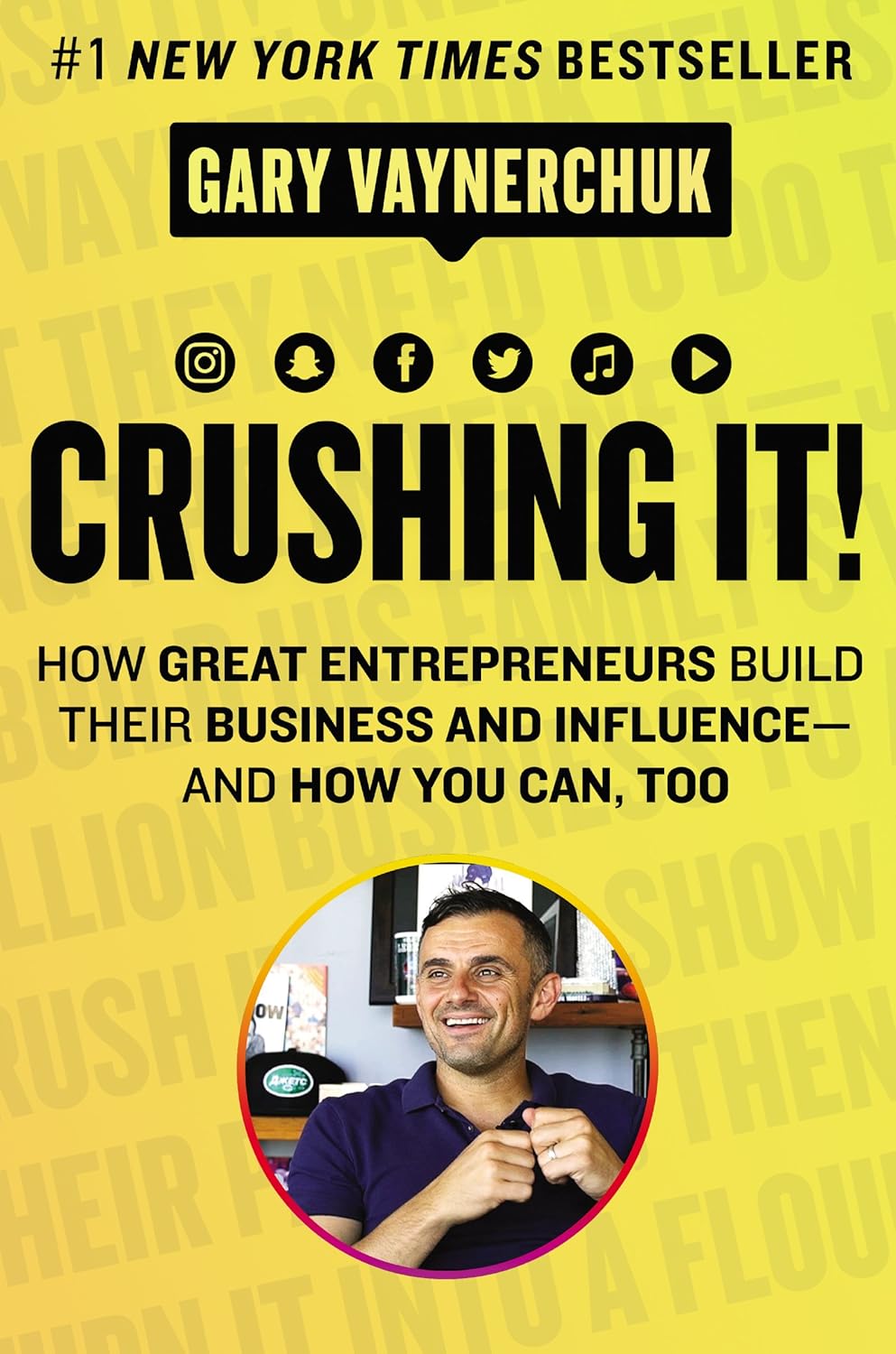
Crushing It!: How Great Entrepreneurs Build Their Business and Influence—and How You Can, Too
Personal Branding Lens: Clarity → Platform
This book is for creators and entrepreneurs who want to build a personal brand but feel uncertain about where to begin. Gary Vaynerchuk argues that brand growth starts with identifying your passion and expertise, then expressing it consistently across social media platforms. Attention is earned daily. The shift is clear: from waiting for opportunity to building influence through steady content creation. Case studies show how individuals leveraged specific platforms by respecting each channel’s dynamics rather than posting the same message everywhere. The book frames attention as a modern asset that can convert into business results over time. It is less a theory and more a collection of applied examples. Read it as a lens on how clarity of voice and disciplined publishing compound into long-term reputation and identity strength.

Published.: The Proven Path From Blank Page To 10,000 Copies Sold
Personal Branding Lens: Clarity → Platform
This book is for aspiring authors and entrepreneurs who want to turn a manuscript into a business asset. It begins with Clarity. Before writing, Bolt emphasizes validating the idea, defining a specific reader, and sharpening the message. That shift matters: from writing what you want to say → to writing what a defined audience will value. Then it moves into Platform. The book outlines structured launch strategy, list building, and coordinated promotion to create visibility and sales. Value before volume. A book is framed not as a creative milestone but as a strategic tool for authority and reach. The thinking is practical and process driven. Used well, it helps you treat authorship as intentional brand infrastructure, strengthening long-term credibility rather than chasing short-term attention.

Jab, Jab, Jab, Right Hook: How to Tell Your Story in a Noisy Social World
Personal Branding Lens: Platform → Trust
This book is for builders shaping their Platform and earning Trust in crowded digital spaces. The tension is familiar: everyone is posting, few are connecting. Before reading, content feels repetitive and transactional. After reading, communication becomes contextual and intentional. Context matters. The central idea of delivering value repeatedly before making an ask reframes brand building as disciplined generosity rather than constant promotion. The distinction between “jabs” and the “right hook” offers a simple decision lens for timing, tone, and platform alignment. It also reinforces that each social platform carries its own culture and expectations, which must be respected rather than duplicated. Used thoughtfully, this approach strengthens credibility through consistency and relevance, helping individuals and teams build durable reputation in public channels over time.
One Million Followers, Updated Edition: How I Built a Massive Social Following in 30 Days
Personal Branding Lens: Positioning → Platform
This book is for creators and entrepreneurs who want to treat audience growth as a disciplined system rather than a creative gamble. It documents a 30-day experiment to build one million followers using paid and organic strategies, grounded in systematic testing and optimization. Growth is engineered. Before, growth feels random and dependent on luck; after, it becomes a process of testing hooks, refining creative variations, and targeting audiences with intention. The focus on data-driven iteration, platform mechanics, and disciplined experimentation aligns closely with Platform in the Personal Branding Lens, while reinforcing Positioning through differentiated messaging in crowded feeds. Attention is treated as an asset. Case studies and campaign breakdowns make it practical without relying on abstract theory. Used well, this book sharpens how you think about scale, helping you build visibility in ways that can compound into long-term brand equity and professional credibility.
Reputation – Compounding Trust
Trust matures over time.
How to Win Friends and Influence People
Personal Branding Lens: Clarity → Trust
This book is for professionals working on Clarity and Trust in how they show up with others. The tension is simple: people want influence, but often rely on criticism, argument, or ego. Before reading, influence feels forceful. After reading, influence becomes relational. Small behaviors matter. Carnegie centers his guidance on principles such as avoiding criticism, giving honest appreciation, showing genuine interest, and encouraging others rather than condemning them. These are not branding tactics. They are behavioral disciplines. The shift is from trying to win arguments to earning goodwill through consistent conduct. Within the Personal Branding Lens, this work strengthens Trust by aligning everyday behavior with respect and appreciation. Used well, it builds a reputation that compounds over time through steady, human-centered influence.
The Psychology of Persuasion: The Essential Guide to the Psychology of Influence and Persuasion in Everyday Life
Personal Branding Lens: Clarity → Trust
This book is for professionals who want to understand the psychology behind influence before attempting to build visibility or authority. Before reading, persuasion feels instinctive or situational. After reading, influence becomes structured and observable. Influence follows patterns. Cialdini’s six principles – reciprocity, commitment and consistency, social proof, authority, liking, and scarcity – explain how credibility and compliance are shaped in everyday decisions. The distinction between automatic responses and deliberate reasoning sharpens Clarity about how people evaluate messages. The emphasis on ethical application strengthens Trust, reminding readers that persuasion can build long-term credibility or erode it. Used as a thinking tool, it helps individuals align their communication with consistent behavior rather than manipulation. Over time, that alignment strengthens reputation and relational maturity.
TOOLS OF TITANS: The Tactics, Routines, And Habits Of Billionaires, Icons, And World-class Performers
Personal Branding Lens: Trust
This book is for professionals who want to build long-term credibility through disciplined habits rather than bold claims. Before reading, performance feels mysterious and personality-driven. After reading, it becomes routine-driven and observable. Routines build reputations. Organized into Healthy, Wealthy, and Wise, the book compiles tactics and habits drawn from interviews across fields. It focuses on repeatable behaviors, experimentation, and iteration rather than abstract theory. Under the Personal Branding Lens of Trust, it reinforces that consistency creates credibility. The documented routines and tactical breakdowns show how sustained performance compounds over time. This is not a single framework but a curated set of field notes. Used well, it becomes a filter for refining your own habits. Over time, disciplined execution shapes a reputation that speaks before you do.
The Entrepreneur’s Solution: The Modern Millionaire’s Path to More Profit, Fans & Freedom
Personal Branding Lens: Clarity → Positioning
This book is for entrepreneurs refining their identity and economic model. It centers on Clarity and Positioning. Before reading, success often feels tied to revenue alone. After reading, wealth is reframed around profit, impact, and freedom by design. Profit first. Freedom by structure. The book distinguishes between transactional income and scalable value-driven models, urging readers to define a clear value proposition aligned with a specific audience. It emphasizes systems, leverage, and financial literacy rather than constant hustle. Entrepreneurship becomes intentional architecture. Used as a thinking tool, it encourages designing a business that reflects personal vision while creating sustainable differentiation. Over time, that discipline strengthens brand maturity rooted in value, consistency, and long-term trust.
Capstone – The Personal Branding Arc
Personal branding is not about becoming louder. It is about becoming clearer, more consistent, and more useful over time. These books begin with foundation because reputation starts with identity, standards, and the choices people can trust. They then move into framing, where your message becomes easier to understand and your difference becomes easier to see. From there, the arc moves into systems, because visibility needs structure, rhythm, and channels that can carry your work. Finally, it ends with reputation, where trust compounds through repeated behavior, helpful contribution, and steady presence. The arc is simple: know who you are, clarify what you stand for, build the platform to share it, and earn trust through consistency. Over time, that kind of brand becomes less about promotion and more about alignment.
Personal branding is not a fuzzy marketing term. Even if you are allergic to the idea of “selling yourself,” these books will help you connect with honesty and purpose, whether you are leading a team or updating your LinkedIn profile.
At its core, personal branding is about alignment. Alignment between who you are and how you show up. Between what you believe and what you build. Between the work you do and the reputation that follows. When that alignment is missing, noise increases. When it is present, credibility compounds.
This is not a list of popular titles. It is a curated shelf organized as a progression. First, clarity. Then positioning. Then platform. Finally, trust. You can read them in any order, but they are grouped to reflect how reputation is built over time.
Foundation – Identity and Standards
Clarity precedes visibility.
Order from personal philosophy → disciplined focused → compounding behavior → relational mindset. That is, it begins with internal standards, moves into focus and trade-offs, then discipline and compounding, then ambition, then relational generosity, and finally courageous action.
The Four Agreements: A Toltec Wisdom Book
Personal Branding Lens: Clarity → Trust
This book is for individuals seeking Clarity and Trust in how they show up each day. The tension is internal: inherited beliefs shape behavior, yet most people remain unaware of them. Before reading, reactions feel automatic. After reading, behavior becomes intentional. Awareness changes everything. The four agreements – be impeccable with your word, don’t take anything personally, don’t make assumptions, and always do your best – create a simple behavioral structure. Impeccability reframes integrity as not using your word against yourself or others. Not taking things personally dissolves unnecessary emotional friction. Repetition makes the master. Over time, these agreements shift reputation from reactive to steady. The book does not offer positioning tactics or platform strategies; it strengthens inner discipline. Used consistently, it builds credibility through daily conduct and supports long-term identity maturity rooted in integrity rather than impression.
The Subtle Art of Not Giving a F*ck: A Counterintuitive Approach to Living a Good Life
Personal Branding Lens: Clarity → Trust
This book is for readers working at the Clarity and Trust stages of personal branding. Before reading, success often feels like chasing constant positivity and approval. After reading, it becomes a deliberate choice about which values deserve attention and which do not. Choose your values carefully. The central idea that values shape behavior reframes personal growth as responsibility, not image management. By owning reactions and embracing discomfort, the reader shifts from external validation to internal standards. The argument that meaningful struggle matters more than superficial happiness reinforces consistency over performance. This is not about being indifferent. It is about being selective. Used well, it strengthens value alignment and builds long-term credibility grounded in deliberate choice rather than noise.
Essentialism: The Disciplined Pursuit of Less
Personal Branding Lens: Clarity → Trust
This book is for professionals who feel stretched thin and want sharper focus in their work and identity. Essentialism centers on the disciplined pursuit of less. It argues that success comes not from doing more, but from exploring, eliminating, and executing only what is vital. The shift is clear: from reacting to every demand to deliberately choosing what is “absolutely” necessary. Less but better. Through rigorous prioritization, boundary setting, and acceptance of trade-offs, the book frames clarity as a daily decision filter. It is not about productivity hacks. It is about deciding what truly matters and protecting it. For personal branding, that discipline strengthens both Clarity and Trust. When your actions consistently reflect what you say is essential, reputation compounds over time.
The ONE Thing: The Surprisingly Simple Truth Behind Extraordinary Results
Personal Branding Lens: Clarity → Trust
This book is for builders who feel scattered and want sharper clarity in how they invest their time and energy. Before reading, effort is divided across many priorities. After reading, decisions revolve around one essential question: What is the ONE Thing that makes everything else easier or unnecessary? Focus changes everything. The “Focusing Question” and the discipline of time blocking create a structure for narrowing attention to what truly matters. By challenging multitasking and balance myths, the book reframes success as sequential and deliberate. In the Personal Branding Lens, this strengthens Clarity by defining what deserves attention and Trust by reinforcing consistent execution. Used well, it helps translate long-term vision into daily action and build credibility through disciplined follow-through.
The Slight Edge: Turning Simple Disciplines into Massive Success and Happiness
Personal Branding Lens: Clarity → Trust
This book is for individuals building long-term reputation through disciplined action rather than dramatic reinvention. Its core idea is simple: small daily choices compound over time. Before reading, success feels tied to big moves and visible breakthroughs. After reading, progress becomes the result of repeated, ordinary decisions. The “Slight Edge” principle reframes growth as consistency applied patiently. Small actions matter. The book challenges short-term comfort and replaces it with a long view anchored in philosophy, habits, and compounding results. Within the Personal Branding Lens, it strengthens Clarity by sharpening awareness of daily choices, and it reinforces Trust through steady, disciplined behavior. It does not offer positioning tactics or visibility strategies. It offers something quieter. Used well, it builds credibility through consistency and helps shape a reputation grounded in long-term character rather than short-term intensity.
So Good They Can’t Ignore You: Why Skills Trump Passion in the Quest for Work You Love
Personal Branding Lens: Clarity → Trust
This book is for professionals who feel pressure to “follow their passion” but suspect that advice is incomplete. The shift is simple: from chasing passion to building rare and valuable skills. Newport challenges the passion hypothesis and introduces the craftsman mindset, focusing on the value you produce rather than the value you receive. Skills create leverage. He defines career capital as the foundation for autonomy and impact, earned through deliberate practice and disciplined improvement. In personal branding terms, this is about Clarity first. You define yourself by the quality of your contribution, not by slogans about purpose. Trust follows. As you accumulate career capital, your reputation compounds because your work becomes difficult to ignore. Read this as a thinking tool for long-term positioning built on substance, not sentiment, and for an identity shaped by mastery rather than mood.
Range: Why Generalists Triumph in a Specialized World
Personal Branding Lens: Clarity → Positioning
This book is for professionals who feel pressure to specialize early and narrow their identity too soon. Before reading, you may believe depth alone defines value. After reading, you see breadth as strategic. David Epstein challenges early specialization and contrasts “kind” environments with “wicked” ones where rules shift and feedback is unclear. That distinction matters. In complex fields, range supports adaptability. Through research on sampling periods and interdisciplinary achievement, the book reframes how you think about career development and differentiation. Under the Personal Branding Lens, it sharpens Clarity by redefining what strength looks like and strengthens Positioning by showing how generalists can thrive where narrow experts stall. It is not a rejection of skill. It is a reordering of assumptions. Over time, that broader base can compound into a reputation for insight that crosses boundaries rather than staying confined within them.
Think and Grow Rich
Personal Branding Lens: Clarity → Trust
This book is for individuals working at the Clarity and Trust stages of their personal brand. Before reading, ambition may feel scattered and reactive. After reading, purpose becomes defined and disciplined. Clarity precedes influence. Hill centers the idea of a definite chief aim, combined with belief, persistence, and organized planning. The Master Mind principle reinforces that coordinated effort and aligned alliances strengthen outcomes. These ideas do not describe market positioning or platform building. They focus on internal alignment and consistent behavior. The shift is from vague desire to structured intent. Used as a thinking tool, the book encourages deliberate thought, resilient action, and long-term cooperation. Over time, that discipline shapes reputation through consistency and reliability rather than visibility alone.
Give and Take: A Revolutionary Approach to Success
Personal Branding Lens: Clarity → Trust
This book is for professionals shaping their identity and long-term reputation. Adam Grant introduces three reciprocity styles: givers, takers, and matchers. That framework creates clarity. Before reading, success may feel like competition; after reading, you see how contribution patterns shape outcomes. The shift is from short-term advantage to long-term reputation. Grant uses research and case examples to show how generosity, when practiced wisely, influences network strength and career trajectory. He also distinguishes selfless giving from “otherish” giving that includes self-protection. That nuance matters. In the Personal Branding Lens, the book sharpens Clarity by helping you define how you show up in relationships, and it strengthens Trust by framing contribution as strategic, not naive. It is not a formula for being nice. It is a lens for building relational capital that compounds over time and matures into durable professional credibility.
Be Fearless: 5 Principles for a Life of Breakthroughs and Purpose
Personal Branding Lens: Clarity → Trust
This book is for professionals who feel ready for greater impact but hesitate at the edge of risk. Jean Case outlines five principles, including making a big bet, learning from failure, and reaching beyond your bubble. Fearlessness is a discipline. The shift is from cautious incremental action to intentional, principle-driven breakthroughs rooted in purpose. Under the Personal Branding Lens, the book strengthens Clarity by defining a repeatable mindset for courageous action, and Trust by emphasizing accountability, resilience, and learning through experimentation. Case frames impact as the result of proactive decisions rather than comfort. The case studies ground the principles in real behavior. This is not a formula for visibility. It is a thinking tool for those who want their reputation to reflect conviction, disciplined risk-taking, and long-term contribution.
Framing – Differentiation and Message
Positioning defines relevance.
Order from category thinking → message clarity → persuasion mechanics → professional signaling. That is, this moves from macro differentiation to narrative clarity, then authority positioning, then persuasion, then profile-level signaling.
Blue Ocean Strategy: Expanded Edition: How to Create Uncontested Market Space and Make the Competition Irrelevant.
Personal Branding Lens: Clarity → Positioning
This book is for professionals and founders who are stuck competing in crowded markets and want to rethink how they differentiate. Before reading, positioning often feels reactive, shaped by rivals and existing categories. After reading, positioning becomes a deliberate act of creating new space. Compete differently. The core idea of value innovation reframes differentiation as breaking the value-cost trade-off rather than choosing between premium and low cost. The tools and principles for reconstructing market boundaries and reaching beyond existing demand offer a structured way to shift from rivalry to relevance. Through its formulation and execution principles, the book functions as a positioning lens, not a branding tactic. Used well, it strengthens long-term strategic clarity and supports the building of a brand rooted in distinct value rather than comparison.
Building a StoryBrand 2.0: Clarify Your Message So Customers Will Listen
Personal Branding Lens: Clarity → Positioning
This book is for founders, creators, and advisors whose message feels scattered or overly complex. If your audience seems confused, this framework helps you move from unclear communication to a simple, structured narrative. Clarity creates traction. Miller introduces a seven-part storytelling model that positions the customer as the hero and the brand as the guide. That shift alone reframes how you speak about your work. Instead of listing features, you define the problem, the solution, and the transformation outcome. The result is tighter messaging and stronger positioning rooted in customer understanding. This is not a branding slogan exercise. It is a communication discipline. Over time, clear messaging compounds into credibility, and credibility shapes how your identity matures in the marketplace.
The Millionaire Messenger: Make a Difference and a Fortune Sharing Your Advice
Personal Branding Lens: Clarity → Positioning
This book is for professionals who sense they have valuable experience but have not yet defined it as a clear message. It centers on Clarity and Positioning. Burchard argues that life story, expertise, and hard-won lessons can become structured advice when tied to a specific audience and transformation outcome. Before reading, your experience feels personal and scattered. After reading, it becomes organized and intentional. The concept of the “expert industry” reframes advice as an economic asset rather than casual insight. He walks through identifying a target audience, shaping a promise, and building authority through books, seminars, and information products. Message matters. The book works as a thinking tool for those ready to treat knowledge as a disciplined offering instead of a hobby. Over time, that discipline compounds into reputation and durable authority.
The Advertising Solution: Influence Prospects, Multiply Sales, and Promote Your Brand
Personal Branding Lens: Positioning
This book is for professionals who need sharper Positioning in crowded markets. Before reading, you may advertise broadly and hope for response. After reading, you think in terms of defined prospects, structured offers, and measurable outcomes. Positioning beats noise. The authors center their approach on understanding target audiences and crafting benefit-driven messaging aligned to specific segments. They treat advertising as a systematic process, built on offer creation, headline strategy, calls to action, and disciplined testing. The focus on tracking and metrics reinforces that message-market fit is not guesswork. This is not about creativity alone. It is about structured persuasion. Used well, it becomes a thinking tool for aligning your message with the right people and strengthening long-term brand credibility through consistent, value-driven communication.
LinkedIn for Personal Branding: The Ultimate Guide
Personal Branding Lens: Positioning
This book is for professionals who want to move from having a LinkedIn profile to owning a clear, searchable position in a crowded marketplace. Before reading, many users treat LinkedIn as an online resume; after reading, they approach it as a structured positioning asset. Clarity comes first. Sandra Long emphasizes defining your professional value before optimizing headlines, summaries, and experience sections. The focus on keyword strategy and search discoverability ties directly to Positioning, helping you stand out in LinkedIn results rather than blending in. She also highlights recommendations, endorsements, and consistent engagement as credibility signals within the platform’s ecosystem. The book works as a practical thinking tool, guiding how to align message, profile structure, and activity. Used consistently, it supports long-term professional visibility and a reputation built on relevance and contribution.
Systems – Distribution and Reach
Platform amplifies positioning.
Order from ownership → expression → social leverage → publishing → growth acceleration → entry tactic. That is, this begins with building owned assets, then daily creative visibility, then social ecosystem leverage, then formal publishing, then tactical content sequencing, and finally then aggressive scaling.
Platform: Get Noticed in a Noisy World
Personal Branding Lens: Platform, Trust
This book is for builders who know their message matters but lack the visibility to amplify it. Before reading, effort feels scattered across blogs, social media, and speaking without cohesion. After reading, visibility becomes a deliberate system. Build the platform first. Hyatt defines a platform as the tools, channels, and relationships that enable someone to be heard, and he offers a practical roadmap from clarifying your message to establishing a home base and leveraging social media. The shift is from random posting to structured presence. The emphasis on audience focus, niche selection, and consistent value anchors the Platform lens, while authenticity and long-term engagement strengthen Trust. Framed as a structured framework rather than theory, it encourages disciplined visibility that compounds over time. Used well, it helps translate message into sustained influence with credibility.
Show Your Work!: 10 Ways to Share Your Creativity and Get Discovered
Personal Branding Lens: Clarity → Platform
This book is for creators who hesitate to publish until their work feels finished. Austin Kleon argues that progress builds audience. Not perfection. The shift is simple but concrete: move from hiding finished work to sharing learning in public. Through short chapters and ten guiding principles, he frames “showing your work” as a daily practice of documenting process, teaching what you know, and using online platforms as distribution channels. The emphasis is not on polished branding but on consistent visibility. In the Personal Branding Lens, this begins with Clarity, understanding what you are making and learning, and extends to Platform, using the internet to share it steadily. It functions as a thinking tool about momentum and openness rather than a formula for virality. Over time, consistent sharing shapes reputation more than isolated breakthroughs ever will.
Crushing It!: How Great Entrepreneurs Build Their Business and Influence—and How You Can, Too
Personal Branding Lens: Clarity → Platform
This book is for creators and entrepreneurs who want to build a personal brand but feel uncertain about where to begin. Gary Vaynerchuk argues that brand growth starts with identifying your passion and expertise, then expressing it consistently across social media platforms. Attention is earned daily. The shift is clear: from waiting for opportunity to building influence through steady content creation. Case studies show how individuals leveraged specific platforms by respecting each channel’s dynamics rather than posting the same message everywhere. The book frames attention as a modern asset that can convert into business results over time. It is less a theory and more a collection of applied examples. Read it as a lens on how clarity of voice and disciplined publishing compound into long-term reputation and identity strength.
Published.: The Proven Path From Blank Page To 10,000 Copies Sold
Personal Branding Lens: Clarity → Platform
This book is for aspiring authors and entrepreneurs who want to turn a manuscript into a business asset. It begins with Clarity. Before writing, Bolt emphasizes validating the idea, defining a specific reader, and sharpening the message. That shift matters: from writing what you want to say → to writing what a defined audience will value. Then it moves into Platform. The book outlines structured launch strategy, list building, and coordinated promotion to create visibility and sales. Value before volume. A book is framed not as a creative milestone but as a strategic tool for authority and reach. The thinking is practical and process driven. Used well, it helps you treat authorship as intentional brand infrastructure, strengthening long-term credibility rather than chasing short-term attention.
Jab, Jab, Jab, Right Hook: How to Tell Your Story in a Noisy Social World
Personal Branding Lens: Platform → Trust
This book is for builders shaping their Platform and earning Trust in crowded digital spaces. The tension is familiar: everyone is posting, few are connecting. Before reading, content feels repetitive and transactional. After reading, communication becomes contextual and intentional. Context matters. The central idea of delivering value repeatedly before making an ask reframes brand building as disciplined generosity rather than constant promotion. The distinction between “jabs” and the “right hook” offers a simple decision lens for timing, tone, and platform alignment. It also reinforces that each social platform carries its own culture and expectations, which must be respected rather than duplicated. Used thoughtfully, this approach strengthens credibility through consistency and relevance, helping individuals and teams build durable reputation in public channels over time.
One Million Followers, Updated Edition: How I Built a Massive Social Following in 30 Days
Personal Branding Lens: Positioning → Platform
This book is for creators and entrepreneurs who want to treat audience growth as a disciplined system rather than a creative gamble. It documents a 30-day experiment to build one million followers using paid and organic strategies, grounded in systematic testing and optimization. Growth is engineered. Before, growth feels random and dependent on luck; after, it becomes a process of testing hooks, refining creative variations, and targeting audiences with intention. The focus on data-driven iteration, platform mechanics, and disciplined experimentation aligns closely with Platform in the Personal Branding Lens, while reinforcing Positioning through differentiated messaging in crowded feeds. Attention is treated as an asset. Case studies and campaign breakdowns make it practical without relying on abstract theory. Used well, this book sharpens how you think about scale, helping you build visibility in ways that can compound into long-term brand equity and professional credibility.
Reputation – Compounding Trust
Trust matures over time.
How to Win Friends and Influence People
Personal Branding Lens: Clarity → Trust
This book is for professionals working on Clarity and Trust in how they show up with others. The tension is simple: people want influence, but often rely on criticism, argument, or ego. Before reading, influence feels forceful. After reading, influence becomes relational. Small behaviors matter. Carnegie centers his guidance on principles such as avoiding criticism, giving honest appreciation, showing genuine interest, and encouraging others rather than condemning them. These are not branding tactics. They are behavioral disciplines. The shift is from trying to win arguments to earning goodwill through consistent conduct. Within the Personal Branding Lens, this work strengthens Trust by aligning everyday behavior with respect and appreciation. Used well, it builds a reputation that compounds over time through steady, human-centered influence.
The Psychology of Persuasion: The Essential Guide to the Psychology of Influence and Persuasion in Everyday Life
Personal Branding Lens: Clarity → Trust
This book is for professionals who want to understand the psychology behind influence before attempting to build visibility or authority. Before reading, persuasion feels instinctive or situational. After reading, influence becomes structured and observable. Influence follows patterns. Cialdini’s six principles – reciprocity, commitment and consistency, social proof, authority, liking, and scarcity – explain how credibility and compliance are shaped in everyday decisions. The distinction between automatic responses and deliberate reasoning sharpens Clarity about how people evaluate messages. The emphasis on ethical application strengthens Trust, reminding readers that persuasion can build long-term credibility or erode it. Used as a thinking tool, it helps individuals align their communication with consistent behavior rather than manipulation. Over time, that alignment strengthens reputation and relational maturity.
TOOLS OF TITANS: The Tactics, Routines, And Habits Of Billionaires, Icons, And World-class Performers
Personal Branding Lens: Trust
This book is for professionals who want to build long-term credibility through disciplined habits rather than bold claims. Before reading, performance feels mysterious and personality-driven. After reading, it becomes routine-driven and observable. Routines build reputations. Organized into Healthy, Wealthy, and Wise, the book compiles tactics and habits drawn from interviews across fields. It focuses on repeatable behaviors, experimentation, and iteration rather than abstract theory. Under the Personal Branding Lens of Trust, it reinforces that consistency creates credibility. The documented routines and tactical breakdowns show how sustained performance compounds over time. This is not a single framework but a curated set of field notes. Used well, it becomes a filter for refining your own habits. Over time, disciplined execution shapes a reputation that speaks before you do.
The Entrepreneur’s Solution: The Modern Millionaire’s Path to More Profit, Fans & Freedom
Personal Branding Lens: Clarity → Positioning
This book is for entrepreneurs refining their identity and economic model. It centers on Clarity and Positioning. Before reading, success often feels tied to revenue alone. After reading, wealth is reframed around profit, impact, and freedom by design. Profit first. Freedom by structure. The book distinguishes between transactional income and scalable value-driven models, urging readers to define a clear value proposition aligned with a specific audience. It emphasizes systems, leverage, and financial literacy rather than constant hustle. Entrepreneurship becomes intentional architecture. Used as a thinking tool, it encourages designing a business that reflects personal vision while creating sustainable differentiation. Over time, that discipline strengthens brand maturity rooted in value, consistency, and long-term trust.
Capstone – The Personal Branding Arc
Personal branding is not about becoming louder. It is about becoming clearer, more consistent, and more useful over time. These books begin with foundation because reputation starts with identity, standards, and the choices people can trust. They then move into framing, where your message becomes easier to understand and your difference becomes easier to see. From there, the arc moves into systems, because visibility needs structure, rhythm, and channels that can carry your work. Finally, it ends with reputation, where trust compounds through repeated behavior, helpful contribution, and steady presence. The arc is simple: know who you are, clarify what you stand for, build the platform to share it, and earn trust through consistency. Over time, that kind of brand becomes less about promotion and more about alignment.
My Books
Drawn from real work in systems, leadership, Java, and AI so you can apply ideas with clarity and confidence.
These books follow one clear thread: helping Java teams make sound choices in the cloud. Each book tackles a different part of the journey. One clarifies how to choose the right Azure service. One walks through coding, deployment, and scaling. One provides visual maps that match Java frameworks to Azure hosting options.
Together, they move from decision clarity to practical execution to clear architecture references. The focus is not on features. It is on fit and tradeoffs.
This shelf is for practitioners and architects who value structure over noise and long-term thinking over quick fixes. Read alone or in sequence, these books build steady judgment and more consistent Java system design.
Book of Architectures – Java on Microsoft Azure
April 2025
Practitioner, Architect
This book is for practitioners and architects deciding where and how their Java application workloads should run on Azure. The tension is clear: many hosting models and services exist, and each framework or application server maps differently across them. Before reading, choices feel scattered. After reading, each workload has a visible match. Clarity beats guesswork. The recurring decision matrix, “Find the Azure Match: Right Service for Every Java App Type,” anchors that shift by mapping Tomcat, Spring Boot, Jakarta EE, WebLogic, WebSphere Liberty, JBoss EAP, Quarkus, and others to Azure App Service, Azure Container Apps, Azure Kubernetes Service, OpenShift, or Virtual Machines. The diagrams extend beyond hosting into the grounding of identity, secrets, monitoring, CI/CD, and data services integration. This is an architectural reference lens. Used well, it helps teams design Java systems on Azure with consistency and confidence.
Code, Deploy, and Scale Java Your Way
August 2022
Practitioner, Architect
This publication is for Java practitioners and architects who want to move to the cloud without rewriting their habits. Many teams worry that cloud adoption means abandoning familiar tools, frameworks, and application servers. This book reframes that concern. The shift is from disruption to continuity. It shows how coding, deployment, and scaling can follow a clear three-part path while preserving established tooling such as Maven, Gradle, IntelliJ, Eclipse, GitHub, Jenkins, Terraform, and the Azure CLI. It lays out multiple deployment models, from virtual machines to Kubernetes and managed services, and connects them to security, observability, and scaling patterns. Choice remains central. By grounding decisions in architecture guidance and lifecycle thinking, the book becomes a lens for aligning Java workloads with modern cloud capabilities while preserving control and developer efficiency over time.
How to Choose the Right Azure Services for Your Applications – It’s Not A or B
June 2022
Practitioner, Architect
This book is for practitioners and architects who are facing a familiar cloud tension: IaaS or PaaS, lift and shift or modernize, speed or control. The real question is not A or B. It is fit for purpose. The shift it encourages is from choosing services by category to choosing them by workload characteristics and architectural intent. That shift changes decision quality. Instead of starting with products, you start with constraints, lifecycle needs, and operational posture. One concrete lens it develops is mapping application patterns to service capabilities before committing to a platform path. Tradeoffs become explicit. Assumptions surface early. Over time, this habit strengthens architectural judgment and builds systems that age well rather than drift under platform pressure.
Drawn from real work in systems, leadership, Java, and AI so you can apply ideas with clarity and confidence.
These books follow one clear thread: helping Java teams make sound choices in the cloud. Each book tackles a different part of the journey. One clarifies how to choose the right Azure service. One walks through coding, deployment, and scaling. One provides visual maps that match Java frameworks to Azure hosting options.
Together, they move from decision clarity to practical execution to clear architecture references. The focus is not on features. It is on fit and tradeoffs.
This shelf is for practitioners and architects who value structure over noise and long-term thinking over quick fixes. Read alone or in sequence, these books build steady judgment and more consistent Java system design.
Book of Architectures – Java on Microsoft Azure
April 2025
Practitioner, Architect
This book is for practitioners and architects deciding where and how their Java application workloads should run on Azure. The tension is clear: many hosting models and services exist, and each framework or application server maps differently across them. Before reading, choices feel scattered. After reading, each workload has a visible match. Clarity beats guesswork. The recurring decision matrix, “Find the Azure Match: Right Service for Every Java App Type,” anchors that shift by mapping Tomcat, Spring Boot, Jakarta EE, WebLogic, WebSphere Liberty, JBoss EAP, Quarkus, and others to Azure App Service, Azure Container Apps, Azure Kubernetes Service, OpenShift, or Virtual Machines. The diagrams extend beyond hosting into the grounding of identity, secrets, monitoring, CI/CD, and data services integration. This is an architectural reference lens. Used well, it helps teams design Java systems on Azure with consistency and confidence.
Code, Deploy, and Scale Java Your Way
August 2022
Practitioner, Architect
This publication is for Java practitioners and architects who want to move to the cloud without rewriting their habits. Many teams worry that cloud adoption means abandoning familiar tools, frameworks, and application servers. This book reframes that concern. The shift is from disruption to continuity. It shows how coding, deployment, and scaling can follow a clear three-part path while preserving established tooling such as Maven, Gradle, IntelliJ, Eclipse, GitHub, Jenkins, Terraform, and the Azure CLI. It lays out multiple deployment models, from virtual machines to Kubernetes and managed services, and connects them to security, observability, and scaling patterns. Choice remains central. By grounding decisions in architecture guidance and lifecycle thinking, the book becomes a lens for aligning Java workloads with modern cloud capabilities while preserving control and developer efficiency over time.
How to Choose the Right Azure Services for Your Applications – It’s Not A or B
June 2022
Practitioner, Architect
This book is for practitioners and architects who are facing a familiar cloud tension: IaaS or PaaS, lift and shift or modernize, speed or control. The real question is not A or B. It is fit for purpose. The shift it encourages is from choosing services by category to choosing them by workload characteristics and architectural intent. That shift changes decision quality. Instead of starting with products, you start with constraints, lifecycle needs, and operational posture. One concrete lens it develops is mapping application patterns to service capabilities before committing to a platform path. Tradeoffs become explicit. Assumptions surface early. Over time, this habit strengthens architectural judgment and builds systems that age well rather than drift under platform pressure.
Java
Design better systems, avoid common traps, and build software that endures, from the fundamentals to enterprise scale.
Java mastery is not built in random steps. It grows in layers. First, you learn the language, its syntax, and its core libraries. Then you learn to think more clearly about objects, APIs, structure, and how code evolves over time. From there, you build the habits that make code easier to read, test, maintain, and extend. Algorithms sharpen problem-solving. Concurrency and performance deepen your understanding of how Java behaves under pressure. Frameworks, enterprise systems, and cloud-native patterns show how applications grow across teams, services, and production environments. AI adds a newer layer, but the same engineering discipline still applies.
This curated shelf is not just a list of books. It is a progression. Each stage builds on the one before it. Each book strengthens a specific layer of skill, from first exposure to deeper judgment. The goal is not to collect references or move fast through titles. The goal is to build understanding that compounds over time.
Good systems come from disciplined growth. So do good engineers.
Start Here – Foundations (First Exposure to Java)
Java For Dummies
Foundations
This book is for readers who are learning how Java programs are built from the ground up. The shift is clear: from seeing code as strange syntax to understanding how instructions, variables, methods, and objects work together. Start small. The book uses complete code examples, setup guidance, diagrams, exercises, and beginner-oriented explanations to make Java less abstract. It introduces the habit of writing, running, testing, and modifying code instead of only reading about concepts. It also gives early exposure to the JDK, IDEs, JShell, JavaFX, collections, streams, and Java 23 preview features. That pattern matters because early habits shape how developers read errors, trace logic, and build confidence. Over time, this foundation supports cleaner debugging, steadier practice, and better technical judgment.
Head First Java: A Brain-Friendly Guide
Foundations
This book is for someone who wants to learn Java by building a working mental model, not by memorizing syntax. The before and after shift is clear: before reading, Java can feel like disconnected rules; after reading, classes, objects, methods, variables, and the JVM start to fit together as one system. Start with the basics. The book uses visual explanations, exercises, puzzles, and code walkthroughs to make readers practice the ideas rather than just read about them. It also introduces object-oriented thinking, collections, exception handling, I/O, and threads in a way that keeps the focus on how Java programs actually behave. Treat it as a learning tool, not a shortcut. Over time, that kind of practice builds cleaner habits, stronger judgment, and a more durable foundation for writing Java code.
Core Java Volume I → Fundamentals
Foundations → Practitioner
This book is for programmers who already know how to think in code and want to understand Java with care. It helps move the reader from writing Java that merely runs to writing Java with a clearer grasp of language rules, libraries, tools, and tradeoffs. Details matter. The book builds that habit through sample programs, API notes, command-line practice, JShell, Eclipse setup, object-oriented programming, generics, collections, concurrency, annotations, and the module system. It also reflects Java 21, so the reader sees the language as it is used now, not only as it began. This is not a shortcut. It is a steady learning tool for building fluency in the language and the platform. Over time, that fluency becomes part of durable engineering judgment.
Java: The Complete Reference
Foundations → Practitioner
This book is for readers who want one broad place to understand Java as a language and as a working platform. It helps move a learner from scattered syntax knowledge to a more connected view of how Java programs are written, compiled, run, and extended. Start with structure. The book builds from data types, control statements, classes, inheritance, exceptions, and generics into libraries, streams, modules, concurrency utilities, and newer Java SE 21 features such as record patterns, sequenced collections, and virtual threads. It also gives readers a practical rhythm through examples, reference-style explanations, JShell, documentation comments, and single-file program execution. This is not a shortcut. It is a steady learning tool for building vocabulary, confidence, and context across the Java platform. Over time, that wider base supports better technical judgment and more durable engineering practice.
Developing Technical Judgement
Thinking in Java
Foundations → Practitioner
This book is for readers who already know basic programming and want to understand Java as a way of thinking, not just a list of syntax rules. Before reading, you may see classes, inheritance, interfaces, and exceptions as separate topics. After reading, you start seeing how Java uses objects, types, boundaries, and reuse to manage complexity. That shift matters. Bruce Eckel spends time on abstraction, hidden implementation, composition, polymorphism, containers, and error handling, which helps readers build a mental model for why code is shaped a certain way. The book also uses examples, exercises, and design discussion to make the learning active. It is not a shortcut. It is a patient tool for building judgment that can carry forward into durable Java practice.
Effective Java
Practitioner → Architect
Effective Java is for developers who already know Java and want to write with more care. The shift is simple: you move from code that works today to code that holds up under change. Judgment beats shortcuts. Joshua Bloch uses 90 focused items to show how small choices shape long-term quality, from static factory methods and builders to equals, hashCode, generics, lambdas, streams, exceptions, concurrency, and serialization. The value is not in memorizing rules. It is in learning how to think through API design, component boundaries, mutability, reuse, and failure. The book keeps returning to clarity, simplicity, correctness, robustness, flexibility, and maintainability. Over time, that practice helps a Java developer build stronger habits, make cleaner tradeoffs, and grow into durable engineering judgment.
Writing Code That Lasts (Craft & Structure)
Clean Code: A Handbook of Agile Software Craftsmanship
Practitioner → Architect
Clean Code is for developers who can already write working programs but want their code to age better inside real teams. The shift is simple: you move from making code pass to making code readable, changeable, and easier to trust. Small things matter. Robert C. Martin frames code as something other people must read, maintain, test, and reshape over time. The book builds that practice through naming, functions, comments, error handling, unit tests, classes, systems, concurrency, refactoring, and code smells. It does not offer a shortcut. It asks the reader to study code, clean code, and practice the judgment behind each change. Over time, that discipline helps a Java developer write with more care, reduce avoidable complexity, and grow toward durable engineering judgment.
Head First Design Patterns: A Brain-Friendly Guide
Practitioner → Architect
This book is for Java developers who know object-oriented basics but want to design code that handles change with less strain. The shift is clear: before reading, inheritance and interfaces can feel like isolated language tools; after reading, they become part of a larger design vocabulary. Change is constant. The book builds that practice through the SimUDuck and Weather Station examples, showing how to identify what varies, encapsulate it, program to an interface, favor composition over inheritance, and use patterns such as Strategy and Observer. It also teaches why shared pattern language helps teams stay at the design level instead of getting lost in implementation details. This is not a shortcut. It is a learning tool for building flexible code, clearer communication, and durable design judgment.
Core Computer Science Discipline
Data Structures and Algorithms in Java: A Project-Based Approach
Foundations → Practitioner
This book is for readers who already have some programming exposure and want to connect Java code with core computer science ideas. The shift is clear: before reading, data structures and algorithms can feel like abstract interview material; after reading, they become tools for solving real programming problems. Practice matters. The book builds that practice through Java implementations of arrays, lists, recursion, sorting, hashing, trees, heaps, graphs, and Big-O analysis. It also uses projects such as turtle graphics, Snake, generative art, password cracking, a search engine, and a recommendation engine to connect theory with working programs. This is not a shortcut. It is a hands-on learning tool for building problem-solving discipline, stronger implementation habits, and the judgment to choose better structures over time.
Modern Java & Concurrency
Modern Java in Action
Practitioner → Depth
This book is for Java developers who already know the language but want to write code that fits the way Java changed after lambdas, streams, and CompletableFuture. The shift is clear: before reading, you may treat collections, threads, and null handling as separate coding problems; after reading, you see how behavior parameterization, pipelines, Optional, and asynchronous APIs create a more consistent style. Code becomes more expressive. The book builds the practice of moving from loop-by-loop thinking to describing data processing with streams, while still paying attention to parallel processing and shared mutable state. It also gives a grounded path into modules and reactive programming without making them feel detached from everyday Java. Over time, this helps a developer build judgment about when language features clarify design and when they add unnecessary complexity.
Java Concurrency in Practice
Practitioner, Architect
This book is for developers who are already building systems and now must make them correct under pressure. The shift is clear: from writing code that works in a single thread to designing systems that remain safe and predictable under concurrency. Concurrency changes everything. That pattern shows up in how you think about shared state, immutability, and safe publication. Instead of reacting to race conditions after they appear, you learn to design classes that are thread safe by construction. This habit compounds over time. Systems scale more cleanly. Failures become rarer and easier to reason about. That discipline matters most when systems grow and teams expand. Good concurrency design protects the future. It builds a foundation for long term architectural stability and thoughtful engineering leadership.
Performance & JVM Internals
Java Performance: The Definitive Guide
Practitioner → Depth
This book is for Java developers who can already build working applications but want to understand why those applications slow down under real conditions. The shift is clear: before reading, you may treat performance as tuning flags and faster code; after reading, you see it as measurement, evidence, and runtime behavior working together. Data comes first. The book builds that practice through benchmarking, profiling, garbage collection, JIT compilation, heap use, native memory, thread behavior, and tools such as Java Flight Recorder. It also keeps the reader honest about full-system testing, because a JVM issue may not be the real bottleneck. This is a learning tool for developing performance judgment, not a bag of shortcuts. Over time, that judgment helps developers make better tradeoffs when Java systems need to stay fast, stable, and understandable.
Optimizing Java: Practical Techniques for Improving JVM Application Performance
Practitioner → Depth
This book is for Java developers who already understand the language but want a more disciplined way to reason about runtime behavior. The shift is clear: before reading, performance can feel like scattered tuning advice; after reading, it becomes a measured practice built on evidence, models, and repeatable tests. Measurement comes first. The book builds that practice through JVM internals, HotSpot, garbage collection, JIT compilation, benchmarking, profiling, GC logs, and hardware-aware thinking. It also treats concurrency as part of the performance picture, with attention to the Java Memory Model, atomics, locks, executors, Fork/Join, and parallel streams. This is not a shortcut. It helps the reader build the patience to test carefully, interpret data honestly, and make stronger performance decisions over time.
Building Systems at Scale
Spring in Action
Practitioner → Architect
This book is for Java developers who want to move from writing isolated application code to understanding how a Spring application comes together as a working system. The shift is clear: before reading, Spring can feel like a collection of annotations and starters; after reading, you see controllers, data access, security, messaging, reactive APIs, monitoring, and deployment as connected parts of one application model. Structure matters. The book builds that practice through a hands-on project that uses Spring Boot, Spring MVC, Spring Data, Spring Security, Reactor, WebFlux, Actuator, JMX, container images, and Kubernetes deployment. It is not a shortcut into Spring. It is a learning tool for seeing how framework choices shape application structure, operating behavior, and long-term maintainability. Over time, that view helps developers make steadier decisions when building Java systems that need to grow.
Cloud Native Java: Designing Resilient Systems with Spring Boot, Spring Cloud, and Cloud Native
Practitioner → Architect
This book is for Java developers who already know how to build applications and now need to understand how those applications behave when they become distributed systems. The shift is clear: before reading, cloud native can feel like deployment vocabulary; after reading, it becomes a way to connect architecture, operations, testing, configuration, and delivery. Systems need discipline. The book builds that practice through Spring Boot, Spring Cloud, twelve-factor application ideas, microservices, observability, service gateways, messaging, and continuous delivery. It also keeps the reader close to real operating concerns: externalized configuration, integration testing, state, routing, and production feedback. This is not a shortcut into cloud native development. It is a learning tool for seeing how Java applications move from code to running systems. Over time, that view helps developers make steadier choices when software must scale, recover, and keep changing.
Jakarta EE Cookbook: Practical recipes for enterprise Java developers to deliver large scale applications with Jakarta EE
Practitioner → Architect
This book is for Java developers who already understand application basics and want a practical path into enterprise Jakarta EE work. The shift is clear: before reading, Jakarta EE can feel like a collection of APIs; after reading, it becomes a set of recipes for building services, securing applications, managing persistence, and deploying systems. Recipes reduce guesswork. The book builds that practice through JAX-RS, JSON-P, JSON-B, JSF, servlets, authentication, authorization, messaging, transactions, Eclipse MicroProfile, Docker, OpenShift, cloud, and continuous delivery. It also connects server-side development with larger concerns such as microservices, containers, and deployment pipelines. This is not a shortcut into enterprise Java. It is a hands-on learning tool for turning platform features into working application patterns and building steadier judgment over time.
AI & Emerging Java Systems
Spring AI in Action
Practitioner → Architect
This book is for developers who already build Spring applications and now want to add real intelligence to them. The shift is clear: from calling a model to designing AI systems with structure and guardrails. Intelligence needs architecture. Craig Walls shows how patterns like Retrieval-Augmented Generation and AI agents fit inside the Spring ecosystem without turning your codebase into an experiment. One habit this book builds is separating model logic from application boundaries, especially when working with embeddings, vector stores, and tool orchestration. That discipline matters. Over time, it helps teams build AI features that are testable, replaceable, and easier to reason about. For architects, it sharpens judgment around abstraction, provider flexibility, and system reliability. AI is not just prompts. It is system design. This book helps you design it with intention.
Fascicle: Understanding LangChain4j – v1.0.1: A Deep Dive Into LangChain4j 1.0.1
Practitioner → Architect
This book is for Java developers who are actively building AI features and beginning to shape architectural decisions around them. The shift is clear: from experimenting with prompts to designing structured AI systems grounded in retrieval, embeddings, and agent workflows. Structure matters. That pattern shows up in how the book treats RAG, vector databases, document splitting, and function calling as deliberate design choices rather than isolated tricks. You learn to separate model behavior from application responsibility, to manage context windows intentionally, and to treat hallucination control as an engineering concern. This discipline compounds over time. It helps you build AI features that are maintainable, testable, and aligned with real system constraints. That foundation prepares you to move from adding intelligence to applications toward shaping intelligent systems deliberately and responsibly.
Interview Preparation
Cracking the Coding Interview: 189 Programming Questions and Solutions
Foundations → Practitioner
This book is for developers who need to prepare for software engineering interviews where algorithms, coding, and communication are tested under pressure. The shift is clear: before reading, interview preparation can feel like memorizing answers; after reading, it becomes a practice of solving problems, explaining tradeoffs, writing code, and testing your thinking. Practice changes the outcome. The book builds that practice through Big O, data structures, recursion, dynamic programming, sorting, searching, system design, Java basics, threads and locks, behavioral questions, hints, and worked solutions. It also reinforces a disciplined interview rhythm: understand the problem, start with brute force, optimize, code carefully, and test. This is a learning tool, not a shortcut. Over time, that preparation helps developers strengthen problem-solving habits that matter beyond the interview itself.
Elements of Programming Interviews: The Insiders’ Guide
Foundations → Practitioner
This book is for developers who want interview preparation to become a structured practice, not a last-minute scramble. The shift is clear: before reading, coding interviews can feel like a pile of disconnected problems; after reading, they become a repeatable way to clarify, solve, code, test, and explain. Practice needs structure. The book builds that structure through data structures, algorithms, system design, Java solution code, complexity analysis, study plans, hints, and worked problem patterns. It also gives attention to the interview setting itself, including resumes, mock interviews, communication, company research, and offer negotiation. This is not a shortcut into interviewing. It is a learning tool for building problem-solving rhythm under pressure, and that rhythm can support stronger technical judgment long after the interview is over.
Java Programming Interviews Exposed
Foundations → Practitioner
This book is for Java developers who know the language but want a steadier way to prepare for technical interviews. The shift is clear: before reading, interview prep can feel like scattered review; after reading, it becomes a structured practice across questions, code, tests, and explanation. Preparation needs rhythm. The book builds that rhythm through interview formats, resume guidance, Big O notation, sorting, searching, data structures, design patterns, JUnit testing, JVM basics, concurrency, and common Java application components. It also reinforces habits that matter under pressure: write clearly, test your assumptions, explain tradeoffs, and understand the role before answering. This is not a shortcut into a job. It is a learning tool for turning Java knowledge into confident technical conversation, which supports better judgment long after the interview ends.
Capstone – The Java Engineering Arc
Java mastery is not built by learning one feature at a time. It is built by layering judgment. These books begin with foundations because good engineers first need a clear mental model of the language, its syntax, and its core libraries. They then move into object-oriented depth, where code becomes more than instructions and starts becoming design. From there, the arc moves into craft, patterns, algorithms, concurrency, performance, and JVM internals. Each layer strengthens how you reason about tradeoffs. Enterprise and cloud-native books then show how Java systems behave at scale, across teams, services, and production pressure. The AI books extend that foundation into emerging systems, where intelligence still needs structure, boundaries, and discipline. The arc is simple: learn the language, think in systems, write with care, measure what matters, and build for change. Over time, that discipline turns Java from a tool into engineering judgment.
Design better systems, avoid common traps, and build software that endures, from the fundamentals to enterprise scale.
Java mastery is not built in random steps. It grows in layers. First, you learn the language, its syntax, and its core libraries. Then you learn to think more clearly about objects, APIs, structure, and how code evolves over time. From there, you build the habits that make code easier to read, test, maintain, and extend. Algorithms sharpen problem-solving. Concurrency and performance deepen your understanding of how Java behaves under pressure. Frameworks, enterprise systems, and cloud-native patterns show how applications grow across teams, services, and production environments. AI adds a newer layer, but the same engineering discipline still applies.
This curated shelf is not just a list of books. It is a progression. Each stage builds on the one before it. Each book strengthens a specific layer of skill, from first exposure to deeper judgment. The goal is not to collect references or move fast through titles. The goal is to build understanding that compounds over time.
Good systems come from disciplined growth. So do good engineers.
Start Here – Foundations (First Exposure to Java)
Java For Dummies
Foundations
This book is for readers who are learning how Java programs are built from the ground up. The shift is clear: from seeing code as strange syntax to understanding how instructions, variables, methods, and objects work together. Start small. The book uses complete code examples, setup guidance, diagrams, exercises, and beginner-oriented explanations to make Java less abstract. It introduces the habit of writing, running, testing, and modifying code instead of only reading about concepts. It also gives early exposure to the JDK, IDEs, JShell, JavaFX, collections, streams, and Java 23 preview features. That pattern matters because early habits shape how developers read errors, trace logic, and build confidence. Over time, this foundation supports cleaner debugging, steadier practice, and better technical judgment.
Head First Java: A Brain-Friendly Guide
Foundations
This book is for someone who wants to learn Java by building a working mental model, not by memorizing syntax. The before and after shift is clear: before reading, Java can feel like disconnected rules; after reading, classes, objects, methods, variables, and the JVM start to fit together as one system. Start with the basics. The book uses visual explanations, exercises, puzzles, and code walkthroughs to make readers practice the ideas rather than just read about them. It also introduces object-oriented thinking, collections, exception handling, I/O, and threads in a way that keeps the focus on how Java programs actually behave. Treat it as a learning tool, not a shortcut. Over time, that kind of practice builds cleaner habits, stronger judgment, and a more durable foundation for writing Java code.
Core Java Volume I – Fundamentals
Foundations → Practitioner
This book is for programmers who already know how to think in code and want to understand Java with care. It helps move the reader from writing Java that merely runs to writing Java with a clearer grasp of language rules, libraries, tools, and tradeoffs. Details matter. The book builds that habit through sample programs, API notes, command-line practice, JShell, Eclipse setup, object-oriented programming, generics, collections, concurrency, annotations, and the module system. It also reflects Java 21, so the reader sees the language as it is used now, not only as it began. This is not a shortcut. It is a steady learning tool for building fluency in the language and the platform. Over time, that fluency becomes part of durable engineering judgment.
Java: The Complete Reference
Foundations → Practitioner
This book is for readers who want one broad place to understand Java as a language and as a working platform. It helps move a learner from scattered syntax knowledge to a more connected view of how Java programs are written, compiled, run, and extended. Start with structure. The book builds from data types, control statements, classes, inheritance, exceptions, and generics into libraries, streams, modules, concurrency utilities, and newer Java SE 21 features such as record patterns, sequenced collections, and virtual threads. It also gives readers a practical rhythm through examples, reference-style explanations, JShell, documentation comments, and single-file program execution. This is not a shortcut. It is a steady learning tool for building vocabulary, confidence, and context across the Java platform. Over time, that wider base supports better technical judgment and more durable engineering practice.
Developing Technical Judgement
Thinking in Java
Foundations → Practitioner
This book is for readers who already know basic programming and want to understand Java as a way of thinking, not just a list of syntax rules. Before reading, you may see classes, inheritance, interfaces, and exceptions as separate topics. After reading, you start seeing how Java uses objects, types, boundaries, and reuse to manage complexity. That shift matters. Bruce Eckel spends time on abstraction, hidden implementation, composition, polymorphism, containers, and error handling, which helps readers build a mental model for why code is shaped a certain way. The book also uses examples, exercises, and design discussion to make the learning active. It is not a shortcut. It is a patient tool for building judgment that can carry forward into durable Java practice.
Effective Java
Practitioner → Architect
Effective Java is for developers who already know Java and want to write with more care. The shift is simple: you move from code that works today to code that holds up under change. Judgment beats shortcuts. Joshua Bloch uses 90 focused items to show how small choices shape long-term quality, from static factory methods and builders to equals, hashCode, generics, lambdas, streams, exceptions, concurrency, and serialization. The value is not in memorizing rules. It is in learning how to think through API design, component boundaries, mutability, reuse, and failure. The book keeps returning to clarity, simplicity, correctness, robustness, flexibility, and maintainability. Over time, that practice helps a Java developer build stronger habits, make cleaner tradeoffs, and grow into durable engineering judgment.
Writing Code That Lasts (Craft & Structure)
Clean Code: A Handbook of Agile Software Craftsmanship
Practitioner → Architect
Clean Code is for developers who can already write working programs but want their code to age better inside real teams. The shift is simple: you move from making code pass to making code readable, changeable, and easier to trust. Small things matter. Robert C. Martin frames code as something other people must read, maintain, test, and reshape over time. The book builds that practice through naming, functions, comments, error handling, unit tests, classes, systems, concurrency, refactoring, and code smells. It does not offer a shortcut. It asks the reader to study code, clean code, and practice the judgment behind each change. Over time, that discipline helps a Java developer write with more care, reduce avoidable complexity, and grow toward durable engineering judgment.
Head First Design Patterns: A Brain-Friendly Guide
Practitioner → Architect
This book is for Java developers who know object-oriented basics but want to design code that handles change with less strain. The shift is clear: before reading, inheritance and interfaces can feel like isolated language tools; after reading, they become part of a larger design vocabulary. Change is constant. The book builds that practice through the SimUDuck and Weather Station examples, showing how to identify what varies, encapsulate it, program to an interface, favor composition over inheritance, and use patterns such as Strategy and Observer. It also teaches why shared pattern language helps teams stay at the design level instead of getting lost in implementation details. This is not a shortcut. It is a learning tool for building flexible code, clearer communication, and durable design judgment.
Core Computer Science Discipline
Data Structures and Algorithms in Java: A Project-Based Approach
Foundations → Practitioner
This book is for readers who already have some programming exposure and want to connect Java code with core computer science ideas. The shift is clear: before reading, data structures and algorithms can feel like abstract interview material; after reading, they become tools for solving real programming problems. Practice matters. The book builds that practice through Java implementations of arrays, lists, recursion, sorting, hashing, trees, heaps, graphs, and Big-O analysis. It also uses projects such as turtle graphics, Snake, generative art, password cracking, a search engine, and a recommendation engine to connect theory with working programs. This is not a shortcut. It is a hands-on learning tool for building problem-solving discipline, stronger implementation habits, and the judgment to choose better structures over time.
Modern Java & Concurrency
Modern Java in Action
Practitioner → Depth
This book is for Java developers who already know the language but want to write code that fits the way Java changed after lambdas, streams, and CompletableFuture. The shift is clear: before reading, you may treat collections, threads, and null handling as separate coding problems; after reading, you see how behavior parameterization, pipelines, Optional, and asynchronous APIs create a more consistent style. Code becomes more expressive. The book builds the practice of moving from loop-by-loop thinking to describing data processing with streams, while still paying attention to parallel processing and shared mutable state. It also gives a grounded path into modules and reactive programming without making them feel detached from everyday Java. Over time, this helps a developer build judgment about when language features clarify design and when they add unnecessary complexity.
Java Concurrency in Practice
Practitioner → Depth
This book is for Java developers who already understand basic threading but want to stop treating concurrency as scattered API usage. The shift is clear: before reading, you may see synchronized, volatile, locks, executors, and concurrent collections as separate tools; after reading, you see them as part of a design discipline for protecting shared state. Correctness comes first. The book builds that discipline through thread safety, visibility, atomicity, safe publication, cancellation, shutdown, testing, and performance tradeoffs. It also shows why code can appear to work and still be broken under real timing, load, or interleaving. This is not a shortcut into parallel programming. It is a careful learning tool for building safer classes, clearer synchronization policies, and stronger judgment when Java systems need to run correctly under concurrency.
Performance & JVM Internals
Java Performance: The Definitive Guide
Practitioner → Depth
This book is for Java developers who can already build working applications but want to understand why those applications slow down under real conditions. The shift is clear: before reading, you may treat performance as tuning flags and faster code; after reading, you see it as measurement, evidence, and runtime behavior working together. Data comes first. The book builds that practice through benchmarking, profiling, garbage collection, JIT compilation, heap use, native memory, thread behavior, and tools such as Java Flight Recorder. It also keeps the reader honest about full-system testing, because a JVM issue may not be the real bottleneck. This is a learning tool for developing performance judgment, not a bag of shortcuts. Over time, that judgment helps developers make better tradeoffs when Java systems need to stay fast, stable, and understandable.
Optimizing Java: Practical Techniques for Improving JVM Application Performance
Practitioner → Depth
This book is for Java developers who already understand the language but want a more disciplined way to reason about runtime behavior. The shift is clear: before reading, performance can feel like scattered tuning advice; after reading, it becomes a measured practice built on evidence, models, and repeatable tests. Measurement comes first. The book builds that practice through JVM internals, HotSpot, garbage collection, JIT compilation, benchmarking, profiling, GC logs, and hardware-aware thinking. It also treats concurrency as part of the performance picture, with attention to the Java Memory Model, atomics, locks, executors, Fork/Join, and parallel streams. This is not a shortcut. It helps the reader build the patience to test carefully, interpret data honestly, and make stronger performance decisions over time.
Building Systems at Scale
Spring in Action
Practitioner → Architect
This book is for Java developers who want to move from writing isolated application code to understanding how a Spring application comes together as a working system. The shift is clear: before reading, Spring can feel like a collection of annotations and starters; after reading, you see controllers, data access, security, messaging, reactive APIs, monitoring, and deployment as connected parts of one application model. Structure matters. The book builds that practice through a hands-on project that uses Spring Boot, Spring MVC, Spring Data, Spring Security, Reactor, WebFlux, Actuator, JMX, container images, and Kubernetes deployment. It is not a shortcut into Spring. It is a learning tool for seeing how framework choices shape application structure, operating behavior, and long-term maintainability. Over time, that view helps developers make steadier decisions when building Java systems that need to grow.
Cloud Native Java: Designing Resilient Systems with Spring Boot, Spring Cloud, and Cloud Native
Practitioner → Architect
This book is for Java developers who already know how to build applications and now need to understand how those applications behave when they become distributed systems. The shift is clear: before reading, cloud native can feel like deployment vocabulary; after reading, it becomes a way to connect architecture, operations, testing, configuration, and delivery. Systems need discipline. The book builds that practice through Spring Boot, Spring Cloud, twelve-factor application ideas, microservices, observability, service gateways, messaging, and continuous delivery. It also keeps the reader close to real operating concerns: externalized configuration, integration testing, state, routing, and production feedback. This is not a shortcut into cloud native development. It is a learning tool for seeing how Java applications move from code to running systems. Over time, that view helps developers make steadier choices when software must scale, recover, and keep changing.
Jakarta EE Cookbook: Practical recipes for enterprise Java developers to deliver large scale applications with Jakarta EE
Practitioner → Architect
This book is for Java developers who already understand application basics and want a practical path into enterprise Jakarta EE work. The shift is clear: before reading, Jakarta EE can feel like a collection of APIs; after reading, it becomes a set of recipes for building services, securing applications, managing persistence, and deploying systems. Recipes reduce guesswork. The book builds that practice through JAX-RS, JSON-P, JSON-B, JSF, servlets, authentication, authorization, messaging, transactions, Eclipse MicroProfile, Docker, OpenShift, cloud, and continuous delivery. It also connects server-side development with larger concerns such as microservices, containers, and deployment pipelines. This is not a shortcut into enterprise Java. It is a hands-on learning tool for turning platform features into working application patterns and building steadier judgment over time.
AI & Emerging Java Systems
Spring AI in Action
Practitioner → Architect
This book is for developers who already build Spring applications and now want to add real intelligence to them. The shift is clear: from calling a model to designing AI systems with structure and guardrails. Intelligence needs architecture. Craig Walls shows how patterns like Retrieval-Augmented Generation and AI agents fit inside the Spring ecosystem without turning your codebase into an experiment. One habit this book builds is separating model logic from application boundaries, especially when working with embeddings, vector stores, and tool orchestration. That discipline matters. Over time, it helps teams build AI features that are testable, replaceable, and easier to reason about. For architects, it sharpens judgment around abstraction, provider flexibility, and system reliability. AI is not just prompts. It is system design. This book helps you design it with intention.
Fascicle: Understanding LangChain4j – v1.0.1: A Deep Dive Into LangChain4j 1.0.1
Practitioner → Architect
This book is for Java developers who are actively building AI features and beginning to shape architectural decisions around them. The shift is clear: from experimenting with prompts to designing structured AI systems grounded in retrieval, embeddings, and agent workflows. Structure matters. That pattern shows up in how the book treats RAG, vector databases, document splitting, and function calling as deliberate design choices rather than isolated tricks. You learn to separate model behavior from application responsibility, to manage context windows intentionally, and to treat hallucination control as an engineering concern. This discipline compounds over time. It helps you build AI features that are maintainable, testable, and aligned with real system constraints. That foundation prepares you to move from adding intelligence to applications toward shaping intelligent systems deliberately and responsibly.
Interview Preparation
Cracking the Coding Interview: 189 Programming Questions and Solutions
Foundations → Practitioner
This book is for developers who need to prepare for software engineering interviews where algorithms, coding, and communication are tested under pressure. The shift is clear: before reading, interview preparation can feel like memorizing answers; after reading, it becomes a practice of solving problems, explaining tradeoffs, writing code, and testing your thinking. Practice changes the outcome. The book builds that practice through Big O, data structures, recursion, dynamic programming, sorting, searching, system design, Java basics, threads and locks, behavioral questions, hints, and worked solutions. It also reinforces a disciplined interview rhythm: understand the problem, start with brute force, optimize, code carefully, and test. This is a learning tool, not a shortcut. Over time, that preparation helps developers strengthen problem-solving habits that matter beyond the interview itself.
Elements of Programming Interviews: The Insiders’ Guide
Foundations → Practitioner
This book is for developers who want interview preparation to become a structured practice, not a last-minute scramble. The shift is clear: before reading, coding interviews can feel like a pile of disconnected problems; after reading, they become a repeatable way to clarify, solve, code, test, and explain. Practice needs structure. The book builds that structure through data structures, algorithms, system design, Java solution code, complexity analysis, study plans, hints, and worked problem patterns. It also gives attention to the interview setting itself, including resumes, mock interviews, communication, company research, and offer negotiation. This is not a shortcut into interviewing. It is a learning tool for building problem-solving rhythm under pressure, and that rhythm can support stronger technical judgment long after the interview is over.
Java Programming Interviews Exposed
Foundations → Practitioner
This book is for Java developers who know the language but want a steadier way to prepare for technical interviews. The shift is clear: before reading, interview prep can feel like scattered review; after reading, it becomes a structured practice across questions, code, tests, and explanation. Preparation needs rhythm. The book builds that rhythm through interview formats, resume guidance, Big O notation, sorting, searching, data structures, design patterns, JUnit testing, JVM basics, concurrency, and common Java application components. It also reinforces habits that matter under pressure: write clearly, test your assumptions, explain tradeoffs, and understand the role before answering. This is not a shortcut into a job. It is a learning tool for turning Java knowledge into confident technical conversation, which supports better judgment long after the interview ends.
Capstone – The Java Engineering Arc
Java mastery is not built by learning one feature at a time. It is built by layering judgment. These books begin with foundations because good engineers first need a clear mental model of the language, its syntax, and its core libraries. They then move into object-oriented depth, where code becomes more than instructions and starts becoming design. From there, the arc moves into craft, patterns, algorithms, concurrency, performance, and JVM internals. Each layer strengthens how you reason about tradeoffs. Enterprise and cloud-native books then show how Java systems behave at scale, across teams, services, and production pressure. The AI books extend that foundation into emerging systems, where intelligence still needs structure, boundaries, and discipline. The arc is simple: learn the language, think in systems, write with care, measure what matters, and build for change. Over time, that discipline turns Java from a tool into engineering judgment.
Leadership
Develop the clarity of purpose, responsibility, and long-term thinking to go from leading projects and processes to leading people.
Leadership is not a title or a role. It is a progression. It begins with internal discipline and ownership. It expands into how we build trust and alignment with others. It matures into designing systems that create focus and accountability. And it endures when culture carries the work forward beyond any one individual.
These books are arranged to reflect that journey. They move from Self to Team to System to Culture. Each work strengthens a different layer of leadership maturity, helping you build not just results, but responsibility, coherence, and long-term institutional health.
SELF – Internal Discipline and Ownership
First correct perception. Then assume ownership. Then examine motive. Then act with intentional discipline. Then connect credibility to relational trust.
Leadership and Self-Deception
Leadership Lens: Self → Team
Leadership and Self-Deception argues that many leadership failures begin with an inward mindset. When leaders are “in the box,” they see others as obstacles or objects rather than people. This shifts leadership from blaming circumstances to examining one’s own mindset first. Anchored in the Self lens, the discipline is personal responsibility for perception, intent, and behavior. At the Team level, the book shows how self-deception erodes trust, weakens accountability, and fuels conflict, even when technical systems appear sound. The decision lens is simple but demanding – before correcting others, assess how you may be contributing to the problem. Conceptual in structure and delivered through narrative case study, the framework focuses on relational clarity rather than process mechanics. It is most useful for leaders facing recurring conflict or strained collaboration that structural fixes alone have not resolved.
Extreme Ownership
Leadership Lens: Self → Team
Extreme Ownership argues that leaders are fully responsible for everything within their domain. This shifts leadership from blame to accountability, from excuses to ownership. Anchored in the Self lens, the discipline begins internally: check the ego, assume responsibility, and correct your own leadership first. At the Team level, the book emphasizes clear communication, decentralized command, alignment around mission, and the principle that there are no bad teams, only bad leaders. The decision lens is direct. When outcomes fall short, look inward before outward. The problems addressed include breakdown under pressure, misalignment, ego-driven conflict, and weak execution. Operational and tactical in level, the lessons are drawn from combat case studies and translated into business application. Most useful when accountability must be rebuilt from the inside out.
The Motive
Leadership Lens: Self → Team
The Motive argues that leadership failure often begins with the wrong motive. This shifts leadership from seeking status and rewards to embracing responsibility and discomfort. Anchored in the Self lens, the book distinguishes between reward-centered and responsibility-centered leadership and asks leaders to examine why they want the role. The discipline is internal first. At the Team level, the leader’s motive determines whether difficult conversations are addressed, clarity is reinforced, and cohesion is built at the executive table. The problems addressed include avoidance of conflict, lack of alignment, executive isolation, and unclear expectations. Conceptual in structure yet practical in implication, the fable format highlights how motive shapes behavior and outcomes. Most useful when leadership feels heavy and avoidance has begun to set in.
Lead Like It Matters
Leadership Lens: Self → Team
This book argues that leadership carries real weight and consequence, and that effectiveness increases when leaders act with ownership and intentionality. The shift is from passivity to responsibility, from drifting through decisions to leading on purpose. The emphasis sits first at the level of Self, where internal discipline and personal growth shape influence, and then at Team, where clarity and responsibility guide others. Through seven leadership principles, it develops a decision lens that asks leaders to assume responsibility for results rather than shift blame or minimize impact. The problems addressed are practical: inconsistency, lack of ownership, unclear direction, and the quiet erosion that follows. The level is applied and behavioral, offering concrete disciplines rather than abstract theory. This is most useful for leaders who sense that results reflect their posture more than their plans.
The SPEED of Trust
Leadership Lens: Self → Team
The SPEED of Trust argues that trust is not a soft value but an economic driver that increases speed and reduces cost. The shift is from viewing trust as a feeling to treating it as a measurable leadership discipline. At the Self level, the book grounds trust in credibility, built through character and competence. At the Team level, it outlines specific behaviors that strengthen cooperation and reduce friction. This pattern scales toward Culture, where high trust lowers hidden agendas and inefficiency. The decision lens is practical: build trust through integrity, clear intent, capability, and consistent results. The problems addressed are familiar to most organizations: low trust, political behavior, and slowed execution. The framework is conceptual yet applied, supported by defined behaviors and case examples. This is most useful for leaders who want to connect personal credibility with institutional performance.
TEAM – Relational Clarity and Accountability
Start with diagnosing dysfunction. Then elevate contribution. Then model ownership in practice. Then build safely. Then shape daily cultural signals. Then study institutional-level team stewardship under pressure.
The Five Dysfunctions of a Team
Leadership Lens: Team
The Five Dysfunctions of a Team argues that team failure follows a predictable pattern of five dysfunctions: absence of trust, fear of conflict, lack of commitment, avoidance of accountability, and inattention to results. Lencioni presents this as a clear model, showing how relational breakdown compounds over time. The shift is from managing outcomes first to building trust first. That foundation enables healthy conflict, which drives commitment, accountability, and collective results. Anchored firmly in the Team lens, the book develops a disciplined way to diagnose political behavior, misalignment, and low accountability inside leadership groups. Its pyramid model offers a conceptual structure with practical application at the executive level. This is most useful for leaders responsible for aligning a senior team where performance issues reflect relational fractures rather than strategy gaps.
Multipliers (Revised and Updated)
Leadership Lens: Team
Multipliers argues that leaders either expand the intelligence around them or diminish it. The core shift is from being the smartest person in the room to creating a room where many people think well. This work sits squarely in the Team lens. It frames leadership as a set of behaviors that either amplify or restrict contribution. The multiplier disciplines – Talent Magnet, Liberator, Challenger, Debate Maker, and Investor – offer a practical decision lens: ask whether your presence increases capability or creates dependency. The book addresses underused talent, disengagement, and stalled innovation. Its orientation is behavioral and relational, grounded in research and illustrated through case examples. The level is conceptual with clear team-level application. It is most useful for leaders who sense their teams can do more and are willing to examine how their own habits shape that ceiling.
It’s Your Ship
Leadership Lens: Self → Team
Leadership, in this book, begins with ownership. Abrashoff argues that performance and morale reflect the leader’s standards and behavior, not the environment. This shift moves leadership from blaming constraints to accepting responsibility. Anchored in Self → Team, the discipline is straightforward: model the standard, listen aggressively, communicate a clear mission, and create ownership at every level. The decision lens is simple but demanding. When results fall short, ask what you can do differently before asking more of others. The problems addressed are practical: low morale, disengagement, rigid hierarchy, and poor execution. The level is operational, grounded in lived command experience rather than abstract theory. This is most useful for leaders stepping into a struggling team who need to reset expectations and rebuild trust through consistent action.
Leaders Eat Last
Leadership Lens: Team → Culture
Leaders Eat Last argues that strong organizations thrive when leaders create environments where people feel safe and protected. The shift is from managing metrics to safeguarding people. Anchored in the Team → Culture lens, the book centers on the “Circle of Safety,” where leaders prioritize the well-being of their teams over personal gain or short-term performance. This approach addresses distrust, internal competition, disengagement, and breakdowns in cooperation. The decision lens is clear: protect your people first, and performance follows. The work operates at a conceptual level with applied organizational implications, drawing on biological and social dynamics to explain why trust and belonging matter. It is most useful for leaders shaping team norms and seeking long-term cohesion rather than quick results.
The Culture Code
Leadership Lens: Team → Culture
The Culture Code argues that strong cultures are not accidents; they are built through specific, repeatable behaviors that create trust and cooperation. Daniel Coyle identifies three core skills – Build Safety, Share Vulnerability, and Establish Purpose – that shape how groups perform. This shifts leadership from managing outcomes to shaping interactions. Instead of relying on charisma or slogans, leaders focus on small, consistent signals that reinforce belonging and shared goals. The book sits primarily at the Team level and extends into Culture, showing how daily relational behaviors compound into institutional norms. Its decision lens is practical: examine the signals you send and the environment they create. It addresses low trust, disengagement, fragmentation, and inconsistent performance through a behavioral model grounded in research and case studies. Conceptual yet actionable, it is most useful for leaders responsible for group cohesion and long-term cultural health.
Team of Rivals
Leadership Lens: Team → Culture
This book argues that Abraham Lincoln’s strength as a leader lay in assembling a cabinet of political rivals and holding them together during national crisis. Instead of surrounding himself with loyalists, he chose capable opponents and built unity through patience, authority, and moral clarity. This shift moves leadership from personal dominance to disciplined stewardship of a diverse team. The focus sits at the Team stage, showing how structured debate and managed disagreement can strengthen executive decision-making. It extends into Culture through Lincoln’s commitment to preserving the Union and shaping national purpose under pressure. The narrative addresses division, rivalry, and crisis at an institutional level, offering a strategic and historical lens rather than a prescriptive model. It is most useful for leaders responsible for holding together strong personalities during moments of institutional strain. Most useful when leading through division where unity must be built, not assumed.
SYSTEM – Strategy, Structure and Alignment
Diagnose the challenge. Build reinforcing momentum. Install execution discipline. Then think structurally about differentiation and long-term advantage.
Good Strategy/Bad Strategy
Good strategy is a coherent response to a real challenge, not a list of goals or ambitions. This book shifts leadership from slogans to diagnosis, from aspiration to coordinated action. Anchored firmly in the System lens, Rumelt introduces the “kernel” of strategy: diagnosis, guiding policy, and coherent action. The discipline begins with a simple question: what is really going on here? From there, leaders are asked to choose, focus, and align resources in a way that addresses the core problem. It also names the hallmarks of bad strategy, including fluff and the failure to face the challenge. The level is conceptual and strategic, but the implications are operational. Most useful when a team or organization is busy yet drifting, and clarity must replace activity.
Turning the Flywheel
Leadership Lens: System
Turning the Flywheel argues that great organizations build momentum through a reinforcing sequence of disciplined actions, not through dramatic breakthroughs. This shifts leadership from chasing the Next Big Thing to designing and sustaining a coherent system. The focus is clearly at the System level: define the few essential components, arrange them in causal order, and execute each turn with discipline. Collins offers the flywheel model and the discipline of firing bullets before cannonballs as decision lenses for extending momentum without reckless bets. The book addresses stalled growth, reactive strategy shifts, and the erosion that comes from abandoning core architecture. Conceptual and strategic in level, yet grounded in case evidence, it helps leaders clarify how their specific flywheel turns and how to renew it without dismantling it. Most useful when momentum feels fragile and the temptation to pivot is strongest.
Measure What Matters
Leadership Lens: System → Culture
Measure What Matters argues that organizations achieve focus and measurable progress through disciplined use of Objectives and Key Results. This shifts leadership from activity without clarity to structured, transparent execution. Anchored primarily in the System lens, OKRs function as an operating model: define a small number of objectives, pair them with measurable key results, and review progress regularly. The discipline is to prioritize what matters most each cycle and align teams around shared, visible commitments. At the Culture level, the framework reinforces accountability, transparency, and focus across the organization. The problems addressed are misalignment, siloed effort, weak accountability, and distraction by secondary work. Strategic in design yet operational in practice, it offers a structured way to translate ambition into coordinated action. Most useful when alignment and accountability need structure, not more urgency.
Zero to One
Leadership Lens: Self → System
Zero to One argues that real progress comes from creating something new, not copying what already exists. It shifts leadership from competing in crowded markets to building a differentiated position that others cannot easily replicate. At the Self level, it calls for definite optimism: leaders must commit to a specific vision of the future rather than rely on chance or diversification. At the System level, it frames strategy around creative monopoly, long-term planning, and structural advantage. The discipline is clear. Choose a unique path. Avoid perfect competition. Build a company designed to be the last mover, not just the first. The problems addressed include commoditized markets, incremental thinking, and short-termism. Conceptual and strategic in level, it challenges founders to think independently about how value is created. Most useful when building from scratch and clarity about differentiation matters most.
SYSTEM → CULTURE – Institutional Maturity and Longevity
Adopt a long-term orientation. Build cohesive clarity. Design principled economic systems. Then enforce cultural standards through talent discipline.
The Infinite Game
Leadership Lens: System → Culture
The Infinite Game argues that business and leadership operate in a game with no finish line. This shifts leadership from winning quarters to sustaining an institution. Anchored in the System and Culture lenses, the book distinguishes between finite and infinite games and outlines five practices required for infinite-minded leadership, including advancing a Just Cause and building trusting teams. The discipline is to align decisions with long-term continuity rather than short-term victory. It addresses declining trust, ethical fading, short-term financial obsession, and cultural deterioration. Conceptual and strategic in level, the argument reframes how leaders define success and endurance. The emphasis is not on beating competitors, but on remaining worthy of participation over time. Most useful when short-term wins are undermining long-term health.
The Advantage
Leadership Lens: Team → Culture
The central claim of this book is simple: organizational health is the ultimate competitive advantage. Not strategy alone. Not finance. Health. Lencioni argues that when a leadership team is cohesive and clear, performance follows. The shift is from managing complexity to cultivating clarity and cohesion. Anchored in Team → Culture, the discipline begins with building a cohesive leadership team grounded in trust, conflict, commitment, accountability, and results, then extends to creating, overcommunicating, and reinforcing clarity across the organization. The decision lens is direct: prioritize behavioral cohesion and alignment over technical sophistication. The problems addressed are politics, confusion, misalignment, and low morale at the executive level. The model is strategic with operational application, offering prescriptive disciplines supported by case examples. Most useful when a leadership team senses drift beneath outward performance.
Good Profit
Leadership Lens: System → Culture
Good Profit argues that long-term profitability must be rooted in creating real value for society, not extracting short-term gain. Charles Koch presents Market-Based Management as an integrated framework for aligning decision rights, incentives, knowledge, and talent around principled value creation. The shift is from managing for quarterly optics to managing for durable contribution. Anchored in the System → Culture stages, the book develops a strategic discipline: design structures and incentives that reward integrity, innovation, and economic value. It addresses short-termism, misaligned incentives, bureaucratic drag, and destructive profit-seeking. The orientation is systemic and strategic, supported by business examples rather than abstract theory. This is most useful for leaders responsible for shaping institutional design and long-term direction, especially when growth pressures begin to erode principle.
Powerful
Leadership Lens: Team → Culture
Powerful argues that high performance does not come from perks or elaborate HR processes, but from honesty, accountability, and disciplined talent management. Patty McCord makes the case that leaders must build strong teams through talent density, candid feedback, and clear expectations. This is a shift from managing through process to leading through adult-to-adult responsibility. The primary lens is Team, extending into Culture as these practices shape norms of candor and ownership across the organization. The decision discipline is direct: treat people as responsible adults, hire and retain high performers, and address performance issues without delay. The problems it tackles are mediocrity, avoidance of difficult conversations, and overreliance on policy. The guidance is practical and operational, grounded in executive experience. It is most useful for leaders rebuilding standards or resetting cultural expectations. Most useful when performance conversations are being avoided or standards have quietly slipped.
Capstone – The Leadership Arc
Leadership is not a collection of techniques. It is a progression of responsibility.
It begins with the mirror. Before strategy, before culture, before performance, there is motive and mindset. If you cannot confront ego, assume ownership, and examine your intent, every system you build will eventually reflect your blind spots. Credibility is earned through character and competence. Trust is built through consistent behavior. Leadership begins when pointing fingers stops.
From there, leadership becomes relational. Teams fail in patterns. Trust must come before conflict. Conflict must lead to commitment. Commitment must produce accountability. Strong leaders do not dominate rooms. They create rooms where others think well. They protect people. They hold standards. They multiply talent rather than control it. Culture is not declared. It is signaled, daily, through what leaders’ reward and what they tolerate.
Then leadership becomes structural. Good strategy always starts with diagnosis. Momentum comes from coherent systems, not bursts of energy. Focus requires measurable objectives. Differentiation requires deliberate design. Incentives must reinforce value creation, not politics. Execution is not about urgency. It is about alignment.
Finally, leadership matures into stewardship. Institutions outlast individuals. Short-term wins are not the goal. Health is. Durable profit is rooted in real contribution. A just cause sustains effort beyond quarterly results. Systems must support principle. Culture must carry clarity forward.
Taken together, these nineteen books tell one story: leadership is the disciplined integration of Self, Team, System, and Culture. It is the work of building something that performs with integrity and endures with purpose.
You are not only delivering results. You are shaping the kind of organization those results create over time.
Develop the clarity of purpose, responsibility, and long-term thinking to go from leading projects and processes to leading people.
Leadership is not a title or a role. It is a progression. It begins with internal discipline and ownership. It expands into how we build trust and alignment with others. It matures into designing systems that create focus and accountability. And it endures when culture carries the work forward beyond any one individual.
These books are arranged to reflect that journey. They move from Self to Team to System to Culture. Each work strengthens a different layer of leadership maturity, helping you build not just results, but responsibility, coherence, and long-term institutional health.
SELF – Internal Discipline and Ownership
First correct perception. Then assume ownership. Then examine motive. Then act with intentional discipline. Then connect credibility to relational trust.
Leadership and Self-Deception
Leadership Lens: Self → Team
Leadership and Self-Deception argues that many leadership failures begin with an inward mindset. When leaders are “in the box,” they see others as obstacles or objects rather than people. This shifts leadership from blaming circumstances to examining one’s own mindset first. Anchored in the Self lens, the discipline is personal responsibility for perception, intent, and behavior. At the Team level, the book shows how self-deception erodes trust, weakens accountability, and fuels conflict, even when technical systems appear sound. The decision lens is simple but demanding – before correcting others, assess how you may be contributing to the problem. Conceptual in structure and delivered through narrative case study, the framework focuses on relational clarity rather than process mechanics. It is most useful for leaders facing recurring conflict or strained collaboration that structural fixes alone have not resolved.
Extreme Ownership
Leadership Lens: Self → Team
Extreme Ownership argues that leaders are fully responsible for everything within their domain. This shifts leadership from blame to accountability, from excuses to ownership. Anchored in the Self lens, the discipline begins internally: check the ego, assume responsibility, and correct your own leadership first. At the Team level, the book emphasizes clear communication, decentralized command, alignment around mission, and the principle that there are no bad teams, only bad leaders. The decision lens is direct. When outcomes fall short, look inward before outward. The problems addressed include breakdown under pressure, misalignment, ego-driven conflict, and weak execution. Operational and tactical in level, the lessons are drawn from combat case studies and translated into business application. Most useful when accountability must be rebuilt from the inside out.
The Motive
Leadership Lens: Self → Team
The Motive argues that leadership failure often begins with the wrong motive. This shifts leadership from seeking status and rewards to embracing responsibility and discomfort. Anchored in the Self lens, the book distinguishes between reward-centered and responsibility-centered leadership and asks leaders to examine why they want the role. The discipline is internal first. At the Team level, the leader’s motive determines whether difficult conversations are addressed, clarity is reinforced, and cohesion is built at the executive table. The problems addressed include avoidance of conflict, lack of alignment, executive isolation, and unclear expectations. Conceptual in structure yet practical in implication, the fable format highlights how motive shapes behavior and outcomes. Most useful when leadership feels heavy and avoidance has begun to set in.
Lead Like It Matters
Leadership Lens: Self → Team
This book argues that leadership carries real weight and consequence, and that effectiveness increases when leaders act with ownership and intentionality. The shift is from passivity to responsibility, from drifting through decisions to leading on purpose. The emphasis sits first at the level of Self, where internal discipline and personal growth shape influence, and then at Team, where clarity and responsibility guide others. Through seven leadership principles, it develops a decision lens that asks leaders to assume responsibility for results rather than shift blame or minimize impact. The problems addressed are practical: inconsistency, lack of ownership, unclear direction, and the quiet erosion that follows. The level is applied and behavioral, offering concrete disciplines rather than abstract theory. This is most useful for leaders who sense that results reflect their posture more than their plans.
The SPEED of Trust
Leadership Lens: Self → Team
The SPEED of Trust argues that trust is not a soft value but an economic driver that increases speed and reduces cost. The shift is from viewing trust as a feeling to treating it as a measurable leadership discipline. At the Self level, the book grounds trust in credibility, built through character and competence. At the Team level, it outlines specific behaviors that strengthen cooperation and reduce friction. This pattern scales toward Culture, where high trust lowers hidden agendas and inefficiency. The decision lens is practical: build trust through integrity, clear intent, capability, and consistent results. The problems addressed are familiar to most organizations: low trust, political behavior, and slowed execution. The framework is conceptual yet applied, supported by defined behaviors and case examples. This is most useful for leaders who want to connect personal credibility with institutional performance.
TEAM – Relational Clarity and Accountability
Start with diagnosing dysfunction. Then elevate contribution. Then model ownership in practice. Then build safely. Then shape daily cultural signals. Then study institutional-level team stewardship under pressure.
The Five Dysfunctions of a Team
Leadership Lens: Team
The Five Dysfunctions of a Team argues that team failure follows a predictable pattern of five dysfunctions: absence of trust, fear of conflict, lack of commitment, avoidance of accountability, and inattention to results. Lencioni presents this as a clear model, showing how relational breakdown compounds over time. The shift is from managing outcomes first to building trust first. That foundation enables healthy conflict, which drives commitment, accountability, and collective results. Anchored firmly in the Team lens, the book develops a disciplined way to diagnose political behavior, misalignment, and low accountability inside leadership groups. Its pyramid model offers a conceptual structure with practical application at the executive level. This is most useful for leaders responsible for aligning a senior team where performance issues reflect relational fractures rather than strategy gaps.
Multipliers (Revised and Updated)
Leadership Lens: Team
Multipliers argues that leaders either expand the intelligence around them or diminish it. The core shift is from being the smartest person in the room to creating a room where many people think well. This work sits squarely in the Team lens. It frames leadership as a set of behaviors that either amplify or restrict contribution. The multiplier disciplines – Talent Magnet, Liberator, Challenger, Debate Maker, and Investor – offer a practical decision lens: ask whether your presence increases capability or creates dependency. The book addresses underused talent, disengagement, and stalled innovation. Its orientation is behavioral and relational, grounded in research and illustrated through case examples. The level is conceptual with clear team-level application. It is most useful for leaders who sense their teams can do more and are willing to examine how their own habits shape that ceiling.
It’s Your Ship
Leadership Lens: Self → Team
Leadership, in this book, begins with ownership. Abrashoff argues that performance and morale reflect the leader’s standards and behavior, not the environment. This shift moves leadership from blaming constraints to accepting responsibility. Anchored in Self → Team, the discipline is straightforward: model the standard, listen aggressively, communicate a clear mission, and create ownership at every level. The decision lens is simple but demanding. When results fall short, ask what you can do differently before asking more of others. The problems addressed are practical: low morale, disengagement, rigid hierarchy, and poor execution. The level is operational, grounded in lived command experience rather than abstract theory. This is most useful for leaders stepping into a struggling team who need to reset expectations and rebuild trust through consistent action.
Leaders Eat Last
Leadership Lens: Team → Culture
Leaders Eat Last argues that strong organizations thrive when leaders create environments where people feel safe and protected. The shift is from managing metrics to safeguarding people. Anchored in the Team → Culture lens, the book centers on the “Circle of Safety,” where leaders prioritize the well-being of their teams over personal gain or short-term performance. This approach addresses distrust, internal competition, disengagement, and breakdowns in cooperation. The decision lens is clear: protect your people first, and performance follows. The work operates at a conceptual level with applied organizational implications, drawing on biological and social dynamics to explain why trust and belonging matter. It is most useful for leaders shaping team norms and seeking long-term cohesion rather than quick results.
The Culture Code
Leadership Lens: Team → Culture
The Culture Code argues that strong cultures are not accidents; they are built through specific, repeatable behaviors that create trust and cooperation. Daniel Coyle identifies three core skills – Build Safety, Share Vulnerability, and Establish Purpose – that shape how groups perform. This shifts leadership from managing outcomes to shaping interactions. Instead of relying on charisma or slogans, leaders focus on small, consistent signals that reinforce belonging and shared goals. The book sits primarily at the Team level and extends into Culture, showing how daily relational behaviors compound into institutional norms. Its decision lens is practical: examine the signals you send and the environment they create. It addresses low trust, disengagement, fragmentation, and inconsistent performance through a behavioral model grounded in research and case studies. Conceptual yet actionable, it is most useful for leaders responsible for group cohesion and long-term cultural health.
Team of Rivals
Leadership Lens: Team → Culture
This book argues that Abraham Lincoln’s strength as a leader lay in assembling a cabinet of political rivals and holding them together during national crisis. Instead of surrounding himself with loyalists, he chose capable opponents and built unity through patience, authority, and moral clarity. This shift moves leadership from personal dominance to disciplined stewardship of a diverse team. The focus sits at the Team stage, showing how structured debate and managed disagreement can strengthen executive decision-making. It extends into Culture through Lincoln’s commitment to preserving the Union and shaping national purpose under pressure. The narrative addresses division, rivalry, and crisis at an institutional level, offering a strategic and historical lens rather than a prescriptive model. It is most useful for leaders responsible for holding together strong personalities during moments of institutional strain. Most useful when leading through division where unity must be built, not assumed.
SYSTEM – Strategy, Structure and Alignment
Diagnose the challenge. Build reinforcing momentum. Install execution discipline. Then think structurally about differentiation and long-term advantage.
Good Strategy/Bad Strategy
Good strategy is a coherent response to a real challenge, not a list of goals or ambitions. This book shifts leadership from slogans to diagnosis, from aspiration to coordinated action. Anchored firmly in the System lens, Rumelt introduces the “kernel” of strategy: diagnosis, guiding policy, and coherent action. The discipline begins with a simple question: what is really going on here? From there, leaders are asked to choose, focus, and align resources in a way that addresses the core problem. It also names the hallmarks of bad strategy, including fluff and the failure to face the challenge. The level is conceptual and strategic, but the implications are operational. Most useful when a team or organization is busy yet drifting, and clarity must replace activity.
Turning the Flywheel
Leadership Lens: System
Turning the Flywheel argues that great organizations build momentum through a reinforcing sequence of disciplined actions, not through dramatic breakthroughs. This shifts leadership from chasing the Next Big Thing to designing and sustaining a coherent system. The focus is clearly at the System level: define the few essential components, arrange them in causal order, and execute each turn with discipline. Collins offers the flywheel model and the discipline of firing bullets before cannonballs as decision lenses for extending momentum without reckless bets. The book addresses stalled growth, reactive strategy shifts, and the erosion that comes from abandoning core architecture. Conceptual and strategic in level, yet grounded in case evidence, it helps leaders clarify how their specific flywheel turns and how to renew it without dismantling it. Most useful when momentum feels fragile and the temptation to pivot is strongest.
Measure What Matters
Leadership Lens: System → Culture
Measure What Matters argues that organizations achieve focus and measurable progress through disciplined use of Objectives and Key Results. This shifts leadership from activity without clarity to structured, transparent execution. Anchored primarily in the System lens, OKRs function as an operating model: define a small number of objectives, pair them with measurable key results, and review progress regularly. The discipline is to prioritize what matters most each cycle and align teams around shared, visible commitments. At the Culture level, the framework reinforces accountability, transparency, and focus across the organization. The problems addressed are misalignment, siloed effort, weak accountability, and distraction by secondary work. Strategic in design yet operational in practice, it offers a structured way to translate ambition into coordinated action. Most useful when alignment and accountability need structure, not more urgency.
Zero to One
Leadership Lens: Self → System
Zero to One argues that real progress comes from creating something new, not copying what already exists. It shifts leadership from competing in crowded markets to building a differentiated position that others cannot easily replicate. At the Self level, it calls for definite optimism: leaders must commit to a specific vision of the future rather than rely on chance or diversification. At the System level, it frames strategy around creative monopoly, long-term planning, and structural advantage. The discipline is clear. Choose a unique path. Avoid perfect competition. Build a company designed to be the last mover, not just the first. The problems addressed include commoditized markets, incremental thinking, and short-termism. Conceptual and strategic in level, it challenges founders to think independently about how value is created. Most useful when building from scratch and clarity about differentiation matters most.
SYSTEM → CULTURE – Institutional Maturity and Longevity
Adopt a long-term orientation. Build cohesive clarity. Design principled economic systems. Then enforce cultural standards through talent discipline.
The Infinite Game
Leadership Lens: System → Culture
The Infinite Game argues that business and leadership operate in a game with no finish line. This shifts leadership from winning quarters to sustaining an institution. Anchored in the System and Culture lenses, the book distinguishes between finite and infinite games and outlines five practices required for infinite-minded leadership, including advancing a Just Cause and building trusting teams. The discipline is to align decisions with long-term continuity rather than short-term victory. It addresses declining trust, ethical fading, short-term financial obsession, and cultural deterioration. Conceptual and strategic in level, the argument reframes how leaders define success and endurance. The emphasis is not on beating competitors, but on remaining worthy of participation over time. Most useful when short-term wins are undermining long-term health.
The Advantage
Leadership Lens: Team → Culture
The central claim of this book is simple: organizational health is the ultimate competitive advantage. Not strategy alone. Not finance. Health. Lencioni argues that when a leadership team is cohesive and clear, performance follows. The shift is from managing complexity to cultivating clarity and cohesion. Anchored in Team → Culture, the discipline begins with building a cohesive leadership team grounded in trust, conflict, commitment, accountability, and results, then extends to creating, overcommunicating, and reinforcing clarity across the organization. The decision lens is direct: prioritize behavioral cohesion and alignment over technical sophistication. The problems addressed are politics, confusion, misalignment, and low morale at the executive level. The model is strategic with operational application, offering prescriptive disciplines supported by case examples. Most useful when a leadership team senses drift beneath outward performance.
Good Profit
Leadership Lens: System → Culture
Good Profit argues that long-term profitability must be rooted in creating real value for society, not extracting short-term gain. Charles Koch presents Market-Based Management as an integrated framework for aligning decision rights, incentives, knowledge, and talent around principled value creation. The shift is from managing for quarterly optics to managing for durable contribution. Anchored in the System → Culture stages, the book develops a strategic discipline: design structures and incentives that reward integrity, innovation, and economic value. It addresses short-termism, misaligned incentives, bureaucratic drag, and destructive profit-seeking. The orientation is systemic and strategic, supported by business examples rather than abstract theory. This is most useful for leaders responsible for shaping institutional design and long-term direction, especially when growth pressures begin to erode principle.
Powerful
Leadership Lens: Team → Culture
Powerful argues that high performance does not come from perks or elaborate HR processes, but from honesty, accountability, and disciplined talent management. Patty McCord makes the case that leaders must build strong teams through talent density, candid feedback, and clear expectations. This is a shift from managing through process to leading through adult-to-adult responsibility. The primary lens is Team, extending into Culture as these practices shape norms of candor and ownership across the organization. The decision discipline is direct: treat people as responsible adults, hire and retain high performers, and address performance issues without delay. The problems it tackles are mediocrity, avoidance of difficult conversations, and overreliance on policy. The guidance is practical and operational, grounded in executive experience. It is most useful for leaders rebuilding standards or resetting cultural expectations. Most useful when performance conversations are being avoided or standards have quietly slipped.
Capstone – The Leadership Arc
Leadership is not a collection of techniques. It is a progression of responsibility.
It begins with the mirror. Before strategy, before culture, before performance, there is motive and mindset. If you cannot confront ego, assume ownership, and examine your intent, every system you build will eventually reflect your blind spots. Credibility is earned through character and competence. Trust is built through consistent behavior. Leadership begins when pointing fingers stops.
From there, leadership becomes relational. Teams fail in patterns. Trust must come before conflict. Conflict must lead to commitment. Commitment must produce accountability. Strong leaders do not dominate rooms. They create rooms where others think well. They protect people. They hold standards. They multiply talent rather than control it. Culture is not declared. It is signaled, daily, through what leaders’ reward and what they tolerate.
Then leadership becomes structural. Good strategy always starts with diagnosis. Momentum comes from coherent systems, not bursts of energy. Focus requires measurable objectives. Differentiation requires deliberate design. Incentives must reinforce value creation, not politics. Execution is not about urgency. It is about alignment.
Finally, leadership matures into stewardship. Institutions outlast individuals. Short-term wins are not the goal. Health is. Durable profit is rooted in real contribution. A just cause sustains effort beyond quarterly results. Systems must support principle. Culture must carry clarity forward.
Taken together, these nineteen books tell one story: leadership is the disciplined integration of Self, Team, System, and Culture. It is the work of building something that performs with integrity and endures with purpose.
You are not only delivering results. You are shaping the kind of organization those results create over time.
Productivity
Discern the work that matters and make steady progress toward it. These practical books can help you focus your attention, build positive habits, and manage your energy.
Together, they move you from being busy but not effective to executing with clarity and purpose. The through line is simple: choose fewer priorities, design systems that support them, protect your attention, and repeat what works. Focus sharpens direction. Execution builds reliability. Energy sustains effort. Compounding turns small, disciplined actions into meaningful long-term results. This is not about time hacks or intensity bursts. It is about steady progress, thoughtful constraints, and habits that endure. Read in sequence, these books form a practical curriculum for doing less, working better, and building capability that strengthens over time.
Framework Lens: Focus → Execution → Energy → Compounding.
Focus
Discern what matters. Protect attention.
Essentialism
Productivity Lens: Focus → Execution
Essentialism argues that productivity increases when we deliberately pursue less but better. The shift is from reactive busyness to intentional execution. Instead of saying yes to every request, it teaches you to identify the vital few and eliminate the trivial many. That discipline anchors this book in Focus first, then Execution. The Explore, Eliminate, Execute model offers a structured way to clarify priorities and act on them with consistency. The decision lens is simple but demanding: if it is not essential, remove it. This addresses overcommitment, distraction, and diluted effort, which often create the feeling of being busy but not effective. Conceptual in structure and practical in application, it blends narrative examples with prescriptive practices and reflective exercises. It is most useful when your calendar is full, but your progress feels scattered.
The ONE Thing
Productivity Lens: Focus → Execution
Extraordinary results come from narrowing attention to the one task that matters most. This book argues that productivity does not improve by doing more, but by identifying the single action that makes everything else easier or unnecessary. The shift is from juggling many priorities to committing to one essential priority at a time. Anchored in Focus → Execution, it develops the discipline of asking the Focusing Question and protecting time for what truly drives results. The decision lens is simple: eliminate competing priorities and act on the highest-leverage task. It addresses multitasking, diluted effort, and fragmented goals. Conceptual in framing but practical in application, it offers structured techniques such as time blocking and goal setting to the now. Most useful when work feels scattered and progress depends on sharper priority clarity.
Deep Work
Productivity Lens: Focus → Execution
Deep Work argues that the ability to concentrate without distraction on cognitively demanding tasks is both rare and valuable in today’s economy. This book shifts you from shallow busyness to deliberate concentration, from reacting to noise to producing meaningful value. Anchored in Focus → Execution, it defines deep work clearly and then offers four structured rules to make it a repeatable discipline. The decision lens is simple: prioritize demanding work that creates new value and reduce the shallow tasks that fragment attention. It addresses constant distraction, declining cognitive capacity, and the habit of mistaking activity for progress. The model is conceptual but supported by practical rules and structured practices. This is most useful for professionals who sense their attention slipping and want a disciplined system for sustained concentration.
Digital Minimalism
Productivity Lens: Focus → Execution
Digital Minimalism argues that intentional and selective use of digital technologies leads to a more focused and meaningful life. The shift is from reactive consumption to deliberate use. Instead of letting tools shape attention, you decide which technologies serve deeply held values and define how they are used. Anchored in Focus → Execution, the book develops a clear decision lens: adopt technology only when it directly supports what matters most and operate it under explicit rules. A structured thirty-day digital declutter process translates philosophy into disciplined action. It addresses digital distraction, compulsive technology use, fragmented attention, and shallow leisure. The model is conceptual yet practical, supported by research, case examples, and prescriptive guidance. This is most useful for professionals who feel constantly connected yet rarely present, and who want to rebuild attention as a long-term capability rather than rely on short-term detox efforts. Best read when constant connectivity begins to erode clarity and depth.
Execution
Translate clarity into reliable action.
Getting Things Done
Productivity Lens: Focus → Execution
Productivity improves when every commitment is captured in a trusted system instead of held in the mind. Getting Things Done centers on Execution first, then Focus. It introduces a structured workflow for capturing, clarifying, organizing, reflecting, and engaging with tasks so that nothing relies on memory alone. This shift moves you from mental overload and reactive work patterns to clear next actions and deliberate follow-through. The discipline is practical and operational. Determine the next physical action. Assign it to the right list and context. Review regularly. The method addresses stress, forgotten commitments, and scattered attention by replacing vague intention with visible structure. Its value is not speed but reliability. Over time, that reliability frees attention for higher-quality thinking. Most useful when your workload feels heavy and your mind feels crowded.
Great at Work
Productivity Lens: Focus → Execution
Great performance, this book argues, comes from working smarter rather than simply working more. The core shift is from busyness to disciplined selectivity. Instead of spreading effort across many priorities, top performers choose a few and then apply sustained, structured effort. Within the Focus → Execution lens, the book emphasizes selecting a small number of meaningful priorities and rejecting low value tasks. It then translates that clarity into practice through seven work smart principles grounded in empirical research. The decision lens is practical: reduce overload, collaborate with discipline, and concentrate effort where it matters most. The problems addressed include overwork, excessive collaboration, and diluted attention. Conceptual in structure but applied in workplace settings, it is most useful for professionals who feel productive yet suspect their effort is scattered.
Compounding
Make progress durable.
Atomic Habits
Productivity Lens: Execution → Compounding
Small, consistent changes in behavior produce remarkable long-term results. This book makes the case that meaningful improvement does not come from dramatic action, but from the compound effect of tiny, repeatable habits. The shift is from chasing motivation to building systems that make progress automatic. Anchored in Execution → Compounding, it develops practical disciplines such as Habit Stacking, the Two Minute Rule, and operating within the Goldilocks Zone. The decision lens is straightforward: choose tiny actions you can sustain daily and let repetition do the heavy lifting. It addresses inconsistent follow-through, reliance on willpower, and stalled progress. Conceptual in framing yet operational in guidance, it offers structured techniques grounded in behavioral psychology. Most useful when long-term goals feel distant and the path forward requires steady, incremental gains rather than intensity.
Capstone – The Productivity Arc
Productivity is not about doing more. It is about doing what matters and doing it well over time. When you clarify your priorities, protect your attention, build reliable systems, and repeat small actions consistently, progress becomes steady instead of forced. The real shift is from reacting to demands to directing your effort with intention. These books, read together, form a practical path. First, decide what deserves your focus. Then build the structure to execute. Finally, install habits that compound quietly in the background. The result is not intensity. It is durability. Over time, that durability becomes capability. And capability, sustained across years, becomes meaningful work.
Discern the work that matters and make steady progress toward it. These practical books can help you focus your attention, build positive habits, and manage your energy.
Together, they move you from being busy but not effective to executing with clarity and purpose. The through line is simple: choose fewer priorities, design systems that support them, protect your attention, and repeat what works. Focus sharpens direction. Execution builds reliability. Energy sustains effort. Compounding turns small, disciplined actions into meaningful long-term results. This is not about time hacks or intensity bursts. It is about steady progress, thoughtful constraints, and habits that endure. Read in sequence, these books form a practical curriculum for doing less, working better, and building capability that strengthens over time.
Framework Lens: Focus → Execution → Energy → Compounding.
Focus
Discern what matters. Protect attention.
Essentialism
Productivity Lens: Focus → Execution
Essentialism argues that productivity increases when we deliberately pursue less but better. The shift is from reactive busyness to intentional execution. Instead of saying yes to every request, it teaches you to identify the vital few and eliminate the trivial many. That discipline anchors this book in Focus first, then Execution. The Explore, Eliminate, Execute model offers a structured way to clarify priorities and act on them with consistency. The decision lens is simple but demanding: if it is not essential, remove it. This addresses overcommitment, distraction, and diluted effort, which often create the feeling of being busy but not effective. Conceptual in structure and practical in application, it blends narrative examples with prescriptive practices and reflective exercises. It is most useful when your calendar is full, but your progress feels scattered.
The ONE Thing
Productivity Lens: Focus → Execution
Extraordinary results come from narrowing attention to the one task that matters most. This book argues that productivity does not improve by doing more, but by identifying the single action that makes everything else easier or unnecessary. The shift is from juggling many priorities to committing to one essential priority at a time. Anchored in Focus → Execution, it develops the discipline of asking the Focusing Question and protecting time for what truly drives results. The decision lens is simple: eliminate competing priorities and act on the highest-leverage task. It addresses multitasking, diluted effort, and fragmented goals. Conceptual in framing but practical in application, it offers structured techniques such as time blocking and goal setting to the now. Most useful when work feels scattered and progress depends on sharper priority clarity.
Deep Work
Productivity Lens: Focus → Execution
Deep Work argues that the ability to concentrate without distraction on cognitively demanding tasks is both rare and valuable in today’s economy. This book shifts you from shallow busyness to deliberate concentration, from reacting to noise to producing meaningful value. Anchored in Focus → Execution, it defines deep work clearly and then offers four structured rules to make it a repeatable discipline. The decision lens is simple: prioritize demanding work that creates new value and reduce the shallow tasks that fragment attention. It addresses constant distraction, declining cognitive capacity, and the habit of mistaking activity for progress. The model is conceptual but supported by practical rules and structured practices. This is most useful for professionals who sense their attention slipping and want a disciplined system for sustained concentration.
Digital Minimalism
Productivity Lens: Focus → Execution
Digital Minimalism argues that intentional and selective use of digital technologies leads to a more focused and meaningful life. The shift is from reactive consumption to deliberate use. Instead of letting tools shape attention, you decide which technologies serve deeply held values and define how they are used. Anchored in Focus → Execution, the book develops a clear decision lens: adopt technology only when it directly supports what matters most and operate it under explicit rules. A structured thirty-day digital declutter process translates philosophy into disciplined action. It addresses digital distraction, compulsive technology use, fragmented attention, and shallow leisure. The model is conceptual yet practical, supported by research, case examples, and prescriptive guidance. This is most useful for professionals who feel constantly connected yet rarely present, and who want to rebuild attention as a long-term capability rather than rely on short-term detox efforts. Best read when constant connectivity begins to erode clarity and depth.
Execution
Translate clarity into reliable action.
Getting Things Done
Productivity Lens: Focus → Execution
Productivity improves when every commitment is captured in a trusted system instead of held in the mind. Getting Things Done centers on Execution first, then Focus. It introduces a structured workflow for capturing, clarifying, organizing, reflecting, and engaging with tasks so that nothing relies on memory alone. This shift moves you from mental overload and reactive work patterns to clear next actions and deliberate follow-through. The discipline is practical and operational. Determine the next physical action. Assign it to the right list and context. Review regularly. The method addresses stress, forgotten commitments, and scattered attention by replacing vague intention with visible structure. Its value is not speed but reliability. Over time, that reliability frees attention for higher-quality thinking. Most useful when your workload feels heavy and your mind feels crowded.
Great at Work
Productivity Lens: Focus → Execution
Great performance, this book argues, comes from working smarter rather than simply working more. The core shift is from busyness to disciplined selectivity. Instead of spreading effort across many priorities, top performers choose a few and then apply sustained, structured effort. Within the Focus → Execution lens, the book emphasizes selecting a small number of meaningful priorities and rejecting low value tasks. It then translates that clarity into practice through seven work smart principles grounded in empirical research. The decision lens is practical: reduce overload, collaborate with discipline, and concentrate effort where it matters most. The problems addressed include overwork, excessive collaboration, and diluted attention. Conceptual in structure but applied in workplace settings, it is most useful for professionals who feel productive yet suspect their effort is scattered.
Compounding
Make progress durable.
Atomic Habits
Productivity Lens: Execution → Compounding
Small, consistent changes in behavior produce remarkable long-term results. This book makes the case that meaningful improvement does not come from dramatic action, but from the compound effect of tiny, repeatable habits. The shift is from chasing motivation to building systems that make progress automatic. Anchored in Execution → Compounding, it develops practical disciplines such as Habit Stacking, the Two Minute Rule, and operating within the Goldilocks Zone. The decision lens is straightforward: choose tiny actions you can sustain daily and let repetition do the heavy lifting. It addresses inconsistent follow-through, reliance on willpower, and stalled progress. Conceptual in framing yet operational in guidance, it offers structured techniques grounded in behavioral psychology. Most useful when long-term goals feel distant and the path forward requires steady, incremental gains rather than intensity.
Capstone – The Productivity Arc
Productivity is not about doing more. It is about doing what matters and doing it well over time. When you clarify your priorities, protect your attention, build reliable systems, and repeat small actions consistently, progress becomes steady instead of forced. The real shift is from reacting to demands to directing your effort with intention. These books, read together, form a practical path. First, decide what deserves your focus. Then build the structure to execute. Finally, install habits that compound quietly in the background. The result is not intensity. It is durability. Over time, that durability becomes capability. And capability, sustained across years, becomes meaningful work.
Self-Growth
No matter your journey, these resources will help you develop the character and confidence to stay grounded for the long road ahead. These books are not about quick change or surface motivation. They help you slow down, notice your patterns, choose with more care, and build the inner strength to keep going when life becomes difficult. Together, they move you from impulse to intention, from reaction to responsibility, and from fragile confidence to steadier growth. Awareness helps you see what is happening inside you. Discipline helps you practice a better response. Perspective helps you interpret life with more wisdom. Resilience helps you remain steady under pressure. Read together, these books form a practical path for becoming more honest, mature, grounded, and prepared for the long work of growth.
Framework Lens: Awareness → Discipline → Perspective → Resilience.
Awareness
Notice the patterns that shape your inner life.
Emotional Agility
Self-Growth Lens: Awareness → Discipline
Emotional Agility is about learning to relate to thoughts, emotions, and behaviors with enough space to choose a wiser response. Susan David frames growth as a movement from rigidity to agility, from being hooked by old stories to acting with intention and values. In the Self-Growth lens, this belongs in Awareness → Discipline. Awareness begins by noticing emotional autopilot, self-defeating thoughts, bottling, brooding, and the difference between a feeling and a command. Discipline comes through the book’s four-part process: Showing Up, Stepping Out, Walking Your Why, and Moving On. The book addresses avoidance, stress, anxiety, difficult transitions, procrastination, and the gap between daily behavior and deeper intention. It is conceptual, psychological, reflective, and practical. Most useful when emotions are loud, but the next step needs to be chosen with honesty, steadiness, and care rather than impulse.
the untethered soul
Self-Growth Lens: Awareness → Discipline
the untethered soul is about inner freedom through the practice of noticing the voice, emotions, and disturbances inside without becoming identified with them. Michael A. Singer frames growth as a movement from being pulled by mental chatter and emotional reaction to standing back as the awareness that observes them. In the Self-Growth lens, this belongs in Awareness → Discipline. Awareness begins with seeing the inner voice, the “inner roommate,” fear, stored pain, and the habit of closing for protection. Discipline comes through the repeated practice of relaxing, releasing, staying centered, remaining open, and not letting the mind or heart’s reactions run the whole life. The book is reflective, spiritual, psychological, conceptual, and practical. Most useful when the inner voice has become too loud, and the next step is to stop obeying the noise and begin choosing steadiness, openness, and release with greater care.
Daring Greatly
Self-Growth Lens: Awareness → Resilience
Daring Greatly is about understanding vulnerability as part of courage, connection, and wholehearted living, rather than treating it as weakness. Brené Brown frames growth as a movement from hiding behind shame, scarcity, perfectionism, and emotional armor to showing up with more honesty and steadiness. In the Self-Growth lens, this belongs in Awareness → Resilience. Awareness begins by noticing the “never enough” patterns, the fear of being seen, and the ways self-worth gets tied to approval or performance. Resilience comes through shame resilience: recognizing shame, practicing critical awareness, reaching out, and speaking shame without losing courage, compassion, or connection. The book is conceptual, psychological, reflective, relational, and practical. Most useful when the fear of being seen has started to cost more than the protection it promised, and the next step is to stop protecting an image and show up with boundaries, courage, and grounded self-worth.
Reboot
Self-Growth Lens: Awareness → Resilience
Reboot argues that better humans make better leaders, and that leadership can become a path for growing up when people examine the inner patterns that shape their work and life. This is a move from reaction to awareness, and from hidden fear to steadier responsibility. In the Self-Growth lens, it belongs most clearly in Awareness → Resilience. Colonna develops radical self-inquiry as the core practice: stand still, listen inward, name the stories you carry, and ask how you may be creating conditions you say you do not want. The book addresses isolation, overwhelm, shame, exhaustion, self-deception, and the habit of mistaking motion or success for meaning. It is reflective, psychological, practical, and spiritual in tone, using personal narrative, coaching stories, and journaling questions. Best read when life looks successful on the outside, but the inner work can no longer be avoided.
Discipline
Turn insight into honest practice.
The Road Less Traveled
Self-Growth Lens: Discipline → Perspective
The Road Less Traveled frames growth as the long work of facing life honestly, accepting responsibility, and using discipline to move through pain rather than avoid it. The shift is from avoidance to responsibility, from reacting to difficulty to meeting it with steadier judgment. In the Self-Growth lens, this belongs most clearly in Discipline → Perspective. Peck’s four tools – delaying gratification, accepting responsibility, dedication to truth, and balancing – give the book its structure, while his wider argument connects mental and spiritual growth as a lifelong process. It addresses procrastination, refusal of responsibility, distorted views of reality, emotional immaturity, dependency, and confusion about love. The level is conceptual, reflective, psychological, spiritual, and practical. Read this when growth cannot remain an idea and must become a more honest way of living. Most useful when you are ready to move from insight to responsibility.
The 7 Habits of Highly Effective People
Self-Growth Lens: Awareness → Discipline
The 7 Habits of Highly Effective People begins with a steady claim: lasting growth starts inside, with the way we see, choose, and practice our lives. It moves the reader from reaction to awareness, and then from awareness to disciplined responsibility. In the Self-Growth lens, this book belongs in Awareness → Discipline because it asks readers to examine their paradigms, motives, commitments, and habits before trying to change outward results. The decision lens is practical: choose responses based on values, begin with the end in mind, put first things first, and renew the capacity that supports the work. It addresses quick-fix thinking, reactive behavior, weak commitments, misplaced priorities, and low-trust relationships at both a conceptual and practical level. Most useful when you want a structured way to move from impulse toward intention, especially in work, family, and personal responsibility.
the year of less
Self-Growth Lens: Awareness → Discipline
The Year of Less is about learning what sits underneath the habit of wanting more. Cait Flanders uses a yearlong shopping ban to examine spending, clutter, impulse, avoidance, and the stories that made consumption feel normal. The shift is from impulse to intention: from buying to feel better, toward noticing the trigger, naming the pattern, and choosing a different response. In the Self-Growth lens, this belongs in Awareness → Discipline. Awareness comes through honest attention to emotional habits and self-deception. Discipline comes through clear rules, an approved shopping list, decluttering, replacement limits, and public accountability. The book addresses mindless spending, retail therapy, debt, clutter, and the difficulty of sustaining change. It is reflective and practical, shaped as a month-by-month memoir rather than a system manual. Most useful when someone wants growth to begin with restraint, honesty, and simpler choices, but still needs to understand what keeps pulling them back to old habits.
Perspective
Learn to see growth, failure, and difficulty with a wider frame.
Mindset
Self-Growth Lens: Awareness → Perspective
Mindset is about how our beliefs about ability shape the way we learn, fail, try, and change. Carol Dweck’s core frame is simple: some people treat ability as fixed, while others see it as something that can grow through effort, strategy, feedback, and help. The shift is from proving yourself to developing yourself. In the Self-Growth lens, this belongs in Awareness → Perspective. Awareness comes from noticing when fear of failure, fragile confidence, labels, or the need for validation are guiding behavior. Perspective comes from reframing failure, effort, talent, and potential as part of a longer growth process. The book is conceptual and psychological, but it uses studies, stories, and practical reflection to make the pattern visible. Most useful when someone wants to move from self-judgment toward learning, steadier effort, and a more honest view of growth.
Think Again
Self-Growth Lens: Awareness → Perspective
Think Again is about the discipline of rethinking what we assume, defend, and attach to our identity. It moves growth from fixed certainty to honest revision, from protecting old opinions to testing them with humility. In the Awareness stage, the book helps readers notice blind spots, overconfidence, and the role identity plays in making beliefs harder to question. In the Perspective stage, it reframes learning as a practice of mental flexibility, where opinions are treated as hypotheses and evidence is allowed to change the conclusion. The book addresses resistance to change, polarized disagreement, and the difficulty of opening our own minds and other people’s minds. Its level is conceptual, psychological, reflective, and practical. Most useful when someone wants to grow with more humility, better judgment, and the maturity to revise what no longer holds, especially when certainty is starting to cost more than it protects.
Wintering
Self-Growth Lens: Perspective → Resilience
Wintering is about learning to live through difficult seasons rather than denying them, rushing past them, or treating them as private failure. Katherine May uses winter as a frame for illness, loss, exhaustion, transition, and the quiet work of recovery. The shift is from fighting the season to learning how to move through it with care. In the Self-Growth lens, this belongs in Perspective → Resilience. Perspective comes from seeing hard seasons as part of life’s pattern, not as proof that something has gone wrong. Resilience comes from rest, retreat, preparation, adaptation, and accepting limits without losing steadiness. The book is reflective, personal, practical, psychological, spiritual, and nature based. Most useful when someone is tired of pretending it is always summer and needs a calmer way to understand struggle, conserve strength, and wait for life to begin changing again.
Resilience
Stay steady when life asks more of you.
The Obstacle Is the Way
Self-Growth Lens: Perspective → Resilience
The Obstacle Is the Way is about meeting difficulty through clear perception, disciplined action, and cultivated will. Ryan Holiday frames obstacles not as final barriers, but as material to be understood, acted on, and endured with steadiness. The shift is from reaction to responsibility: from being blocked by fear, frustration, or confusion, toward seeing clearly, choosing what is within control, and taking the next right action. In the Self-Growth lens, this belongs in Perspective → Resilience. Perspective comes from reframing obstacles through objectivity, control, and the Stoic idea that what stands in the way can become the way. Resilience comes from persistence, pragmatism, inner strength, and the ability to keep acting when outcomes remain uncertain. The book is conceptual, practical, philosophical, historical, and reflective. Most useful when obstacles feel personal, but the wiser path is to face difficulty without giving fear the final word: see clearly, act responsibly, and endure with steadiness.
Man’s Search for Meaning
Self-Growth Lens: Perspective → Resilience
Man’s Search for Meaning is about the human search for meaning, even under suffering, loss, and extreme pressure. Viktor Frankl frames meaning not as an abstract idea, but as something discovered through work, love, responsibility, and the attitude one takes toward unavoidable suffering. The shift is from asking what life should give us to asking what life requires of us. In the Self-Growth lens, this belongs in Perspective → Resilience. Perspective comes from seeing suffering, hope, and responsibility through a wider frame of meaning. Resilience comes from inner freedom, endurance, and the capacity to choose one’s response when circumstances cannot be controlled. The book is reflective, psychological, spiritual, existential, conceptual, and practical. Most useful when life feels stripped down, and the deeper work is to face suffering without losing responsibility, dignity, or meaning.
Capstone – The Self-Growth Arc
Self-growth is not about becoming someone else. It is about becoming more honest, steady, and responsible with the life already in your hands. These books begin with awareness because growth starts when you can see your patterns clearly. They move into discipline because insight must become practice. They then widen into perspective, where failure, change, and uncertainty can be understood with more maturity. Finally, they end in resilience, where meaning and steadiness matter more than comfort or control. The arc is simple: see clearly, choose carefully, think wisely, and endure faithfully. Over time, that kind of growth builds internal stability. It helps you stay grounded, not only when life is clear, but also when the road ahead is long.
No matter your journey, these resources will help you develop the character and confidence to stay grounded for the long road ahead. These books are not about quick change or surface motivation. They help you slow down, notice your patterns, choose with more care, and build the inner strength to keep going when life becomes difficult. Together, they move you from impulse to intention, from reaction to responsibility, and from fragile confidence to steadier growth. Awareness helps you see what is happening inside you. Discipline helps you practice a better response. Perspective helps you interpret life with more wisdom. Resilience helps you remain steady under pressure. Read together, these books form a practical path for becoming more honest, mature, grounded, and prepared for the long work of growth.
Framework Lens: Awareness → Discipline → Perspective → Resilience.
Awareness
Notice the patterns that shape your inner life.
Emotional Agility
Self-Growth Lens: Awareness → Discipline
Emotional Agility is about learning to relate to thoughts, emotions, and behaviors with enough space to choose a wiser response. Susan David frames growth as a movement from rigidity to agility, from being hooked by old stories to acting with intention and values. In the Self-Growth lens, this belongs in Awareness → Discipline. Awareness begins by noticing emotional autopilot, self-defeating thoughts, bottling, brooding, and the difference between a feeling and a command. Discipline comes through the book’s four-part process: Showing Up, Stepping Out, Walking Your Why, and Moving On. The book addresses avoidance, stress, anxiety, difficult transitions, procrastination, and the gap between daily behavior and deeper intention. It is conceptual, psychological, reflective, and practical. Most useful when emotions are loud, but the next step needs to be chosen with honesty, steadiness, and care rather than impulse.
the untethered soul
Self-Growth Lens: Awareness → Discipline
the untethered soul is about inner freedom through the practice of noticing the voice, emotions, and disturbances inside without becoming identified with them. Michael A. Singer frames growth as a movement from being pulled by mental chatter and emotional reaction to standing back as the awareness that observes them. In the Self-Growth lens, this belongs in Awareness → Discipline. Awareness begins with seeing the inner voice, the “inner roommate,” fear, stored pain, and the habit of closing for protection. Discipline comes through the repeated practice of relaxing, releasing, staying centered, remaining open, and not letting the mind or heart’s reactions run the whole life. The book is reflective, spiritual, psychological, conceptual, and practical. Most useful when the inner voice has become too loud, and the next step is to stop obeying the noise and begin choosing steadiness, openness, and release with greater care.
Daring Greatly
Self-Growth Lens: Awareness → Resilience
Daring Greatly is about understanding vulnerability as part of courage, connection, and wholehearted living, rather than treating it as weakness. Brené Brown frames growth as a movement from hiding behind shame, scarcity, perfectionism, and emotional armor to showing up with more honesty and steadiness. In the Self-Growth lens, this belongs in Awareness → Resilience. Awareness begins by noticing the “never enough” patterns, the fear of being seen, and the ways self-worth gets tied to approval or performance. Resilience comes through shame resilience: recognizing shame, practicing critical awareness, reaching out, and speaking shame without losing courage, compassion, or connection. The book is conceptual, psychological, reflective, relational, and practical. Most useful when the fear of being seen has started to cost more than the protection it promised, and the next step is to stop protecting an image and show up with boundaries, courage, and grounded self-worth.
Reboot
Self-Growth Lens: Awareness → Resilience
Reboot argues that better humans make better leaders, and that leadership can become a path for growing up when people examine the inner patterns that shape their work and life. This is a move from reaction to awareness, and from hidden fear to steadier responsibility. In the Self-Growth lens, it belongs most clearly in Awareness → Resilience. Colonna develops radical self-inquiry as the core practice: stand still, listen inward, name the stories you carry, and ask how you may be creating conditions you say you do not want. The book addresses isolation, overwhelm, shame, exhaustion, self-deception, and the habit of mistaking motion or success for meaning. It is reflective, psychological, practical, and spiritual in tone, using personal narrative, coaching stories, and journaling questions. Best read when life looks successful on the outside, but the inner work can no longer be avoided.
Discipline
Turn insight into honest practice.
The Road Less Traveled
Self-Growth Lens: Discipline → Perspective
The Road Less Traveled frames growth as the long work of facing life honestly, accepting responsibility, and using discipline to move through pain rather than avoid it. The shift is from avoidance to responsibility, from reacting to difficulty to meeting it with steadier judgment. In the Self-Growth lens, this belongs most clearly in Discipline → Perspective. Peck’s four tools – delaying gratification, accepting responsibility, dedication to truth, and balancing – give the book its structure, while his wider argument connects mental and spiritual growth as a lifelong process. It addresses procrastination, refusal of responsibility, distorted views of reality, emotional immaturity, dependency, and confusion about love. The level is conceptual, reflective, psychological, spiritual, and practical. Read this when growth cannot remain an idea and must become a more honest way of living. Most useful when you are ready to move from insight to responsibility.
The 7 Habits of Highly Effective People
Self-Growth Lens: Awareness → Discipline
The 7 Habits of Highly Effective People begins with a steady claim: lasting growth starts inside, with the way we see, choose, and practice our lives. It moves the reader from reaction to awareness, and then from awareness to disciplined responsibility. In the Self-Growth lens, this book belongs in Awareness → Discipline because it asks readers to examine their paradigms, motives, commitments, and habits before trying to change outward results. The decision lens is practical: choose responses based on values, begin with the end in mind, put first things first, and renew the capacity that supports the work. It addresses quick-fix thinking, reactive behavior, weak commitments, misplaced priorities, and low-trust relationships at both a conceptual and practical level. Most useful when you want a structured way to move from impulse toward intention, especially in work, family, and personal responsibility.
the year of less
Self-Growth Lens: Awareness → Discipline
The Year of Less is about learning what sits underneath the habit of wanting more. Cait Flanders uses a yearlong shopping ban to examine spending, clutter, impulse, avoidance, and the stories that made consumption feel normal. The shift is from impulse to intention: from buying to feel better, toward noticing the trigger, naming the pattern, and choosing a different response. In the Self-Growth lens, this belongs in Awareness → Discipline. Awareness comes through honest attention to emotional habits and self-deception. Discipline comes through clear rules, an approved shopping list, decluttering, replacement limits, and public accountability. The book addresses mindless spending, retail therapy, debt, clutter, and the difficulty of sustaining change. It is reflective and practical, shaped as a month-by-month memoir rather than a system manual. Most useful when someone wants growth to begin with restraint, honesty, and simpler choices, but still needs to understand what keeps pulling them back to old habits.
Perspective
Learn to see growth, failure, and difficulty with a wider frame.
Mindset
Self-Growth Lens: Awareness → Perspective
Mindset is about how our beliefs about ability shape the way we learn, fail, try, and change. Carol Dweck’s core frame is simple: some people treat ability as fixed, while others see it as something that can grow through effort, strategy, feedback, and help. The shift is from proving yourself to developing yourself. In the Self-Growth lens, this belongs in Awareness → Perspective. Awareness comes from noticing when fear of failure, fragile confidence, labels, or the need for validation are guiding behavior. Perspective comes from reframing failure, effort, talent, and potential as part of a longer growth process. The book is conceptual and psychological, but it uses studies, stories, and practical reflection to make the pattern visible. Most useful when someone wants to move from self-judgment toward learning, steadier effort, and a more honest view of growth.
Think Again
Self-Growth Lens: Awareness → Perspective
Think Again is about the discipline of rethinking what we assume, defend, and attach to our identity. It moves growth from fixed certainty to honest revision, from protecting old opinions to testing them with humility. In the Awareness stage, the book helps readers notice blind spots, overconfidence, and the role identity plays in making beliefs harder to question. In the Perspective stage, it reframes learning as a practice of mental flexibility, where opinions are treated as hypotheses and evidence is allowed to change the conclusion. The book addresses resistance to change, polarized disagreement, and the difficulty of opening our own minds and other people’s minds. Its level is conceptual, psychological, reflective, and practical. Most useful when someone wants to grow with more humility, better judgment, and the maturity to revise what no longer holds, especially when certainty is starting to cost more than it protects.
Wintering
Self-Growth Lens: Perspective → Resilience
Wintering is about learning to live through difficult seasons rather than denying them, rushing past them, or treating them as private failure. Katherine May uses winter as a frame for illness, loss, exhaustion, transition, and the quiet work of recovery. The shift is from fighting the season to learning how to move through it with care. In the Self-Growth lens, this belongs in Perspective → Resilience. Perspective comes from seeing hard seasons as part of life’s pattern, not as proof that something has gone wrong. Resilience comes from rest, retreat, preparation, adaptation, and accepting limits without losing steadiness. The book is reflective, personal, practical, psychological, spiritual, and nature based. Most useful when someone is tired of pretending it is always summer and needs a calmer way to understand struggle, conserve strength, and wait for life to begin changing again.
Resilience
Stay steady when life asks more of you.
The Obstacle Is the Way
Self-Growth Lens: Perspective → Resilience
The Obstacle Is the Way is about meeting difficulty through clear perception, disciplined action, and cultivated will. Ryan Holiday frames obstacles not as final barriers, but as material to be understood, acted on, and endured with steadiness. The shift is from reaction to responsibility: from being blocked by fear, frustration, or confusion, toward seeing clearly, choosing what is within control, and taking the next right action. In the Self-Growth lens, this belongs in Perspective → Resilience. Perspective comes from reframing obstacles through objectivity, control, and the Stoic idea that what stands in the way can become the way. Resilience comes from persistence, pragmatism, inner strength, and the ability to keep acting when outcomes remain uncertain. The book is conceptual, practical, philosophical, historical, and reflective. Most useful when obstacles feel personal, but the wiser path is to face difficulty without giving fear the final word: see clearly, act responsibly, and endure with steadiness.
Man’s Search for Meaning
Self-Growth Lens: Perspective → Resilience
Man’s Search for Meaning is about the human search for meaning, even under suffering, loss, and extreme pressure. Viktor Frankl frames meaning not as an abstract idea, but as something discovered through work, love, responsibility, and the attitude one takes toward unavoidable suffering. The shift is from asking what life should give us to asking what life requires of us. In the Self-Growth lens, this belongs in Perspective → Resilience. Perspective comes from seeing suffering, hope, and responsibility through a wider frame of meaning. Resilience comes from inner freedom, endurance, and the capacity to choose one’s response when circumstances cannot be controlled. The book is reflective, psychological, spiritual, existential, conceptual, and practical. Most useful when life feels stripped down, and the deeper work is to face suffering without losing responsibility, dignity, or meaning.
Capstone – The Self-Growth Arc
Self-growth is not about becoming someone else. It is about becoming more honest, steady, and responsible with the life already in your hands. These books begin with awareness because growth starts when you can see your patterns clearly. They move into discipline because insight must become practice. They then widen into perspective, where failure, change, and uncertainty can be understood with more maturity. Finally, they end in resilience, where meaning and steadiness matter more than comfort or control. The arc is simple: see clearly, choose carefully, think wisely, and endure faithfully. Over time, that kind of growth builds internal stability. It helps you stay grounded, not only when life is clear, but also when the road ahead is long.
Personal Branding
Personal branding is not a fuzzy marketing term. Even if you are allergic to the idea of “selling yourself,” these books will help you connect with honesty and purpose, whether you are leading a team or updating your LinkedIn profile.
At its core, personal branding is about alignment. Alignment between who you are and how you show up. Between what you believe and what you build. Between the work you do and the reputation that follows. When that alignment is missing, noise increases. When it is present, credibility compounds.
This is not a list of popular titles. It is a curated shelf organized as a progression. First, clarity. Then positioning. Then platform. Finally, trust. You can read them in any order, but they are grouped to reflect how reputation is built over time.
Foundation – Identity and Standards
Clarity precedes visibility.
Order from personal philosophy → disciplined focused → compounding behavior → relational mindset. That is, it begins with internal standards, moves into focus and trade-offs, then discipline and compounding, then ambition, then relational generosity, and finally courageous action.
The Four Agreements: A Toltec Wisdom Book
Personal Branding Lens: Clarity → Trust
This book is for individuals seeking Clarity and Trust in how they show up each day. The tension is internal: inherited beliefs shape behavior, yet most people remain unaware of them. Before reading, reactions feel automatic. After reading, behavior becomes intentional. Awareness changes everything. The four agreements – be impeccable with your word, don’t take anything personally, don’t make assumptions, and always do your best – create a simple behavioral structure. Impeccability reframes integrity as not using your word against yourself or others. Not taking things personally dissolves unnecessary emotional friction. Repetition makes the master. Over time, these agreements shift reputation from reactive to steady. The book does not offer positioning tactics or platform strategies; it strengthens inner discipline. Used consistently, it builds credibility through daily conduct and supports long-term identity maturity rooted in integrity rather than impression.
The Subtle Art of Not Giving a F*ck: A Counterintuitive Approach to Living a Good Life
Personal Branding Lens: Clarity → Trust
This book is for readers working at the Clarity and Trust stages of personal branding. Before reading, success often feels like chasing constant positivity and approval. After reading, it becomes a deliberate choice about which values deserve attention and which do not. Choose your values carefully. The central idea that values shape behavior reframes personal growth as responsibility, not image management. By owning reactions and embracing discomfort, the reader shifts from external validation to internal standards. The argument that meaningful struggle matters more than superficial happiness reinforces consistency over performance. This is not about being indifferent. It is about being selective. Used well, it strengthens value alignment and builds long-term credibility grounded in deliberate choice rather than noise.
Essentialism: The Disciplined Pursuit of Less
Personal Branding Lens: Clarity → Trust
This book is for professionals who feel stretched thin and want sharper focus in their work and identity. Essentialism centers on the disciplined pursuit of less. It argues that success comes not from doing more, but from exploring, eliminating, and executing only what is vital. The shift is clear: from reacting to every demand to deliberately choosing what is “absolutely” necessary. Less but better. Through rigorous prioritization, boundary setting, and acceptance of trade-offs, the book frames clarity as a daily decision filter. It is not about productivity hacks. It is about deciding what truly matters and protecting it. For personal branding, that discipline strengthens both Clarity and Trust. When your actions consistently reflect what you say is essential, reputation compounds over time.
The ONE Thing: The Surprisingly Simple Truth Behind Extraordinary Results
Personal Branding Lens: Clarity → Trust
This book is for builders who feel scattered and want sharper clarity in how they invest their time and energy. Before reading, effort is divided across many priorities. After reading, decisions revolve around one essential question: What is the ONE Thing that makes everything else easier or unnecessary? Focus changes everything. The “Focusing Question” and the discipline of time blocking create a structure for narrowing attention to what truly matters. By challenging multitasking and balance myths, the book reframes success as sequential and deliberate. In the Personal Branding Lens, this strengthens Clarity by defining what deserves attention and Trust by reinforcing consistent execution. Used well, it helps translate long-term vision into daily action and build credibility through disciplined follow-through.
The Slight Edge: Turning Simple Disciplines into Massive Success and Happiness
Personal Branding Lens: Clarity → Trust
This book is for individuals building long-term reputation through disciplined action rather than dramatic reinvention. Its core idea is simple: small daily choices compound over time. Before reading, success feels tied to big moves and visible breakthroughs. After reading, progress becomes the result of repeated, ordinary decisions. The “Slight Edge” principle reframes growth as consistency applied patiently. Small actions matter. The book challenges short-term comfort and replaces it with a long view anchored in philosophy, habits, and compounding results. Within the Personal Branding Lens, it strengthens Clarity by sharpening awareness of daily choices, and it reinforces Trust through steady, disciplined behavior. It does not offer positioning tactics or visibility strategies. It offers something quieter. Used well, it builds credibility through consistency and helps shape a reputation grounded in long-term character rather than short-term intensity.
So Good They Can’t Ignore You: Why Skills Trump Passion in the Quest for Work You Love
Personal Branding Lens: Clarity → Trust
This book is for professionals who feel pressure to “follow their passion” but suspect that advice is incomplete. The shift is simple: from chasing passion to building rare and valuable skills. Newport challenges the passion hypothesis and introduces the craftsman mindset, focusing on the value you produce rather than the value you receive. Skills create leverage. He defines career capital as the foundation for autonomy and impact, earned through deliberate practice and disciplined improvement. In personal branding terms, this is about Clarity first. You define yourself by the quality of your contribution, not by slogans about purpose. Trust follows. As you accumulate career capital, your reputation compounds because your work becomes difficult to ignore. Read this as a thinking tool for long-term positioning built on substance, not sentiment, and for an identity shaped by mastery rather than mood.
Range: Why Generalists Triumph in a Specialized World
Personal Branding Lens: Clarity → Positioning
This book is for professionals who feel pressure to specialize early and narrow their identity too soon. Before reading, you may believe depth alone defines value. After reading, you see breadth as strategic. David Epstein challenges early specialization and contrasts “kind” environments with “wicked” ones where rules shift and feedback is unclear. That distinction matters. In complex fields, range supports adaptability. Through research on sampling periods and interdisciplinary achievement, the book reframes how you think about career development and differentiation. Under the Personal Branding Lens, it sharpens Clarity by redefining what strength looks like and strengthens Positioning by showing how generalists can thrive where narrow experts stall. It is not a rejection of skill. It is a reordering of assumptions. Over time, that broader base can compound into a reputation for insight that crosses boundaries rather than staying confined within them.
Think and Grow Rich
Personal Branding Lens: Clarity → Trust
This book is for individuals working at the Clarity and Trust stages of their personal brand. Before reading, ambition may feel scattered and reactive. After reading, purpose becomes defined and disciplined. Clarity precedes influence. Hill centers the idea of a definite chief aim, combined with belief, persistence, and organized planning. The Master Mind principle reinforces that coordinated effort and aligned alliances strengthen outcomes. These ideas do not describe market positioning or platform building. They focus on internal alignment and consistent behavior. The shift is from vague desire to structured intent. Used as a thinking tool, the book encourages deliberate thought, resilient action, and long-term cooperation. Over time, that discipline shapes reputation through consistency and reliability rather than visibility alone.
Give and Take: A Revolutionary Approach to Success
Personal Branding Lens: Clarity → Trust
This book is for professionals shaping their identity and long-term reputation. Adam Grant introduces three reciprocity styles: givers, takers, and matchers. That framework creates clarity. Before reading, success may feel like competition; after reading, you see how contribution patterns shape outcomes. The shift is from short-term advantage to long-term reputation. Grant uses research and case examples to show how generosity, when practiced wisely, influences network strength and career trajectory. He also distinguishes selfless giving from “otherish” giving that includes self-protection. That nuance matters. In the Personal Branding Lens, the book sharpens Clarity by helping you define how you show up in relationships, and it strengthens Trust by framing contribution as strategic, not naive. It is not a formula for being nice. It is a lens for building relational capital that compounds over time and matures into durable professional credibility.
Be Fearless: 5 Principles for a Life of Breakthroughs and Purpose
Personal Branding Lens: Clarity → Trust
This book is for professionals who feel ready for greater impact but hesitate at the edge of risk. Jean Case outlines five principles, including making a big bet, learning from failure, and reaching beyond your bubble. Fearlessness is a discipline. The shift is from cautious incremental action to intentional, principle-driven breakthroughs rooted in purpose. Under the Personal Branding Lens, the book strengthens Clarity by defining a repeatable mindset for courageous action, and Trust by emphasizing accountability, resilience, and learning through experimentation. Case frames impact as the result of proactive decisions rather than comfort. The case studies ground the principles in real behavior. This is not a formula for visibility. It is a thinking tool for those who want their reputation to reflect conviction, disciplined risk-taking, and long-term contribution.
Framing – Differentiation and Message
Positioning defines relevance.
Order from category thinking → message clarity → persuasion mechanics → professional signaling. That is, this moves from macro differentiation to narrative clarity, then authority positioning, then persuasion, then profile-level signaling.
Blue Ocean Strategy: Expanded Edition: How to Create Uncontested Market Space and Make the Competition Irrelevant.
Personal Branding Lens: Clarity → Positioning
This book is for professionals and founders who are stuck competing in crowded markets and want to rethink how they differentiate. Before reading, positioning often feels reactive, shaped by rivals and existing categories. After reading, positioning becomes a deliberate act of creating new space. Compete differently. The core idea of value innovation reframes differentiation as breaking the value-cost trade-off rather than choosing between premium and low cost. The tools and principles for reconstructing market boundaries and reaching beyond existing demand offer a structured way to shift from rivalry to relevance. Through its formulation and execution principles, the book functions as a positioning lens, not a branding tactic. Used well, it strengthens long-term strategic clarity and supports the building of a brand rooted in distinct value rather than comparison.
Building a StoryBrand 2.0: Clarify Your Message So Customers Will Listen
Personal Branding Lens: Clarity → Positioning
This book is for founders, creators, and advisors whose message feels scattered or overly complex. If your audience seems confused, this framework helps you move from unclear communication to a simple, structured narrative. Clarity creates traction. Miller introduces a seven-part storytelling model that positions the customer as the hero and the brand as the guide. That shift alone reframes how you speak about your work. Instead of listing features, you define the problem, the solution, and the transformation outcome. The result is tighter messaging and stronger positioning rooted in customer understanding. This is not a branding slogan exercise. It is a communication discipline. Over time, clear messaging compounds into credibility, and credibility shapes how your identity matures in the marketplace.
The Millionaire Messenger: Make a Difference and a Fortune Sharing Your Advice
Personal Branding Lens: Clarity → Positioning
This book is for professionals who sense they have valuable experience but have not yet defined it as a clear message. It centers on Clarity and Positioning. Burchard argues that life story, expertise, and hard-won lessons can become structured advice when tied to a specific audience and transformation outcome. Before reading, your experience feels personal and scattered. After reading, it becomes organized and intentional. The concept of the “expert industry” reframes advice as an economic asset rather than casual insight. He walks through identifying a target audience, shaping a promise, and building authority through books, seminars, and information products. Message matters. The book works as a thinking tool for those ready to treat knowledge as a disciplined offering instead of a hobby. Over time, that discipline compounds into reputation and durable authority.
The Advertising Solution: Influence Prospects, Multiply Sales, and Promote Your Brand
Personal Branding Lens: Positioning
This book is for professionals who need sharper Positioning in crowded markets. Before reading, you may advertise broadly and hope for response. After reading, you think in terms of defined prospects, structured offers, and measurable outcomes. Positioning beats noise. The authors center their approach on understanding target audiences and crafting benefit-driven messaging aligned to specific segments. They treat advertising as a systematic process, built on offer creation, headline strategy, calls to action, and disciplined testing. The focus on tracking and metrics reinforces that message-market fit is not guesswork. This is not about creativity alone. It is about structured persuasion. Used well, it becomes a thinking tool for aligning your message with the right people and strengthening long-term brand credibility through consistent, value-driven communication.
LinkedIn for Personal Branding: The Ultimate Guide
Personal Branding Lens: Positioning
This book is for professionals who want to move from having a LinkedIn profile to owning a clear, searchable position in a crowded marketplace. Before reading, many users treat LinkedIn as an online resume; after reading, they approach it as a structured positioning asset. Clarity comes first. Sandra Long emphasizes defining your professional value before optimizing headlines, summaries, and experience sections. The focus on keyword strategy and search discoverability ties directly to Positioning, helping you stand out in LinkedIn results rather than blending in. She also highlights recommendations, endorsements, and consistent engagement as credibility signals within the platform’s ecosystem. The book works as a practical thinking tool, guiding how to align message, profile structure, and activity. Used consistently, it supports long-term professional visibility and a reputation built on relevance and contribution.
Systems – Distribution and Reach
Platform amplifies positioning.
Order from ownership → expression → social leverage → publishing → growth acceleration → entry tactic. That is, this begins with building owned assets, then daily creative visibility, then social ecosystem leverage, then formal publishing, then tactical content sequencing, and finally then aggressive scaling.
Platform: Get Noticed in a Noisy World
Personal Branding Lens: Platform, Trust
This book is for builders who know their message matters but lack the visibility to amplify it. Before reading, effort feels scattered across blogs, social media, and speaking without cohesion. After reading, visibility becomes a deliberate system. Build the platform first. Hyatt defines a platform as the tools, channels, and relationships that enable someone to be heard, and he offers a practical roadmap from clarifying your message to establishing a home base and leveraging social media. The shift is from random posting to structured presence. The emphasis on audience focus, niche selection, and consistent value anchors the Platform lens, while authenticity and long-term engagement strengthen Trust. Framed as a structured framework rather than theory, it encourages disciplined visibility that compounds over time. Used well, it helps translate message into sustained influence with credibility.
Show Your Work!: 10 Ways to Share Your Creativity and Get Discovered
Personal Branding Lens: Clarity → Platform
This book is for creators who hesitate to publish until their work feels finished. Austin Kleon argues that progress builds audience. Not perfection. The shift is simple but concrete: move from hiding finished work to sharing learning in public. Through short chapters and ten guiding principles, he frames “showing your work” as a daily practice of documenting process, teaching what you know, and using online platforms as distribution channels. The emphasis is not on polished branding but on consistent visibility. In the Personal Branding Lens, this begins with Clarity, understanding what you are making and learning, and extends to Platform, using the internet to share it steadily. It functions as a thinking tool about momentum and openness rather than a formula for virality. Over time, consistent sharing shapes reputation more than isolated breakthroughs ever will.
Crushing It!: How Great Entrepreneurs Build Their Business and Influence—and How You Can, Too
Personal Branding Lens: Clarity → Platform
This book is for creators and entrepreneurs who want to build a personal brand but feel uncertain about where to begin. Gary Vaynerchuk argues that brand growth starts with identifying your passion and expertise, then expressing it consistently across social media platforms. Attention is earned daily. The shift is clear: from waiting for opportunity to building influence through steady content creation. Case studies show how individuals leveraged specific platforms by respecting each channel’s dynamics rather than posting the same message everywhere. The book frames attention as a modern asset that can convert into business results over time. It is less a theory and more a collection of applied examples. Read it as a lens on how clarity of voice and disciplined publishing compound into long-term reputation and identity strength.
Published.: The Proven Path From Blank Page To 10,000 Copies Sold
Personal Branding Lens: Clarity → Platform
This book is for aspiring authors and entrepreneurs who want to turn a manuscript into a business asset. It begins with Clarity. Before writing, Bolt emphasizes validating the idea, defining a specific reader, and sharpening the message. That shift matters: from writing what you want to say → to writing what a defined audience will value. Then it moves into Platform. The book outlines structured launch strategy, list building, and coordinated promotion to create visibility and sales. Value before volume. A book is framed not as a creative milestone but as a strategic tool for authority and reach. The thinking is practical and process driven. Used well, it helps you treat authorship as intentional brand infrastructure, strengthening long-term credibility rather than chasing short-term attention.
Jab, Jab, Jab, Right Hook: How to Tell Your Story in a Noisy Social World
Personal Branding Lens: Platform → Trust
This book is for builders shaping their Platform and earning Trust in crowded digital spaces. The tension is familiar: everyone is posting, few are connecting. Before reading, content feels repetitive and transactional. After reading, communication becomes contextual and intentional. Context matters. The central idea of delivering value repeatedly before making an ask reframes brand building as disciplined generosity rather than constant promotion. The distinction between “jabs” and the “right hook” offers a simple decision lens for timing, tone, and platform alignment. It also reinforces that each social platform carries its own culture and expectations, which must be respected rather than duplicated. Used thoughtfully, this approach strengthens credibility through consistency and relevance, helping individuals and teams build durable reputation in public channels over time.
One Million Followers, Updated Edition: How I Built a Massive Social Following in 30 Days
Personal Branding Lens: Positioning → Platform
This book is for creators and entrepreneurs who want to treat audience growth as a disciplined system rather than a creative gamble. It documents a 30-day experiment to build one million followers using paid and organic strategies, grounded in systematic testing and optimization. Growth is engineered. Before, growth feels random and dependent on luck; after, it becomes a process of testing hooks, refining creative variations, and targeting audiences with intention. The focus on data-driven iteration, platform mechanics, and disciplined experimentation aligns closely with Platform in the Personal Branding Lens, while reinforcing Positioning through differentiated messaging in crowded feeds. Attention is treated as an asset. Case studies and campaign breakdowns make it practical without relying on abstract theory. Used well, this book sharpens how you think about scale, helping you build visibility in ways that can compound into long-term brand equity and professional credibility.
Reputation – Compounding Trust
Trust matures over time.
How to Win Friends and Influence People
Personal Branding Lens: Clarity → Trust
This book is for professionals working on Clarity and Trust in how they show up with others. The tension is simple: people want influence, but often rely on criticism, argument, or ego. Before reading, influence feels forceful. After reading, influence becomes relational. Small behaviors matter. Carnegie centers his guidance on principles such as avoiding criticism, giving honest appreciation, showing genuine interest, and encouraging others rather than condemning them. These are not branding tactics. They are behavioral disciplines. The shift is from trying to win arguments to earning goodwill through consistent conduct. Within the Personal Branding Lens, this work strengthens Trust by aligning everyday behavior with respect and appreciation. Used well, it builds a reputation that compounds over time through steady, human-centered influence.
The Psychology of Persuasion: The Essential Guide to the Psychology of Influence and Persuasion in Everyday Life
Personal Branding Lens: Clarity → Trust
This book is for professionals who want to understand the psychology behind influence before attempting to build visibility or authority. Before reading, persuasion feels instinctive or situational. After reading, influence becomes structured and observable. Influence follows patterns. Cialdini’s six principles – reciprocity, commitment and consistency, social proof, authority, liking, and scarcity – explain how credibility and compliance are shaped in everyday decisions. The distinction between automatic responses and deliberate reasoning sharpens Clarity about how people evaluate messages. The emphasis on ethical application strengthens Trust, reminding readers that persuasion can build long-term credibility or erode it. Used as a thinking tool, it helps individuals align their communication with consistent behavior rather than manipulation. Over time, that alignment strengthens reputation and relational maturity.
TOOLS OF TITANS: The Tactics, Routines, And Habits Of Billionaires, Icons, And World-class Performers
Personal Branding Lens: Trust
This book is for professionals who want to build long-term credibility through disciplined habits rather than bold claims. Before reading, performance feels mysterious and personality-driven. After reading, it becomes routine-driven and observable. Routines build reputations. Organized into Healthy, Wealthy, and Wise, the book compiles tactics and habits drawn from interviews across fields. It focuses on repeatable behaviors, experimentation, and iteration rather than abstract theory. Under the Personal Branding Lens of Trust, it reinforces that consistency creates credibility. The documented routines and tactical breakdowns show how sustained performance compounds over time. This is not a single framework but a curated set of field notes. Used well, it becomes a filter for refining your own habits. Over time, disciplined execution shapes a reputation that speaks before you do.
The Entrepreneur’s Solution: The Modern Millionaire’s Path to More Profit, Fans & Freedom
Personal Branding Lens: Clarity → Positioning
This book is for entrepreneurs refining their identity and economic model. It centers on Clarity and Positioning. Before reading, success often feels tied to revenue alone. After reading, wealth is reframed around profit, impact, and freedom by design. Profit first. Freedom by structure. The book distinguishes between transactional income and scalable value-driven models, urging readers to define a clear value proposition aligned with a specific audience. It emphasizes systems, leverage, and financial literacy rather than constant hustle. Entrepreneurship becomes intentional architecture. Used as a thinking tool, it encourages designing a business that reflects personal vision while creating sustainable differentiation. Over time, that discipline strengthens brand maturity rooted in value, consistency, and long-term trust.
Capstone – The Personal Branding Arc
Personal branding is not about becoming louder. It is about becoming clearer, more consistent, and more useful over time. These books begin with foundation because reputation starts with identity, standards, and the choices people can trust. They then move into framing, where your message becomes easier to understand and your difference becomes easier to see. From there, the arc moves into systems, because visibility needs structure, rhythm, and channels that can carry your work. Finally, it ends with reputation, where trust compounds through repeated behavior, helpful contribution, and steady presence. The arc is simple: know who you are, clarify what you stand for, build the platform to share it, and earn trust through consistency. Over time, that kind of brand becomes less about promotion and more about alignment.
Personal branding is not a fuzzy marketing term. Even if you are allergic to the idea of “selling yourself,” these books will help you connect with honesty and purpose, whether you are leading a team or updating your LinkedIn profile.
At its core, personal branding is about alignment. Alignment between who you are and how you show up. Between what you believe and what you build. Between the work you do and the reputation that follows. When that alignment is missing, noise increases. When it is present, credibility compounds.
This is not a list of popular titles. It is a curated shelf organized as a progression. First, clarity. Then positioning. Then platform. Finally, trust. You can read them in any order, but they are grouped to reflect how reputation is built over time.
Foundation – Identity and Standards
Clarity precedes visibility.
Order from personal philosophy → disciplined focused → compounding behavior → relational mindset. That is, it begins with internal standards, moves into focus and trade-offs, then discipline and compounding, then ambition, then relational generosity, and finally courageous action.
The Four Agreements: A Toltec Wisdom Book
Personal Branding Lens: Clarity → Trust
This book is for individuals seeking Clarity and Trust in how they show up each day. The tension is internal: inherited beliefs shape behavior, yet most people remain unaware of them. Before reading, reactions feel automatic. After reading, behavior becomes intentional. Awareness changes everything. The four agreements – be impeccable with your word, don’t take anything personally, don’t make assumptions, and always do your best – create a simple behavioral structure. Impeccability reframes integrity as not using your word against yourself or others. Not taking things personally dissolves unnecessary emotional friction. Repetition makes the master. Over time, these agreements shift reputation from reactive to steady. The book does not offer positioning tactics or platform strategies; it strengthens inner discipline. Used consistently, it builds credibility through daily conduct and supports long-term identity maturity rooted in integrity rather than impression.
The Subtle Art of Not Giving a F*ck: A Counterintuitive Approach to Living a Good Life
Personal Branding Lens: Clarity → Trust
This book is for readers working at the Clarity and Trust stages of personal branding. Before reading, success often feels like chasing constant positivity and approval. After reading, it becomes a deliberate choice about which values deserve attention and which do not. Choose your values carefully. The central idea that values shape behavior reframes personal growth as responsibility, not image management. By owning reactions and embracing discomfort, the reader shifts from external validation to internal standards. The argument that meaningful struggle matters more than superficial happiness reinforces consistency over performance. This is not about being indifferent. It is about being selective. Used well, it strengthens value alignment and builds long-term credibility grounded in deliberate choice rather than noise.
Essentialism: The Disciplined Pursuit of Less
Personal Branding Lens: Clarity → Trust
This book is for professionals who feel stretched thin and want sharper focus in their work and identity. Essentialism centers on the disciplined pursuit of less. It argues that success comes not from doing more, but from exploring, eliminating, and executing only what is vital. The shift is clear: from reacting to every demand to deliberately choosing what is “absolutely” necessary. Less but better. Through rigorous prioritization, boundary setting, and acceptance of trade-offs, the book frames clarity as a daily decision filter. It is not about productivity hacks. It is about deciding what truly matters and protecting it. For personal branding, that discipline strengthens both Clarity and Trust. When your actions consistently reflect what you say is essential, reputation compounds over time.
The ONE Thing: The Surprisingly Simple Truth Behind Extraordinary Results
Personal Branding Lens: Clarity → Trust
This book is for builders who feel scattered and want sharper clarity in how they invest their time and energy. Before reading, effort is divided across many priorities. After reading, decisions revolve around one essential question: What is the ONE Thing that makes everything else easier or unnecessary? Focus changes everything. The “Focusing Question” and the discipline of time blocking create a structure for narrowing attention to what truly matters. By challenging multitasking and balance myths, the book reframes success as sequential and deliberate. In the Personal Branding Lens, this strengthens Clarity by defining what deserves attention and Trust by reinforcing consistent execution. Used well, it helps translate long-term vision into daily action and build credibility through disciplined follow-through.
The Slight Edge: Turning Simple Disciplines into Massive Success and Happiness
Personal Branding Lens: Clarity → Trust
This book is for individuals building long-term reputation through disciplined action rather than dramatic reinvention. Its core idea is simple: small daily choices compound over time. Before reading, success feels tied to big moves and visible breakthroughs. After reading, progress becomes the result of repeated, ordinary decisions. The “Slight Edge” principle reframes growth as consistency applied patiently. Small actions matter. The book challenges short-term comfort and replaces it with a long view anchored in philosophy, habits, and compounding results. Within the Personal Branding Lens, it strengthens Clarity by sharpening awareness of daily choices, and it reinforces Trust through steady, disciplined behavior. It does not offer positioning tactics or visibility strategies. It offers something quieter. Used well, it builds credibility through consistency and helps shape a reputation grounded in long-term character rather than short-term intensity.
So Good They Can’t Ignore You: Why Skills Trump Passion in the Quest for Work You Love
Personal Branding Lens: Clarity → Trust
This book is for professionals who feel pressure to “follow their passion” but suspect that advice is incomplete. The shift is simple: from chasing passion to building rare and valuable skills. Newport challenges the passion hypothesis and introduces the craftsman mindset, focusing on the value you produce rather than the value you receive. Skills create leverage. He defines career capital as the foundation for autonomy and impact, earned through deliberate practice and disciplined improvement. In personal branding terms, this is about Clarity first. You define yourself by the quality of your contribution, not by slogans about purpose. Trust follows. As you accumulate career capital, your reputation compounds because your work becomes difficult to ignore. Read this as a thinking tool for long-term positioning built on substance, not sentiment, and for an identity shaped by mastery rather than mood.
Range: Why Generalists Triumph in a Specialized World
Personal Branding Lens: Clarity → Positioning
This book is for professionals who feel pressure to specialize early and narrow their identity too soon. Before reading, you may believe depth alone defines value. After reading, you see breadth as strategic. David Epstein challenges early specialization and contrasts “kind” environments with “wicked” ones where rules shift and feedback is unclear. That distinction matters. In complex fields, range supports adaptability. Through research on sampling periods and interdisciplinary achievement, the book reframes how you think about career development and differentiation. Under the Personal Branding Lens, it sharpens Clarity by redefining what strength looks like and strengthens Positioning by showing how generalists can thrive where narrow experts stall. It is not a rejection of skill. It is a reordering of assumptions. Over time, that broader base can compound into a reputation for insight that crosses boundaries rather than staying confined within them.
Think and Grow Rich
Personal Branding Lens: Clarity → Trust
This book is for individuals working at the Clarity and Trust stages of their personal brand. Before reading, ambition may feel scattered and reactive. After reading, purpose becomes defined and disciplined. Clarity precedes influence. Hill centers the idea of a definite chief aim, combined with belief, persistence, and organized planning. The Master Mind principle reinforces that coordinated effort and aligned alliances strengthen outcomes. These ideas do not describe market positioning or platform building. They focus on internal alignment and consistent behavior. The shift is from vague desire to structured intent. Used as a thinking tool, the book encourages deliberate thought, resilient action, and long-term cooperation. Over time, that discipline shapes reputation through consistency and reliability rather than visibility alone.
Give and Take: A Revolutionary Approach to Success
Personal Branding Lens: Clarity → Trust
This book is for professionals shaping their identity and long-term reputation. Adam Grant introduces three reciprocity styles: givers, takers, and matchers. That framework creates clarity. Before reading, success may feel like competition; after reading, you see how contribution patterns shape outcomes. The shift is from short-term advantage to long-term reputation. Grant uses research and case examples to show how generosity, when practiced wisely, influences network strength and career trajectory. He also distinguishes selfless giving from “otherish” giving that includes self-protection. That nuance matters. In the Personal Branding Lens, the book sharpens Clarity by helping you define how you show up in relationships, and it strengthens Trust by framing contribution as strategic, not naive. It is not a formula for being nice. It is a lens for building relational capital that compounds over time and matures into durable professional credibility.
Be Fearless: 5 Principles for a Life of Breakthroughs and Purpose
Personal Branding Lens: Clarity → Trust
This book is for professionals who feel ready for greater impact but hesitate at the edge of risk. Jean Case outlines five principles, including making a big bet, learning from failure, and reaching beyond your bubble. Fearlessness is a discipline. The shift is from cautious incremental action to intentional, principle-driven breakthroughs rooted in purpose. Under the Personal Branding Lens, the book strengthens Clarity by defining a repeatable mindset for courageous action, and Trust by emphasizing accountability, resilience, and learning through experimentation. Case frames impact as the result of proactive decisions rather than comfort. The case studies ground the principles in real behavior. This is not a formula for visibility. It is a thinking tool for those who want their reputation to reflect conviction, disciplined risk-taking, and long-term contribution.
Framing – Differentiation and Message
Positioning defines relevance.
Order from category thinking → message clarity → persuasion mechanics → professional signaling. That is, this moves from macro differentiation to narrative clarity, then authority positioning, then persuasion, then profile-level signaling.
Blue Ocean Strategy: Expanded Edition: How to Create Uncontested Market Space and Make the Competition Irrelevant.
Personal Branding Lens: Clarity → Positioning
This book is for professionals and founders who are stuck competing in crowded markets and want to rethink how they differentiate. Before reading, positioning often feels reactive, shaped by rivals and existing categories. After reading, positioning becomes a deliberate act of creating new space. Compete differently. The core idea of value innovation reframes differentiation as breaking the value-cost trade-off rather than choosing between premium and low cost. The tools and principles for reconstructing market boundaries and reaching beyond existing demand offer a structured way to shift from rivalry to relevance. Through its formulation and execution principles, the book functions as a positioning lens, not a branding tactic. Used well, it strengthens long-term strategic clarity and supports the building of a brand rooted in distinct value rather than comparison.
Building a StoryBrand 2.0: Clarify Your Message So Customers Will Listen
Personal Branding Lens: Clarity → Positioning
This book is for founders, creators, and advisors whose message feels scattered or overly complex. If your audience seems confused, this framework helps you move from unclear communication to a simple, structured narrative. Clarity creates traction. Miller introduces a seven-part storytelling model that positions the customer as the hero and the brand as the guide. That shift alone reframes how you speak about your work. Instead of listing features, you define the problem, the solution, and the transformation outcome. The result is tighter messaging and stronger positioning rooted in customer understanding. This is not a branding slogan exercise. It is a communication discipline. Over time, clear messaging compounds into credibility, and credibility shapes how your identity matures in the marketplace.
The Millionaire Messenger: Make a Difference and a Fortune Sharing Your Advice
Personal Branding Lens: Clarity → Positioning
This book is for professionals who sense they have valuable experience but have not yet defined it as a clear message. It centers on Clarity and Positioning. Burchard argues that life story, expertise, and hard-won lessons can become structured advice when tied to a specific audience and transformation outcome. Before reading, your experience feels personal and scattered. After reading, it becomes organized and intentional. The concept of the “expert industry” reframes advice as an economic asset rather than casual insight. He walks through identifying a target audience, shaping a promise, and building authority through books, seminars, and information products. Message matters. The book works as a thinking tool for those ready to treat knowledge as a disciplined offering instead of a hobby. Over time, that discipline compounds into reputation and durable authority.
The Advertising Solution: Influence Prospects, Multiply Sales, and Promote Your Brand
Personal Branding Lens: Positioning
This book is for professionals who need sharper Positioning in crowded markets. Before reading, you may advertise broadly and hope for response. After reading, you think in terms of defined prospects, structured offers, and measurable outcomes. Positioning beats noise. The authors center their approach on understanding target audiences and crafting benefit-driven messaging aligned to specific segments. They treat advertising as a systematic process, built on offer creation, headline strategy, calls to action, and disciplined testing. The focus on tracking and metrics reinforces that message-market fit is not guesswork. This is not about creativity alone. It is about structured persuasion. Used well, it becomes a thinking tool for aligning your message with the right people and strengthening long-term brand credibility through consistent, value-driven communication.
LinkedIn for Personal Branding: The Ultimate Guide
Personal Branding Lens: Positioning
This book is for professionals who want to move from having a LinkedIn profile to owning a clear, searchable position in a crowded marketplace. Before reading, many users treat LinkedIn as an online resume; after reading, they approach it as a structured positioning asset. Clarity comes first. Sandra Long emphasizes defining your professional value before optimizing headlines, summaries, and experience sections. The focus on keyword strategy and search discoverability ties directly to Positioning, helping you stand out in LinkedIn results rather than blending in. She also highlights recommendations, endorsements, and consistent engagement as credibility signals within the platform’s ecosystem. The book works as a practical thinking tool, guiding how to align message, profile structure, and activity. Used consistently, it supports long-term professional visibility and a reputation built on relevance and contribution.
Systems – Distribution and Reach
Platform amplifies positioning.
Order from ownership → expression → social leverage → publishing → growth acceleration → entry tactic. That is, this begins with building owned assets, then daily creative visibility, then social ecosystem leverage, then formal publishing, then tactical content sequencing, and finally then aggressive scaling.
Platform: Get Noticed in a Noisy World
Personal Branding Lens: Platform, Trust
This book is for builders who know their message matters but lack the visibility to amplify it. Before reading, effort feels scattered across blogs, social media, and speaking without cohesion. After reading, visibility becomes a deliberate system. Build the platform first. Hyatt defines a platform as the tools, channels, and relationships that enable someone to be heard, and he offers a practical roadmap from clarifying your message to establishing a home base and leveraging social media. The shift is from random posting to structured presence. The emphasis on audience focus, niche selection, and consistent value anchors the Platform lens, while authenticity and long-term engagement strengthen Trust. Framed as a structured framework rather than theory, it encourages disciplined visibility that compounds over time. Used well, it helps translate message into sustained influence with credibility.
Show Your Work!: 10 Ways to Share Your Creativity and Get Discovered
Personal Branding Lens: Clarity → Platform
This book is for creators who hesitate to publish until their work feels finished. Austin Kleon argues that progress builds audience. Not perfection. The shift is simple but concrete: move from hiding finished work to sharing learning in public. Through short chapters and ten guiding principles, he frames “showing your work” as a daily practice of documenting process, teaching what you know, and using online platforms as distribution channels. The emphasis is not on polished branding but on consistent visibility. In the Personal Branding Lens, this begins with Clarity, understanding what you are making and learning, and extends to Platform, using the internet to share it steadily. It functions as a thinking tool about momentum and openness rather than a formula for virality. Over time, consistent sharing shapes reputation more than isolated breakthroughs ever will.
Crushing It!: How Great Entrepreneurs Build Their Business and Influence—and How You Can, Too
Personal Branding Lens: Clarity → Platform
This book is for creators and entrepreneurs who want to build a personal brand but feel uncertain about where to begin. Gary Vaynerchuk argues that brand growth starts with identifying your passion and expertise, then expressing it consistently across social media platforms. Attention is earned daily. The shift is clear: from waiting for opportunity to building influence through steady content creation. Case studies show how individuals leveraged specific platforms by respecting each channel’s dynamics rather than posting the same message everywhere. The book frames attention as a modern asset that can convert into business results over time. It is less a theory and more a collection of applied examples. Read it as a lens on how clarity of voice and disciplined publishing compound into long-term reputation and identity strength.
Published.: The Proven Path From Blank Page To 10,000 Copies Sold
Personal Branding Lens: Clarity → Platform
This book is for aspiring authors and entrepreneurs who want to turn a manuscript into a business asset. It begins with Clarity. Before writing, Bolt emphasizes validating the idea, defining a specific reader, and sharpening the message. That shift matters: from writing what you want to say → to writing what a defined audience will value. Then it moves into Platform. The book outlines structured launch strategy, list building, and coordinated promotion to create visibility and sales. Value before volume. A book is framed not as a creative milestone but as a strategic tool for authority and reach. The thinking is practical and process driven. Used well, it helps you treat authorship as intentional brand infrastructure, strengthening long-term credibility rather than chasing short-term attention.
Jab, Jab, Jab, Right Hook: How to Tell Your Story in a Noisy Social World
Personal Branding Lens: Platform → Trust
This book is for builders shaping their Platform and earning Trust in crowded digital spaces. The tension is familiar: everyone is posting, few are connecting. Before reading, content feels repetitive and transactional. After reading, communication becomes contextual and intentional. Context matters. The central idea of delivering value repeatedly before making an ask reframes brand building as disciplined generosity rather than constant promotion. The distinction between “jabs” and the “right hook” offers a simple decision lens for timing, tone, and platform alignment. It also reinforces that each social platform carries its own culture and expectations, which must be respected rather than duplicated. Used thoughtfully, this approach strengthens credibility through consistency and relevance, helping individuals and teams build durable reputation in public channels over time.
One Million Followers, Updated Edition: How I Built a Massive Social Following in 30 Days
Personal Branding Lens: Positioning → Platform
This book is for creators and entrepreneurs who want to treat audience growth as a disciplined system rather than a creative gamble. It documents a 30-day experiment to build one million followers using paid and organic strategies, grounded in systematic testing and optimization. Growth is engineered. Before, growth feels random and dependent on luck; after, it becomes a process of testing hooks, refining creative variations, and targeting audiences with intention. The focus on data-driven iteration, platform mechanics, and disciplined experimentation aligns closely with Platform in the Personal Branding Lens, while reinforcing Positioning through differentiated messaging in crowded feeds. Attention is treated as an asset. Case studies and campaign breakdowns make it practical without relying on abstract theory. Used well, this book sharpens how you think about scale, helping you build visibility in ways that can compound into long-term brand equity and professional credibility.
Reputation – Compounding Trust
Trust matures over time.
How to Win Friends and Influence People
Personal Branding Lens: Clarity → Trust
This book is for professionals working on Clarity and Trust in how they show up with others. The tension is simple: people want influence, but often rely on criticism, argument, or ego. Before reading, influence feels forceful. After reading, influence becomes relational. Small behaviors matter. Carnegie centers his guidance on principles such as avoiding criticism, giving honest appreciation, showing genuine interest, and encouraging others rather than condemning them. These are not branding tactics. They are behavioral disciplines. The shift is from trying to win arguments to earning goodwill through consistent conduct. Within the Personal Branding Lens, this work strengthens Trust by aligning everyday behavior with respect and appreciation. Used well, it builds a reputation that compounds over time through steady, human-centered influence.
The Psychology of Persuasion: The Essential Guide to the Psychology of Influence and Persuasion in Everyday Life
Personal Branding Lens: Clarity → Trust
This book is for professionals who want to understand the psychology behind influence before attempting to build visibility or authority. Before reading, persuasion feels instinctive or situational. After reading, influence becomes structured and observable. Influence follows patterns. Cialdini’s six principles – reciprocity, commitment and consistency, social proof, authority, liking, and scarcity – explain how credibility and compliance are shaped in everyday decisions. The distinction between automatic responses and deliberate reasoning sharpens Clarity about how people evaluate messages. The emphasis on ethical application strengthens Trust, reminding readers that persuasion can build long-term credibility or erode it. Used as a thinking tool, it helps individuals align their communication with consistent behavior rather than manipulation. Over time, that alignment strengthens reputation and relational maturity.
TOOLS OF TITANS: The Tactics, Routines, And Habits Of Billionaires, Icons, And World-class Performers
Personal Branding Lens: Trust
This book is for professionals who want to build long-term credibility through disciplined habits rather than bold claims. Before reading, performance feels mysterious and personality-driven. After reading, it becomes routine-driven and observable. Routines build reputations. Organized into Healthy, Wealthy, and Wise, the book compiles tactics and habits drawn from interviews across fields. It focuses on repeatable behaviors, experimentation, and iteration rather than abstract theory. Under the Personal Branding Lens of Trust, it reinforces that consistency creates credibility. The documented routines and tactical breakdowns show how sustained performance compounds over time. This is not a single framework but a curated set of field notes. Used well, it becomes a filter for refining your own habits. Over time, disciplined execution shapes a reputation that speaks before you do.
The Entrepreneur’s Solution: The Modern Millionaire’s Path to More Profit, Fans & Freedom
Personal Branding Lens: Clarity → Positioning
This book is for entrepreneurs refining their identity and economic model. It centers on Clarity and Positioning. Before reading, success often feels tied to revenue alone. After reading, wealth is reframed around profit, impact, and freedom by design. Profit first. Freedom by structure. The book distinguishes between transactional income and scalable value-driven models, urging readers to define a clear value proposition aligned with a specific audience. It emphasizes systems, leverage, and financial literacy rather than constant hustle. Entrepreneurship becomes intentional architecture. Used as a thinking tool, it encourages designing a business that reflects personal vision while creating sustainable differentiation. Over time, that discipline strengthens brand maturity rooted in value, consistency, and long-term trust.
Capstone – The Personal Branding Arc
Personal branding is not about becoming louder. It is about becoming clearer, more consistent, and more useful over time. These books begin with foundation because reputation starts with identity, standards, and the choices people can trust. They then move into framing, where your message becomes easier to understand and your difference becomes easier to see. From there, the arc moves into systems, because visibility needs structure, rhythm, and channels that can carry your work. Finally, it ends with reputation, where trust compounds through repeated behavior, helpful contribution, and steady presence. The arc is simple: know who you are, clarify what you stand for, build the platform to share it, and earn trust through consistency. Over time, that kind of brand becomes less about promotion and more about alignment.
Media Kit
Official Bio
Asir Selvasingh helps companies and developers work better together. He builds bridges between large teams, cloud services, and the people who create the applications we all use. At Microsoft, he helped grow the Java and open-source strategy on Azure, turning early ideas into a multi-billion-dollar business and earning the trust of global companies like Starbucks, Morgan Stanley, Daimler, UBS, and Adobe.
Asir has collaborated with hundreds of enterprise teams worldwide to understand what they need to build and scale. Their questions shaped many of the services and improvements that made Azure stronger and easier to use.
Today he helps teams bring app, data, AI, and agents together so they can turn ideas into intelligent systems that create real business value. He works with C-level leaders, architects, and developers on AI adoption, system modernization, and applying agentic technologies in practical, responsible ways.
Asir shares what he learns through writing and speaking. His guides and talks on choosing Azure services and using Java with AI have reached readers in many countries and languages. He lives in Seattle, where he lives with his family and enjoys photography, writing, cooking, and mentoring the next generation of builders.
Approved Photos
You are free to use these photos with our permission as long as you send us a link at info@selvasingh.com to where they are being used.




Bring transformative leadership to your team
I am available as a conference presenter, keynote speaker, writer, board adviser, and more.