Too Many AI Tools? Choose What Gets You to Trusted Production
July 2, 2026
Asir Selvasingh • June 1, 2026
Read time – 9 min
Book Review and Leadership Reflection: Building Repeatable Momentum in the AI Era
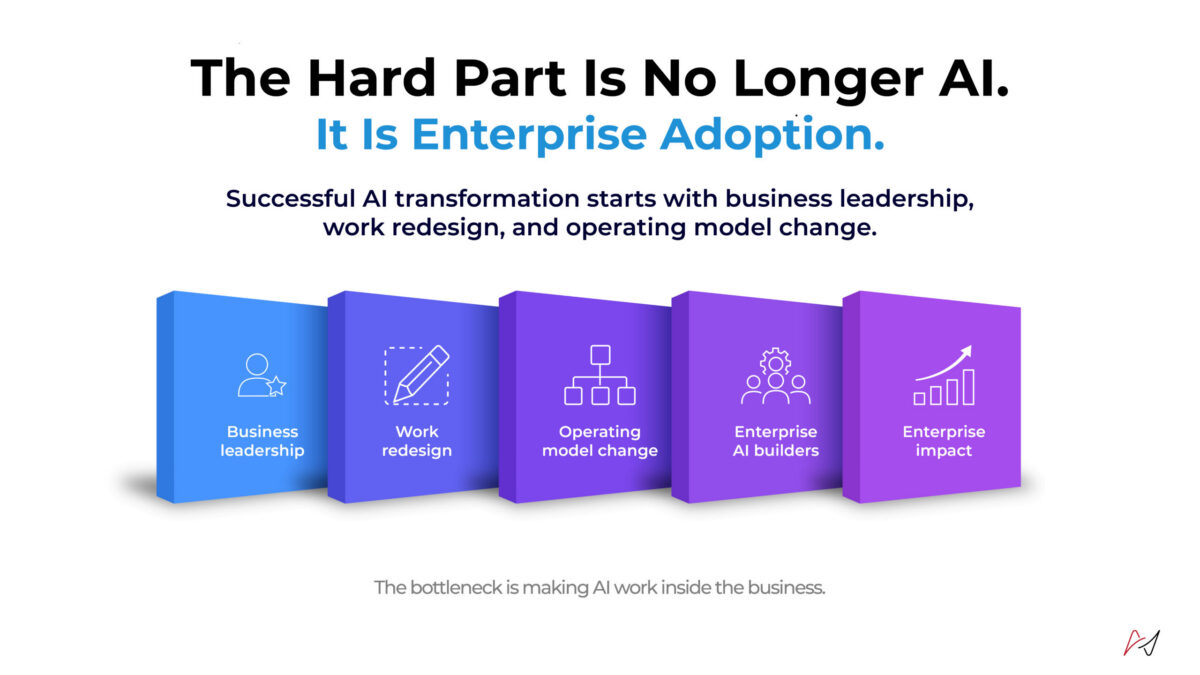
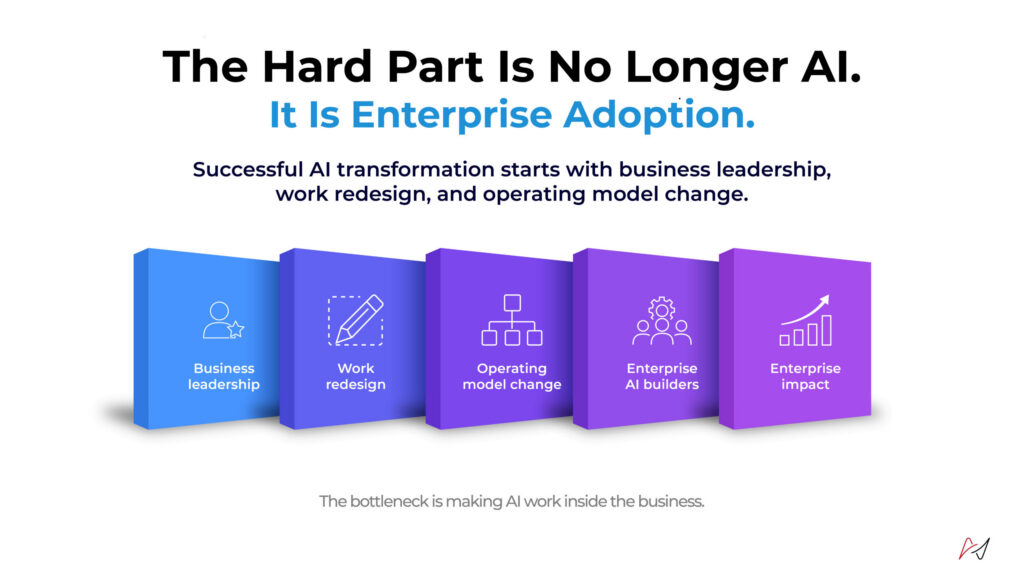
Many companies are trying to move AI from pilots to production, but the hard part is not just choosing the right model, tool, platform, or agent strategy. Those choices matter. The harder part is building a system that turns AI experiments into trusted business outcomes again and again.
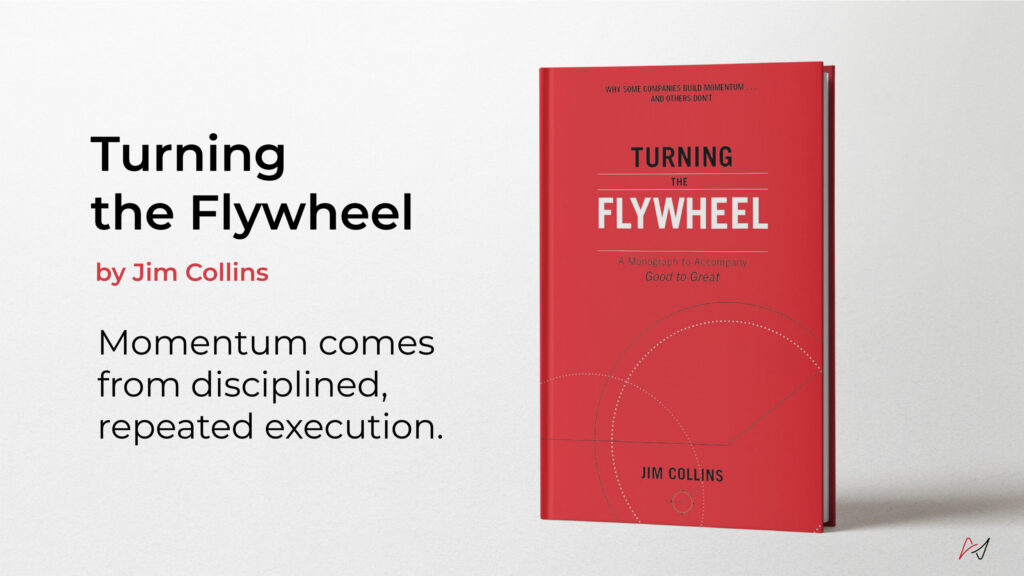
That is why Jim Collins’ Turning the Flywheel feels especially relevant now. The book argues that great companies build momentum by identifying the few connected actions that create value, then repeating them with discipline until momentum compounds.
The book is less about strategy as a document and more about strategy as a repeatable operating system.
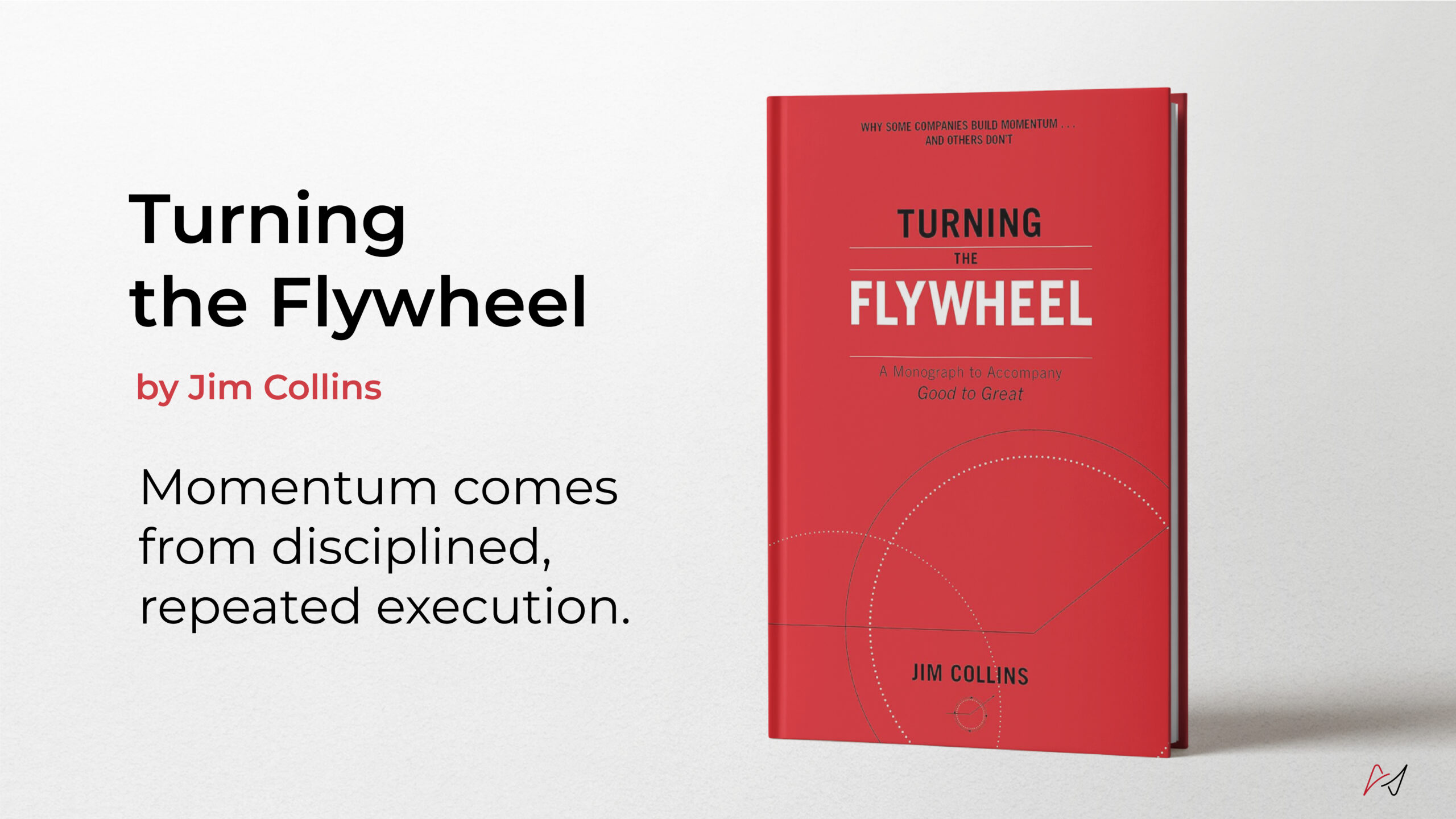
Figure 1. Turning the Flywheel by Jim Collins
Collins’ central message is that momentum comes not from dramatic breakthroughs, but from disciplined, repeated execution of a reinforcing operating loop.

The real transformation is not the AI tool. It is the operating rhythm that turns experiments into trusted outcomes.
The Takeaway: Momentum Comes from a Repeatable Loop
Turning the Flywheel is a short but powerful reminder that great companies do not usually win because of one lucky break, one product, or one bold move. They win because they understand the few actions that create momentum, then repeat those actions with discipline until the flywheel starts turning faster.
The core lesson is simple: durable success comes from connected actions that compound, not from scattered activity.
Why This Matters Now: The AI Transformation Moment
Many leaders today are under pressure to deliver transformation. They are moving into AI, cloud, platform shifts, new business models, and new customer expectations. The natural instinct is to search for the next big decision: the right use case, the right model, the right platform, the right architecture, or the right agent strategy.
Collins challenges that instinct. He argues that the real “big thing” is not a product, market, or trend. It is the underlying flywheel architecture of the business.
This is relevant because many organizations do not fail from lack of ideas. They struggle because their ideas do not connect into a system that compounds. They may have pilots, tools, teams, and executive interest, but without a clear flywheel, motion does not automatically become momentum.
Momentum does not come from scattered activity. It comes from connected actions that compound.
Thesis
The central thesis of Turning the Flywheel is that sustainable success comes from identifying the repeatable set of actions that build on one another, then executing those actions over and over until they create compounding momentum. A strong flywheel has a few connected steps. Each step feeds the next. Over time, the wheel turns faster, effort becomes more productive, and success becomes easier to sustain.
The opposite is also true. When leaders make random changes, chase disconnected growth, or expand without evidence, they slow the flywheel down and create the conditions for decline.
Big Ideas
Big Idea 1: Momentum is built, not discovered
Collins pushes back on the idea that companies succeed because they find a magic moment. The flywheel starts slowly. It takes effort, patience, and repeated pushes. But once the system is clear and the actions reinforce one another, momentum begins to compound.
This is a useful leadership lesson because many teams give up too early. They expect visible results before the operating system has had enough repetitions. The flywheel idea reminds leaders to distinguish between a bad strategy and a good strategy that has not had enough disciplined execution yet.
For AI transformation, this matters because early pilots may not immediately show enterprise-wide impact. That does not always mean the work is wrong. It may mean the organization has not yet connected the full path from workflow selection to prototype, validation, production, reuse, and adoption.
Big Idea 2: The flywheel must be simple enough to repeat
A strong flywheel is not a long list of activities. It is a small number of connected actions that can be repeated. The summary points to the idea that the flywheel should not have more than six actions because too many steps make it complicated and hard to execute.
This is where the book becomes very practical. If a team cannot explain its flywheel clearly, it probably cannot execute it consistently. Simplicity is not about making the business shallow. It is about making the operating logic clear enough for people to align around it.
For AI transformation, this is especially important. If the strategy becomes a long list of platforms, models, pilots, governance boards, tools, and experiments, the organization may lose the operating logic. A good AI flywheel should be simple enough for leaders, builders, and business teams to understand and repeat.
Big Idea 3: Change must be evidence-based
The book does not argue that companies should never change. It argues that change should be made for the right reasons. Leaders should test the flywheel, look for evidence, and make changes only when there is a real need.
This is one of the strongest leadership lessons in the book. Many organizations confuse movement with progress. They keep adjusting strategy, adding initiatives, or expanding into new areas before they have proof that the change strengthens the flywheel. Collins reminds us that undisciplined change can become its own form of decline.
For AI transformation, this means leaders should avoid reacting to every new model release, vendor announcement, or industry trend as if it requires a new strategy. The better question is whether a change strengthens the flywheel. Does it improve workflow selection? Does it increase trust? Does it help more pilots reach production? Does it create reusable patterns? If not, the change may create activity without momentum.
Personal Insight
The insight I would carry forward is this:
The flywheel is not just a business model. It is a leadership discipline.
It asks leaders to understand what truly creates value, simplify that into a repeatable loop, and stay with it long enough for momentum to build. That is harder than it sounds because leaders are often rewarded for new ideas, bold pivots, and visible activity. The flywheel rewards something quieter: clarity, patience, evidence, and consistent execution.
For me, the strongest idea is that the “big thing” is not one product, one launch, or one market move. The big thing is the system that makes repeated success possible.
That insight feels especially relevant in the AI era. The biggest question is not only which AI idea is most exciting. The bigger question is which system will help an organization turn AI ideas into trusted, production-grade outcomes again and again.
The AI Transformation Flywheel
One of the best ways to apply Turning the Flywheel today is through the lens of AI transformation.
Many organizations are discovering that AI transformation is not just about finding the right use case, model, platform, or agent strategy. Those choices matter. But the bigger challenge is building the repeatable operating loop that turns AI experiments into trusted production outcomes.
A practical AI transformation flywheel could look like this:
First, identify high-value business workflows where AI can remove friction, improve decisions, or create a better customer experience.
Second, build focused prototypes with the people closest to the workflow, so the solution is grounded in real business context.
Third, validate the prototype against quality, security, privacy, reliability, and business value.
Fourth, move the successful patterns into production with clear ownership, governance, monitoring, and feedback loops.
Fifth, reuse the learnings, components, and operating patterns across the next set of workflows.
Sixth, build organizational confidence as more teams see AI creating real value in a trusted and repeatable way.
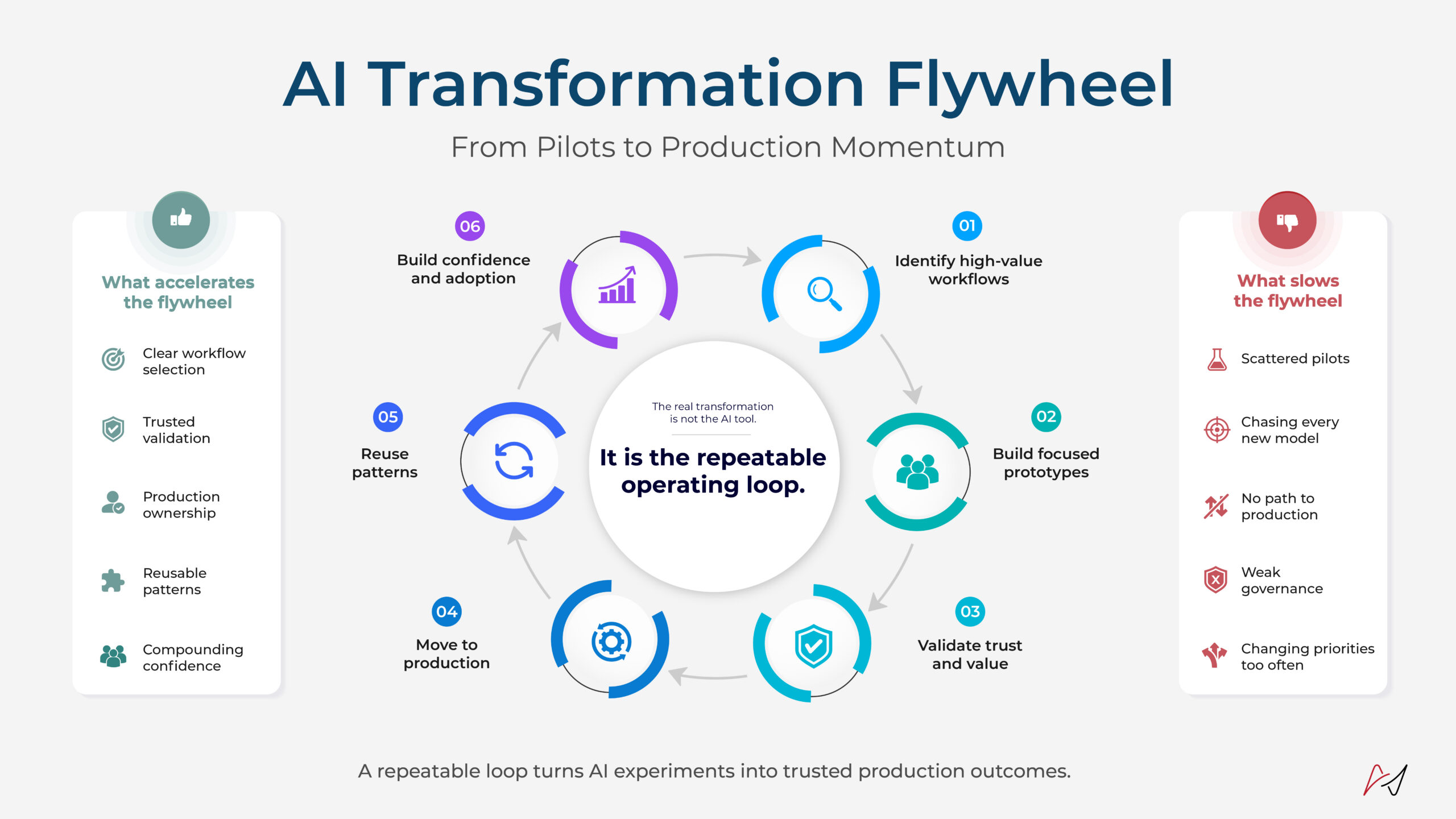
Figure 2. The AI Transformation Flywheel
A six-step operating loop for scaling AI from experimentation to enterprise adoption. Each stage reinforces the next, creating compounding momentum through workflow selection, prototyping, validation, production, reuse, and organizational confidence.
That is the AI flywheel. Each step makes the next step easier. Better workflow selection improves prototype quality. Better prototypes improve validation. Better validation increases trust. Better production systems create reusable patterns. Reuse improves speed. Better results build confidence. And confidence creates the next round of adoption.
This is where Collins’ idea becomes especially relevant. AI transformation will not scale through scattered pilots, executive enthusiasm, or tool adoption alone. It will scale when leaders build the operating rhythm that turns experiments into repeatable business outcomes.
The danger is also clear. If leaders keep changing AI priorities, reacting to every new model release, or launching disconnected pilots without a path to production, they slow the flywheel down. Activity increases, but momentum does not. The organization may look busy, but it is not compounding learning or value.
The leadership lesson is simple:
Do not ask only, “What is our AI strategy?” Ask, “What is our AI flywheel?”
Assessment
Where the book is strong
The book is strongest in how it simplifies a hard leadership problem. It gives leaders a practical way to think about momentum. It also gives them a way to test whether their business activities reinforce one another or remain disconnected.
The examples of Amazon, Nike, and Disney help make the idea tangible. They show that different companies can have different flywheels, but the pattern is the same: clear actions, connected steps, repeated execution, and compounding momentum.
The book is also strong because it forces a useful leadership question: are we building a system that compounds, or are we just adding more motion?
That question is especially useful for AI transformation because many organizations already have enough AI activity. What they need is a clearer path from experimentation to trusted production momentum.
Where the book has limits
The book is short and intentionally focused, so it does not go deep into the messy parts of execution. In larger organizations, defining the flywheel is only the first challenge. Leaders also have to deal with incentives, politics, silos, talent gaps, measurement, governance, risk, and competing priorities.
This is especially true for AI transformation. An AI flywheel requires more than a clean diagram. It requires data readiness, security review, privacy controls, production engineering, model evaluation, change management, and business ownership. The framework is useful, but it does not remove the hard work of aligning people and operating rhythms around the flywheel.
Audience
This book is useful for founders, CEOs, product leaders, engineering leaders, and business leaders who are trying to understand how growth really compounds.
It is especially useful for leaders who are in one of three situations:
First, they are building something from the ground up and need to define the operating loop.
Second, they are leading a business that has many activities but lacks a clear center of gravity.
Third, they are trying to scale an existing business without losing focus.
I would also add one more audience: leaders responsible for AI transformation. If they are trying to move from pilots to production, the flywheel gives them a practical way to think about repeatability, trust, and momentum.
Final Recommendation
I recommend Turning the Flywheel for leaders who want a simple but durable way to think about growth, execution, and momentum.
It is especially relevant now as companies work through AI transformation. Many teams are discovering that the challenge is not just finding the right AI use case, model, platform, or agent strategy. The more durable question is this: what flywheel turns AI ideas into trusted production outcomes?
That is the best use of the book. Do not just read it as a business concept. Use it as a leadership mirror. What is our flywheel? What are the few actions that truly create momentum? Are we executing them consistently? Are we making changes based on evidence, or reacting to impatience?
That is where Turning the Flywheel becomes more than a short book. It becomes a practical way to think about building durable momentum in a world full of noise.
Closing Question
As AI transformation moves from pilots to production, the leadership question is not only whether an organization has the right use cases, models, platforms, tools, or agents.
The deeper question is this: What is your AI flywheel?
What are the few connected actions that create momentum? Where does the loop slow down? Which steps are repeatable? Which decisions are backed by evidence? And how does each successful cycle make the next one easier?
That is the conversation every leadership team should be having now.
What is your AI flywheel?
What are the few connected actions that create momentum? Where does the loop slow down? Which steps are repeatable? Which decisions are backed by evidence? And how does each successful cycle make the next one easier?
That is the conversation every leadership team should be having now.
Categories > Leadership/AI
Tags > Artificial Intelligence, Technology, Leadership, AI Transformation, AI Strategy, AI Adoption, AI Governance, Enterprise AI, Production AI

Related posts